Showing posts with label Books. Show all posts

Monday, February 24, 2014

Book Review: The Clann Bhride Book of Hours

Logo for Clann Bhride
It's no big secret that my home-away-from-home on the internet is the eCauldron forums - there's always interesting discussion and good people to talk to.  I'm also a member of the Cauldron's Cill, a group of people devoted to flametending for the Goddess Brighid.  Some members there have been working on beginning a Brighid-specific religious group separate from the forums for awhile, and recently they launched - the group is called Clann Bhride.  It's not what I'm looking for in a religious group, but I very much respect the people behind it and their tremendous efforts; so when they released a book of prayers, rituals, and essays surrounding Brighid and Her lore, I immediately downloaded it.

The Clann Bhride Book of Hours, written by Aster Breo, Finn, Gilbride and Sage, is a fantastic resource (and free!) for anyone interested in the Goddess Brighid (and may be of interest to many others, for reasons I'll get to in a moment).   It's a fairly quick read, clocking in at around 140-some pages on my Kindle, but is absolutely packed with prayers, rituals, lore, and reflective essays.  It is a very practical guide to a spiritual practice devoted to Brigid.  The book begins with a dedication ritual, and then gives possible prayers that can be used throughout the day; and then goes on to describe occasional prayers and practices, such as flametending.  A new concept that I hadn't heard of before is called well tending - caring for or donating towards the care of a body of water.  Of all the possible practices laid out in the book, this was my absolute favorite, and I'm already thinking of how to incorporate it into my life.  Various festivals (generally Celtic) and their relation to Brigid are discussed, and some possible rituals and prayers for life events such as births, deaths, and rites of passage are given.  In the second part of the book, there are some wonderful essays discussing both practical practice and theology surrounding Brigid.  My personal favorite was "Brigid: Lady of Our Hearths, Lady of Our Hearts", in which the authors present a wonderful list of all the different deities, saints, and mortal women in the Celtic lore who bore a name or title etymologically related to Brigid; and the general idea of their stories and attributes.

The main issue I had with the book - and it can hardly be called an issue, as for some it will certainly be a positive point - is the tendency of the authors to universalize Brigid, associating Her with Goddesses such as Vesta and Minerva.  This is not necessarily a problem - and happily makes the book applicable to those who worship a hearth or fire related Goddess - but is far enough from my personal view of the divine that many of the prayers would need some modification to work in my personal practice.  She is also often associated with the creation of the cosmos, and also the moon and stars; which doesn't apply to my experience of Her.  I want to reiterate that these things are only a drawback for me personally - I imagine these aspects of the book will actually open it up to many others who aren't drawn to honor Brigid in a Celtic-specific or hard polytheist manner.

Overall, I think the Clann Bhride Book of Hours is an excellent resource, and I can't say enough good things about the people behind it.  Full of beautifully-written prayers, wonderful practice concepts, and brilliant essays; it's absolutely worth a download - especially at its current price of FREE.  There's also a paperback version available for a small fee to cover printing a shipping.  If you're even remotely interested, pick it up!  It's absolutely worth the time.

Monday, February 3, 2014

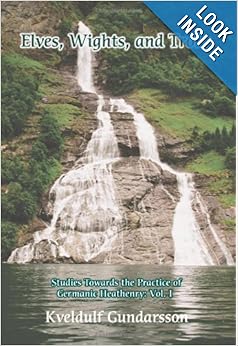
Book Review: Elves, Wights, and Trolls by Kveldulf Gundarsson

My personal spiritual practice has always been largely focused on local land spirits; and so when I began to explore Heathenry more deeply I was very interested in learning about nature spirits from a Germanic point of view.  Elves, Wights, and Trolls by Kveldulf Gundarsson is pretty cheap to pick up used, and is such a fantastic resource that, in retrospect, I would have paid 3 times the price.

As the title says, this book is a study of all kinds of spirits the ancient Germanic peoples would have classified as 'other' - or not Gods.  Gundarsson does a good job describing the fluidity that these categories had to the ancients that we, as modern peoples who like putting things in their little distinct boxes, don't often grasp right away.  Honestly, on picking up this book, I was hoping to receive some clarification on what exactly a Jötunn was, compared to a land wight, compared to the alfar, compared to a troll or any number of other words the Germanic peoples had for these beings.  There was not a lot of clarification, just an acknowledgement that the evidence seems to say that these categories were not at all distinct; and certainly none of them were definitively classified as 'good' or 'evil' to the Germanic peoples.  Gundarsson does give some ideas as to what the distinctions may have meant in the past, but this UPG is pretty clearly marked out.

There is a separate chapter for each type of being, mostly devoted to folk stories of the spirits, and appearances and actions in the lore that we do have.  Through these remnants, Gundarsson attempts to re-imagine what these beings may have been to the ancient Germanic peoples; and gives helpful suggestions on offerings, which spirits to propitiate with them, and which spirits to avoid.  My personal favorite was the portion on house spirits, which not only contains several folk tales, but many cautionary mentions that folk practice seems to suggest are prudent.  As someone who grew up in a home that still held some lingering beliefs about house spirits, it was very enlightening to see where some of these ideas and practices may have originated.

There are very interesting portions on the Jötnar, and Gundarsson is not hostile towards them in his writing.  He even suggests that Thor fought the Jötnar, especially females, in the lore because the main foe of the ancient Germanic peoples was the harsh environment they lived in - but now that humanity has shown itself capable of permanently damaging the environment, perhaps the scales ought to tip from malice towards concern for the Jötnar.

The one concern I had was Gundarsson's tendency to ascribe equal importance to all his sources - whether archaeology, ancient lore, or very recently recorded folk tales.  While interesting, there is certainly a vast amount of difference between the archaeology's conclusions about the culture of Germanic peoples around 0 BC and the culture of Northern Europe in the 19th century when many folk tales were recorded.  Gundarsson does make a great effort to reference his information, which diminishes the problem greatly, but I feel it still effects his conclusions in a way that I personally don't prefer.

All in all, it is a fantastic book, and belongs on the bookshelf of any land-honoring Heathen.  I also think it would be helpful to any Pagan looking to honor land spirits, even if they are not specifically interested in Germanic culture, because of its wealth of information - seriously, this book is just packed with info.  I've read quite a few books on the fae of Celtic lore, and none I've found have been so helpful or informative as Gundarsson's is on the land spirits of Germanic lore.

Tuesday, January 21, 2014

Book Review: Our Troth (first edition)

I've read a few "intro to Heathenry" books now, and I hadn't yet found one that really was what I wanted it to be.  Most were too short, too fluffy, or too old - usually a combo of two or more.  I understand the purpose of intro books, but I feel like I need more than a page of discussion about Thor to really get a proper introduction to Him.  I picked up the first edition of Our Troth from a friend, who bought it years ago when the current two volumes were still published as one (I've been told the current edition is not drastically different, but I can't personally attest to that).  It really was exactly what I'd been looking for.

Our Troth was published by The Troth, a Heathen organization based in the US.  They have a good clergy training program, and hold an annual gathering known as Trothmoot.  Some prominent Heathen authors, such as Diana Paxson and Kveldulf Gundarsson, are active members.  In fact, Our Troth has contributions from both of them, as well as a few other authors.  This article-style mixture of authors can be hard for some to read, as the style is not entirely consistent throughout, but I personally didn't have any issue with the changing voice.  One thing I'd like to point out is that The Troth is an adamantly anti-racist organization.  Unlike some other Heathen groups who have more of a don't-ask-don't-tell policy, the Troth accepts any and all who feel called to Heathenry, and little tolerance for those who would make others feel unwelcome.  Our Troth is written with this in mind, and is an ideal introduction for those who might be leery of less inclusive rhetoric.

Each of the major Gods and Goddesses of Germanic Paganism have a chapter and and a lot of information about them; and many spirits and wights get their own chapters as well (the Disir, house-wights, land-wights, etins, etc).  There's also information about Germanic cosmology and the nine worlds, some history of the Indo-Europeans and Germanic peoples, and some Heathen theology.  The second half of the book (and from what I understand, the second volume of the current arrangement) has information and examples for many different rituals, thoughts on clergy and ritual space in Heathenry, and a note on the rights of practitioners of minority religions.  I found the first half of the book incredibly informative, and it greatly helped my understanding of the Gods and Goddesses, as well as the specific history of the Germanic peoples.  I would absolutely recommend it to anyone just getting into Heathenry.  As for the second half of the book, I am a little more leery of handing out the recommendation.  I feel that it is more suited to an experienced Heathen's bookshelf as a reference or tidbit of knowledge; much of the content consists of ideas for group rituals that someone new to Heathenry would not be planning anyhow, because the rituals themselves are written with the assumption of a large space with at least a kitchen.  The other discussions on Hof and clergy get incredibly specific and are rather dry, and were difficult for me to get through (and I don't mind dry reading)!

I absolutely recommend that any beginners to Heathenry pick up the first volume of Our Troth.  The second volume can probably wait until you you have been practicing a few years, or for some reason you really need to know the optimal dimensions for building a Troth-approved Hof.

Monday, November 25, 2013

Book Review: A World Full of Gods by John Michael Greer

A World Full of Gods: An Inquiry into Polytheism was written by John Michael Greer and is available here on Amazon.  The first thing you should know about this book: it is about philosophy.  It's not about theology, or what do Pagans believe; it's not a book to help you go more in-depth with your practice or to hammer out the finer details of your personal world-view.  It is a philosophy text written in the traditional style of persuasive argument; in this case, the argument for polytheism.

John Michael Greer is the current head of the Ancient Order of Druids in America, a group I don't have much personal experience with but have heard good things about.  He is also a prolific author who has released many Pagan and esoteric titles, and maintains his blog, The Arch Druid Report.  This particular work is a bit of a departure from other things I've read by him; his tone, while remaining conversational and easy to read, is very much rooted in the philosophical tradition.

In the first part of the book, Greer outlines his basic arguments for polytheism, as opposed to either classic monotheism or atheism.  Though the first half of the book does seem to largely digress into discussions of the various arguments for the aforementioned positions, I for one appreciated the basic overview of these classic arguments before diving into Greer's own counter-arguments.  He makes many persuasive points; the main argument being that with so many different experiences of the sacred or deity, it therefor makes the most sense for there to actually be different deities imparting these separate experiences.  He also addresses many of atheism's arguments against theism, and many classic monotheist's arguments against atheism and (misunderstood) paganism, and quite handily shows their inherent flaws when faced with a polytheistic worldview.

I personally greatly enjoyed this book; but I also minored in philosophy at the undergraduate level.  Those more unfamiliar with the discipline of philosophy, or who are familiar but don't enjoy the type of arguments that philosophers frequently entertain, may find this book much less appealing.  For the Pagan who is often faced with religious debates or attacks by Christians or atheists, this book can arm you with some very valuable, perspective-changing arguments that may be of great use if you are interested in engaging in those kinds of discussions.

Overall, I feel this is a very specialized piece of writing that will probably appeal to a small group of the already small group of Paganism; but if what you've heard sounds appealing, you'll probably enjoy it a lot - I certainly did!

Wednesday, September 11, 2013

Book Review : The Pagan Religions of the Ancient British Isles, by Ronald Hutton

I can't say enough about how fantastic this book is.  Not for enhancing your practice (it may actually have you tearing down some of it), not for bringing you closer to nature or your inner self; but for its clear, objective, and wonderfully unapologetic look at the past.  It reaches few conclusions, one of the most prominent being that, with the available evidence, we can't draw any conclusions.  What it does is lay out the facts that we have in an accessible way, so that the reader is free to draw their own conclusions (or not).  The facts that Hutton lays out are drawn from archaeological work, historic resources (including how reliable those resources may or may not be) and observations of modern-day tribal cultures.

Though it was discouraging at times to hear how little we know about the actual religious practices of my ancestors, and indeed how little we know historically about many of the commonly honored deities in Neo-Paganism, I find that with this grounding in actual fact, I am more at ease with most of my religious practice, even those elements that have proven to be modern or at least not based in reliable historical sources.  Now that I see how impossible actual reconstruction is, it has given me more freedom to be a bit 'looser' in my own path - for instance, my enduring admiration for Robert Graves' tree calendar doesn't seem so ridiculous in light of the many other elements of my practice that have been made up whole-cloth in the past.

Also, I feel that this book was part of a major connection with my own ancestors.  Knowing more about their day-to-day life, their intensely regional practices, and what the world was like when they were living in it has brought me much closer to these often distant-seeming presences.  I now know much more about the kinds of offerings they thought the spirits needed, and can fulfill their wishes accordingly in my own practice.  I also enjoyed the large section on water hoards; to me, it shows an intense awe for the deep places that lie unseen beneath the surface waters, something I have personally felt many times.

The Pagan Religions of the Ancient British Isles covers a great length of time, from the first arrival of humans on the Isles (back when they were part of the continent!) up to and including the final spread of Christianity.  There is a large section on the Neolithic period, a smaller one on the Iron Age (when the actual un-Romanized Celts largely populated the Isles, a period from which there is scant archaeological or historical evidence), and a great deal of information on the Romanization of Britain.  I found it a fascinating read, and I would recommend it to anyone who is interested in learning just how much they don't actually know about ancient Paganism in the British Isles.

Saturday, August 24, 2013

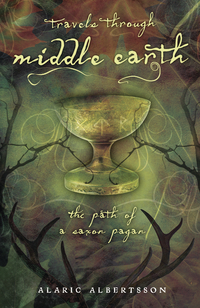
Book Review - Travels Through Middle Earth: the Path of a Saxon Pagan, by Alaric Albertsson

Travels Through Middle Earth: The Path of a Saxon Pagan is a lovely introduction to Saxon Neo-Paganism. Many different aspects of the path are covered, from the Deities and the Spirits all the way to making your own mead! I did read the other recommended books for an Anglo-Saxon hearth culture (Brian Branston's Lost Gods of England and The Real Middle Earth by Brian Bates) but was left unfulfilled - Branston's work was very academic and interesting, but lacked spiritual recommendations; and Bates's book was a bit too loose with history for my tastes. Then I read Travels Through Middle Earth, and it was exactly the kind of book on Anglo-Saxon Paganism that I had been looking for; a good mix of scholarship and the personal experience of a man who has been walking this path for many years.

Travels Through Middle Earth is an introduction to Anglo-Saxon Paganism, and because of that it contains a lot of the usual 101 information - basic overviews of deities and holidays, many of which you can find in other Pagan introduction books. But where this book stands out is Alaric's careful attention to the mindset and world-view of the Anglo-Saxons. I particularly resonated with his point about language and culture; they are inextricably intertwined in the common phrases we use every day, without thinking. And of course, a people's religion is intimately bound up with their culture. This makes the English-speaking world particularly suited to the worldview of the Anglo-Saxons (though of course not limited to it - I myself also honor a Celtic hearth culture, and I wasn't raised speaking a Gaelic language).

Alaric also, while introducing the usual 101 holidays of the Wheel of the Year, goes deeper into their older meanings; and even talks about some interesting holidays that are much less well known in the general Pagan community, such as Mother's Night, a celebration of female ancestral spirits. He also gives many good ideas for celebrating these occasions, while staying true to the history and allowing for the fact that most of these customs are much more recent than our Pagan ancestors, but still applicable.

I have used some of the ideas in this book already in my own practice, setting up a wéofod (shrine) for Thunor and Frige. I appreciate Alaric's emphasis on consistent practice, and the book has inspired me to be more regular in my interactions with the Deities and Spirits. I would absolutely recommend this book to anyone interested in Anglo-Saxon, or any sort of Germanic Paganism; I feel Travels Through Middle Earth is a fantastic resource to those who may just be starting out, and also contains some wonderful gems for those who have been walking the path for awhile now.

Wednesday, August 7, 2013

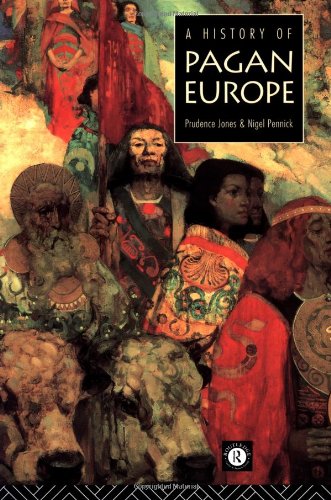
Book Review : A History of Pagan Europe, by Prudence Jones and Nigel Pennick

A History of Pagan Europe is an all too brief but tantalizing overview of the evolution of Pagan religions in Europe, from Greek and Roman to Celtic and Slavic cultures.  Each culture is covered from its earliest archaeological and recorded history, until the arrival of Christianity and the conversion of the people.  In covering this incredibly diverse group of peoples, it is impossible to go into much detail, but the overview gives a fascinating picture of the many differences and also many similarities between the disparate cultures of historical Europe.
             This book is particularly significant because of the invaluable information that can be gained by looking at these cultures in parallel.  By virtue of being adjacent and closely related to one another, each culture has influenced and affected others around it, and before and after it in history; and seeing these cultures all in one place helps to compare and contrast them in a way that is more informative then studying the cultures in isolation.  As a Pan-Indo-European organization, this book is particularly well suited to ADF and its members; we can all gain valuable insight into the practice of our ancestors and also of our fellow ADF members.
            This is the book that helped me to choose my hearth cultures.  In learning about the Paganism of the British Isles, and the many different traditions and cultures that have dwelt there over the years, I was drawn in and truly inspired.  My maternal grandfather is of English stock, and my father's family has maintained strong cultural ties to Ireland; and I found it fascinating to read of the history of these peoples.  I haven't really studied history before, and so A History of Pagan Europe, especially the chapter on the British Isles, opened up my mind and made clear so many things that I'd only vaguely understood about my distant ancestors before.  This book inspired a few conversations with my grandfather about his ancestors living in England and coming over to America; which helped me form a closer connection with my ancestors then I had had before.  I'm now looking more deeply into both Celtic and Anglo-Saxon histories and cultures, and making offerings to some of their deities, just as my ancestors would have done.
            I really enjoyed this book, and would absolutely recommend it to those who were new to ADF or uninformed about history, like I was before reading it.  It did seem to be rather simplistic, as it certainly had to be in covering such a broad subject, so I might not recommend it to someone who already had a good amount of knowledge on the subject.  I also did notice some biases when reading the text, particularly an anti-Christian bias.  Perhaps this is a reaction to the anti-Pagan bias of much of the source material, but nonetheless it was bothersome for an academic text.  Also, I found that one of the stated purposes of the book - to show that Pagan culture and religion survived to this day in some form - didn't really pan out as the authors seemed to have intended.  I enjoyed the overview of history, but I didn't feel that nearly enough evidence was presented to support that conclusion. 


            Overall, I loved the book and found it very helpful to me, both in my general knowledge of history and in inspiring my personal hearth culture search.  I think it's a great addition to the Dedicant Path reading list, and would encourage most of my fellow Dedicants to take the time to read it.

Friday, January 25, 2013

B is for Books (for kids!)

Being the bibliophile that I am, it is no surprise that for me, B unquestionably stands for Books!  I'm currently sitting (metaphorically!) on a huge pile of esoteric literature while I work on another Tarot reproduction; but given the subject of this blog, I'd like to speak out and give some suggestions on Pagan books, fiction and non-fiction, that my children have enjoyed.

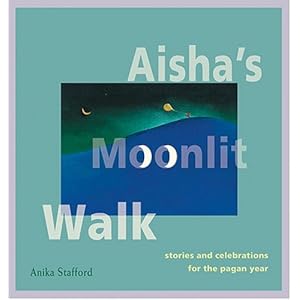
The first, and my eldest daughter's favorite, is Aisha's Moonlit Walk by Anika Stafford.  My daughter is just about to turn five, but we've been enjoying this book for a couple of years now.  It has a chapter for each holiday of the Wiccan Wheel of the Year, telling a story about Aisha and her family.  There are also lots of discussion questions that give lots of room to talk about your own family traditions and beliefs - so if you follow a season-inspired calendar of celebrations, even if they're not the typical Wheel of the Year, this book is really informative for kids.  For my daughter, it's helped to teach her that there are other kids out there like her.  We live in an isolated part of the Midwest, and the few groups that I do know of and attend occasionally don't have any other young members; and she is unfortunately already a bit hesitant to mention her holidays to friends or at school.  This book has really made her feel a lot less alone in her religion.

Some favorites for the 5 year old and the 2 year old are this series of books by Ellen Jackson: there is one for the Spring Equinox, Autumn Equinox, Winter Solstice and Summer Solstice.  Each book not only goes into the changing weather and plant and animal life of each season, but also talks about several ancient peoples and how they would have celebrated this time of year.  For me as a Druid, this series is perfect because it covers many of the basics of our modern practice (seasons and their change) as well as how the ancient druidic peoples might have celebrated.

One more recommendation for the Pagan pre-parent - Pagan Parenting: Spiritual, Magical, and Emotional Development of the Child by Kristin Madden.  I absolutely adore this book.  I didn't find it until I was pregnant with my third child, but it was such an uplifting and helpful read while I was struggling with some difficult emotions.  There are some great rituals, and very lovely meditations - some to prepare for childbirth, and many to connect with the unborn child which I found incredibly helpful.  I really feel this book is a must for anyone who is going to become a Pagan parent.