I began my year of High Day celebrations on Lughnasadh, celebrating with a group called Pagans of Nebraska. The ritual was typically Wiccan, beginning with a sage smudge to purify those entering the circle. Once everyone had entered and formed the circle, four people standing at the quarters called the four elements: Air, Fire, Water and Earth. Then a man and a woman standing in the center of the circle called on the God and Goddess respectively, and thanked Them for the gifts of the harvest. After the leaders had finished, they went around the circle distributing water and cinnamon bread to the participants. Then the God and Goddess were thanked again and bid farewell, and the elements were similarly thanked. The circle was closed and the participants free to socialize.
This was my first foray into public ritual, and honestly I didn't much enjoy it. There seemed to be very little energy; possibly due to the poor reading of many of the invocations, or the seemingly disinterested and cellphone-glancing participants. The ritual leader at one point had to stop and turn off his cell when it rang in the midst of the ritual. The setting also left much to be desired; a little green patch of grass between two parking lots, a rather busy road, and a brick building. All in all, I was rather disappointed in the experience.
Saturday, August 10, 2013

Friday, August 9, 2013
P is for Parenting
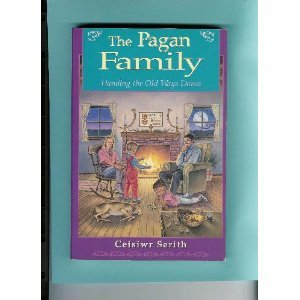
I've been doing a lot more thinking about Pagan parenting lately as my oldest daughter prepares to go to kindergarten in less than a week. Like most any parent, I worry about my kids, and my oldest is especially sensitive. And we as a family are pretty strange in the middle of white bread, midwest America. She has dark skin at a school with less than 10% minority population. She doesn't eat pork in honor of my husband's Muslim roots. She has different holidays, as we're celebrating Eid tomorrow and this last weekend attended a Lughnasadh circle. She does have church and Sunday school, but it's at the local Unitarian church, and she doesn't know much about Jesus besides his name and a lunch-time prayer my mother taught her. She's incredibly precocious and is already doing division and reading chapter books at home. We don't have much money but are lucky enough to live for a cheap price in a nice neighborhood, which means she'll be going to school with a lot of kids with a lot of money. She's about as different as you get around here! And I fear, terribly, that it will leave her the odd girl out.
How does one reconcile their Pagan faith, and a desire to pass that down, with the stronger desire to raise a happy and well-adjusted child? My strategy has been to teach her to be as strong and self-reliant and proud as she can be; to take great joy in her traditions and differences. I've been reading The Pagan Family by Ceisiwr Serith recently, and it's convinced me that the two greatest weapons we have in the fight for our children's happiness are Family Traditions and Pagan Community. Children need a sense of stability that is easily imparted by established religions with dogma and traditions and community laid out and easily accessible; but for Pagan parents it's much more difficult. We have to make our own traditions, and stick to them. We have to make our own community, and hold it together to the best of our abilities.
Family traditions are super fun, and great, but you have to commit to them. You must perform them each year (or each month, or whatever set length of time) for them to truly become a tradition. It is this stability that will help anchor a child when others bring up more mainstream traditions. Sure, their friends go to church every Christmas Eve and then go home and read the nativity story before the family dinner the next day; but our daughter helps me light the candles the night of the winter solstice, then we turn off the lights and sip hot cocoa while watching the cold outside world and waiting for the new dawn. Then the next morning we all go out to greet the sun and come back in to open presents and have a special solstice feast. If my daughter has something similar to talk about when other kids are talking about Christmas, there's much less chance of her feeling left out or weird.
The other really essential thing is Pagan Community. This is great if you have a local community, especially one with other kids, as I have been really blessed with the past year or so. Teach your child a useful skill he or she can bring to gatherings. My daughter practices drumming with me, and when we go to circles she brings her own drum and helps us raise energy. She's learned some of the chants we use in circles and helps to sing along. BUT this is something you can accomplish even if the "community" is only the two of you. My husband is an atheist and isn't really comfortable taking part in rituals, so for a few years my daughter and I were all each other had spiritually - and it was okay. The important thing is to talk about it, openly with your children, and not make Paganism seem like a touchy or strange subject. Take them for nature walks, have them help with recycling, make them aware of the world and get them involved in your Paganism. I think this is the best defense against proselytization and bullying for Pagan children.
After one year of preschool, my daughter is still proud and confident of her differences - but that was three days a week, two hours a day. I'm not sure how things will pan out in a full-day kindergarten, where her dietary differences will be much more obvious, and we'll be pulling her out of school for a few holidays. Like everything else in parenting, I try my best and wait and see how it turns out!
Wednesday, August 7, 2013
Book Review : A History of Pagan Europe, by Prudence Jones and Nigel Pennick
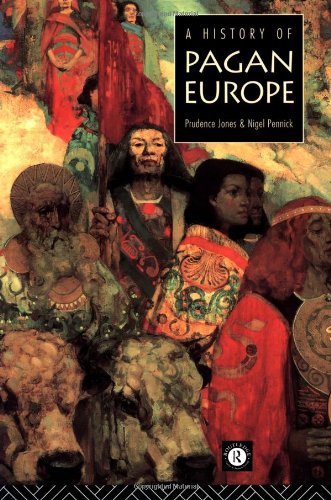
This book is
particularly significant because of the invaluable information that can be
gained by looking at these cultures in parallel. By virtue of being adjacent and closely
related to one another, each culture has influenced and affected others around
it, and before and after it in history; and seeing these cultures all in one
place helps to compare and contrast them in a way that is more informative then
studying the cultures in isolation. As a
Pan-Indo-European organization, this book is particularly well suited to ADF
and its members; we can all gain valuable insight into the practice of our
ancestors and also of our fellow ADF members.
This is the book that helped me to choose my hearth
cultures. In learning about the Paganism
of the British Isles, and the many different traditions and cultures that have dwelt
there over the years, I was drawn in and truly inspired. My maternal grandfather is of English stock,
and my father's family has maintained strong cultural ties to Ireland; and I
found it fascinating to read of the history of these peoples. I haven't really studied history before, and
so A History of Pagan Europe,
especially the chapter on the British Isles, opened up my mind and made clear
so many things that I'd only vaguely understood about my distant ancestors
before. This book inspired a few
conversations with my grandfather about his ancestors living in England and coming
over to America; which helped me form a closer connection with my ancestors
then I had had before. I'm now looking
more deeply into both Celtic and Anglo-Saxon histories and cultures, and making
offerings to some of their deities, just as my ancestors would have done.
I really enjoyed this book, and would absolutely
recommend it to those who were new to ADF or uninformed about history, like I
was before reading it. It did seem to be
rather simplistic, as it certainly had to be in covering such a broad subject,
so I might not recommend it to someone who already had a good amount of
knowledge on the subject. I also did
notice some biases when reading the text, particularly an anti-Christian
bias. Perhaps this is a reaction to the
anti-Pagan bias of much of the source material, but nonetheless it was
bothersome for an academic text. Also, I
found that one of the stated purposes of the book - to show that Pagan culture
and religion survived to this day in some form - didn't really pan out as the
authors seemed to have intended. I
enjoyed the overview of history, but I didn't feel that nearly enough evidence
was presented to support that conclusion.
Overall, I loved the book and found it very helpful to
me, both in my general knowledge of history and in inspiring my personal hearth
culture search. I think it's a great
addition to the Dedicant Path reading list, and would encourage most of my
fellow Dedicants to take the time to read it.
Friday, February 22, 2013
D is for Druid
 I am a Druid. It might seem like a simple statement, but it's been a very long and complicated journey for me: through Buddhism, Taoism, other Eastern religions; through Wicca, vague nature-religion, on and on and on. Not that I'm condemning seekers; on the contrary, I think that spending some time seeking is an essential part of one's spiritual life. Some are happy never to settle down. But after a year with ADF Druidism, I really feel as if I have found a place to settle down.
Though I don't have a Grove near me, I still am able to connect to other Druids through the Solitary Druid and the liturgy they write. But ADF is different for all of its members, and today I'd like to enumerate on what Druidry means to me.
Like many followers of Earth-centered religions; I have always felt drawn to nature and the natural world. My grandmother taught me a great respect for the world around us: she would take me camping often, instilling an incredible love and awe for nature. She is a firm Christian, but believes that God expresses His majesty through his creation; and she passed on that love to me (though not the love of her God ;) ). I also grew up with a love of classical mythology and JRR Tolkien's fantasy of a more rural, more connected world where beauty in nature is highly valued. The trees are alive with thoughts and spirits; and I have carried this animistic view through my life.
I am a Druid because I believe that there are Nature spirits all around me that are worthy and deserving of respect. I am a Druid because I honor my ancestors believe their spirits have left a mark on both the land and myself. I am a Druid because I don't know if the Gods and Goddesses are real, and I'm not sure that it matters. I worship them as if they are, because it accomplishes my ultimate goal of closeness with those things that matter to me: the land, the waters, the sky.
I am an ADF Druid because I find value in tradition and common liturgy. I respond well to structure, when given plenty of room to be who I am within that structure. I am not a reconstructionist, and I am not only an Earth-centered spiritual person. I am an ADF Druid, part of a living tradition that is both old and new.
Saturday, February 2, 2013
C is for Christianity
Well, I wrote up a huge post yesterday; and then decided not to publish it. It was full of my angsty journey from hostility to understanding of my Christian heritage, and honestly was probably way more words than anyone would want to read about my childhood! So, a little late, I give you a new 'C for Christianity' post.
Many Pagans today were raised in Christian homes, and many of those in fairly fundamentalist ones. I am one of those Pagans, and the journey of transition was a difficult one for me, as it is for many. I know that at first, I took the stance of totally cutting everything about my birth religion out of my consciousness and my life - I refused to attend church with the family, refused to touch the books on religion they gave me, I even did up very elaborate goth makeup for my graduation to piss off the church elders! But my attitude has slowly changed over the years, and I'd like to propose today that we don't have to do this.
I'm not advocating that we, as Pagans in a Christian family or society, bow to the wishes of those around us, confess our sins, and convert! What we can do is carry forward some of the things we learned in our youth to inform the religious practices we have adopted as our own. One of my favorite services was always Good Friday - it was very ceremonial with candles being lit and extinguished at specific times, dark and melancholy words and hymns; it always felt as if a cloud was passing over the earth and death was very near. In my teenage wisdom I dismissed this as ridiculous; but now a bit older and a bit wiser, I can see that this was probably one of my first experiences in looking the otherworld in the eye, much as many Pagans do at Samhain. After this realization, I began to tap into that very strong feeling and memory association from my youth and used that in my Samhain rituals - I used some of the same hymn tunes and put my own Pagan words to them, and I still follow the Tenebrae extinguishing of candles; but this is to honor the death of the light and life on the earth rather than Jesus.
I have been accused of being a catch-all, eclectic, take-what's-shiny Pagan, and I suppose that's a fairly accurate characterization. But this is not just grabbing some random ritual from some random culture - it's borrowing from the religion of my birth, the religion of my society, and one with which I have very powerful sensation and memory associations. I no longer believe in the literal existence of Jesus, but why should that stop me from borrowing a ritual that fits my purpose, has exactly the right tone, and that I am intimately familiar with after having been part of it for almost twenty years?
In that same vein, I feel that it is at our own peril that former-Christian Pagans eschew the general holidays and merriment of wider society. I know one Wiccan woman who refuses to acknowledge the existence of Christmas to her children, insisting that they celebrate only Yule and that Santa Claus and Jesus are malicious stories intended to deceive their friends. I can understand where she is coming from, but at the same time I don't think she realizes just how hard it is to be a child that doesn't celebrate Christmas, or Easter, or any of the other major Christian holidays - even the harmless, secular aspects. My husband grew up Muslim, and he still carries animosity and anger about Christmas; not because he felt oppressed, but because he felt left out. Is that what we want to do to our children? Should we sacrifice their joy in the holiday season because we have issues about our Christian past? In my house, we have chosen to celebrate Yule and Ostara in very ritualistic, religious ways - and at Christmas and Easter, we open presents from Santa and hunt eggs left by the Easter Bunny. We don't generally talk about Jesus's birth or death, but that doesn't mean we have to ignore the holiday, especially in our increasingly secularized society.
I'd like to challenge all of the former-Christian Pagans reading this to take some time to think about your relationship with Christianity. Do you view it with animosity? Perhaps it is time to start changing that view. I like to remember the Pagans of Europe, who when confronted with conversion to this new religion, went along with it - but still kept many of their old traditions and rituals as well.
Many Pagans today were raised in Christian homes, and many of those in fairly fundamentalist ones. I am one of those Pagans, and the journey of transition was a difficult one for me, as it is for many. I know that at first, I took the stance of totally cutting everything about my birth religion out of my consciousness and my life - I refused to attend church with the family, refused to touch the books on religion they gave me, I even did up very elaborate goth makeup for my graduation to piss off the church elders! But my attitude has slowly changed over the years, and I'd like to propose today that we don't have to do this.
I'm not advocating that we, as Pagans in a Christian family or society, bow to the wishes of those around us, confess our sins, and convert! What we can do is carry forward some of the things we learned in our youth to inform the religious practices we have adopted as our own. One of my favorite services was always Good Friday - it was very ceremonial with candles being lit and extinguished at specific times, dark and melancholy words and hymns; it always felt as if a cloud was passing over the earth and death was very near. In my teenage wisdom I dismissed this as ridiculous; but now a bit older and a bit wiser, I can see that this was probably one of my first experiences in looking the otherworld in the eye, much as many Pagans do at Samhain. After this realization, I began to tap into that very strong feeling and memory association from my youth and used that in my Samhain rituals - I used some of the same hymn tunes and put my own Pagan words to them, and I still follow the Tenebrae extinguishing of candles; but this is to honor the death of the light and life on the earth rather than Jesus.
I have been accused of being a catch-all, eclectic, take-what's-shiny Pagan, and I suppose that's a fairly accurate characterization. But this is not just grabbing some random ritual from some random culture - it's borrowing from the religion of my birth, the religion of my society, and one with which I have very powerful sensation and memory associations. I no longer believe in the literal existence of Jesus, but why should that stop me from borrowing a ritual that fits my purpose, has exactly the right tone, and that I am intimately familiar with after having been part of it for almost twenty years?
In that same vein, I feel that it is at our own peril that former-Christian Pagans eschew the general holidays and merriment of wider society. I know one Wiccan woman who refuses to acknowledge the existence of Christmas to her children, insisting that they celebrate only Yule and that Santa Claus and Jesus are malicious stories intended to deceive their friends. I can understand where she is coming from, but at the same time I don't think she realizes just how hard it is to be a child that doesn't celebrate Christmas, or Easter, or any of the other major Christian holidays - even the harmless, secular aspects. My husband grew up Muslim, and he still carries animosity and anger about Christmas; not because he felt oppressed, but because he felt left out. Is that what we want to do to our children? Should we sacrifice their joy in the holiday season because we have issues about our Christian past? In my house, we have chosen to celebrate Yule and Ostara in very ritualistic, religious ways - and at Christmas and Easter, we open presents from Santa and hunt eggs left by the Easter Bunny. We don't generally talk about Jesus's birth or death, but that doesn't mean we have to ignore the holiday, especially in our increasingly secularized society.
I'd like to challenge all of the former-Christian Pagans reading this to take some time to think about your relationship with Christianity. Do you view it with animosity? Perhaps it is time to start changing that view. I like to remember the Pagans of Europe, who when confronted with conversion to this new religion, went along with it - but still kept many of their old traditions and rituals as well.
Friday, January 25, 2013
B is for Books (for kids!)
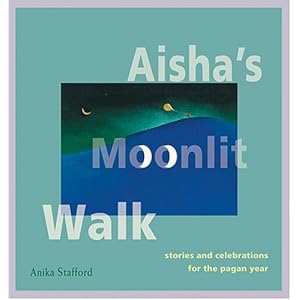
The first, and my eldest daughter's favorite, is Aisha's Moonlit Walk by Anika Stafford. My daughter is just about to turn five, but we've been enjoying this book for a couple of years now. It has a chapter for each holiday of the Wiccan Wheel of the Year, telling a story about Aisha and her family. There are also lots of discussion questions that give lots of room to talk about your own family traditions and beliefs - so if you follow a season-inspired calendar of celebrations, even if they're not the typical Wheel of the Year, this book is really informative for kids. For my daughter, it's helped to teach her that there are other kids out there like her. We live in an isolated part of the Midwest, and the few groups that I do know of and attend occasionally don't have any other young members; and she is unfortunately already a bit hesitant to mention her holidays to friends or at school. This book has really made her feel a lot less alone in her religion.
Some favorites for the 5 year old and the 2 year old are this series of books by Ellen Jackson: there is one for the Spring Equinox, Autumn Equinox, Winter Solstice and Summer Solstice. Each book not only goes into the changing weather and plant and animal life of each season, but also talks about several ancient peoples and how they would have celebrated this time of year. For me as a Druid, this series is perfect because it covers many of the basics of our modern practice (seasons and their change) as well as how the ancient druidic peoples might have celebrated.
One more recommendation for the Pagan pre-parent - Pagan Parenting: Spiritual, Magical, and Emotional Development of the Child by Kristin Madden. I absolutely adore this book. I didn't find it until I was pregnant with my third child, but it was such an uplifting and helpful read while I was struggling with some difficult emotions. There are some great rituals, and very lovely meditations - some to prepare for childbirth, and many to connect with the unborn child which I found incredibly helpful. I really feel this book is a must for anyone who is going to become a Pagan parent.
Thursday, January 24, 2013
Winter
Well, I fell off the bandwagon! The Pagan Blog Project and my hopes of completing the Dedicant's Path this year both fell by the wayside when faced when the encroaching cold. Here's to a fresh start and a successful year as Spring once again starts to show its face!
Subscribe to:
Posts (Atom)