Showing posts with label DP Requirements. Show all posts

Monday, October 6, 2014

Mental Discipline Writeup


I began working on my meditation requirement in early October of 2013, and have continued at least twice a week up until the time of this writing, and I plan to continue doing so into the future as well. When I first began trying to work on meditation, I unfortunately had a great deal of difficulty with it. I downloaded a copy of Ian Corrigan's recording of the Two Powers meditation, and for the first month tried nearly every day to follow along with the meditation.

This turned out to be an incredibly difficult task for me. Though the meditation itself is just short of ten minutes, I found myself asleep before the end of the meditation every single time I attempted to work through it. This isn't to say that I didn't make any strides – in fact, I experienced some definite growth and changes during the first half or so of each attempt – but the outcome was always the same. About the middle of October, I began noticing that I could feel energy flowing within myself when the meditation directed me to reach my roots down into the cool water below the earth; I felt a cool tingling come up from my feet and spread across my whole body. Likewise, when I reached my branches to the sun, I could feel the warm sunlight, and its warmth suffused through me and mixed with the cool tingly energy just as the meditation described. Unfortunately, I don't think I have ever gotten beyond this mixing point when listening to the Two Powers.

This continued on for another month or so, each time failing to even make it through to the end of the meditation. After awhile, I posted on the ADF facebook page, begging for help figuring out my problem. I was getting incredibly discouraged – I know the point of the DP is to at least try a variety of things, but I felt as if my attempts were getting me absolutely nowhere. I'd discovered a great way to get myself to sleep at night if I was having trouble with insomnia, but I wanted to go deeper and discover more.

On the facebook page, a few different ideas were presented that I decided to try out. The idea I liked the most was a walking meditation, but unfortunately by that time of year it was much too cold outside for me to comfortably walk about for more than a few minutes. So I began another form of moving meditation: I returned to doing a Sun Salutation morning devotional, this time with a focus on clearing my mind as I moved through the yoga poses. I practiced this meditation almost every morning for six months, and I did enjoy it, but it wasn't quite the traditional sort of blank-mind meditation that I suppose I had in mind when I set out to learn to meditate. Once spring came again, I decided to try out some of the warmer-weather ideas.

The first was a walking meditation, which actually turned out to not work for me at all. Continuing to do my sun salutations, so I could actually have some productive mental discipline time, I added a walk in the afternoon when I could have some time without my children. I found the actual act of walking calming in the same way that my yoga in the morning was, but unfortunately there were way too many distractions in my neighborhood – neighbors would say hi, family (since we live in the same neighborhood as my in-laws and my husband's aunt and uncle) would drive by and honk and wave, and overall I found it the very opposite of peaceful to be constantly jarred out of a meditative state. I think it might work better for me to walk in the very early morning or in a different location, but I'm not able to make that work with my children-limited schedule.

The second idea I tried was a focused meditation – the idea is to focus on a square of ground or some other part of nature and to let one's thoughts quiet while contemplating it. This was something I had a great deal of success with. I think having some visual input is very helpful for me to stay awake; I am a fairly powerful visualizer, but with my eyes closed and no one else around, the signals for sleep are apparently just too strong. My usual practice involved climbing up my backyard oak tree in the afternoon, putting my hands on the trunk, and just studying that tiny patch of trunk or leaves. I did not set a timer when doing this, because I only had action to an old-fashioned ticking type which was often distracting. I found that I usually was done in about half an hour, including time to climb up and down the oak; so it's probably somewhere around 15 minutes of actual meditation. Once I had realized how effective this was, after about a week, I switched to this form instead of my morning yoga; and began doing a simple version of the Core Order of Ritual as my morning devotional instead.

Now that the weather is beginning to get colder again, I've been driven back inside and can no longer climb trees in the afternoon. Luckily, before it began to get cold, I attended the Midnight Flame Festival and was able to attend Nick Egelhoff's workshop on different types of meditation. I found a great affinity for a square breathing meditation – where I breathe in for three, hold my breath for three, exhale for three, and hold again for three more. Something about the counting and the concentration that it requires from me is very engaging, and I am able to clear my mind without it being so unoccupied that I slip into sleep. It's not as lovely as meditating in a tree, but it is very relaxing.

I never have had as physical a reaction to meditation as I did when feeling the energy in the Two Powers; that was a unique experience that I don't think can be replicated with the simpler, less visualization-heavy kinds of meditation that I've been trying since. I find meditation very relaxing and calming, and it helps me deal with the stress of the day. When I switched my meditation from morning to afternoon, I did notice a change – but it was not a drastic one, since I was still doing a morning devotional that was calming and centering for me, though not exactly a meditation. I found that doing something both in the morning and afternoon was really helpful; it's the natural midpoint of my day when my children are either asleep or at school, so I found it a great time to pause and recharge, and it really increased my patience in the later half of the day. I also found it easier, after a few months of practice, to get into a ritual mindset immediately at the start of a rite, which was very helpful for me both in my solitary practice and as a leader of ritual.

All in all, beginning a meditation practice has been incredibly beneficial to me, and honestly I wish I had started sooner. I meditate almost every day, and have done so since beginning this experiment, and it has enabled me become better at both concentration and entering and staying in a ritual mindset. Once I tried something new, and overcame the problem of falling asleep during meditation, it became a powerful tool; one I will absolutely continue to practice.

Monday, September 29, 2014

Personal Practice Writeup

I first began my work on the Dedicant's Path in 2012, when I originally joined ADF. I had been Pagan for years or so prior to that, but I had never felt called to a particular pantheon or group of deities; instead my spirituality was largely centered around nature spirits and the Earth Mother, and a reverence for the mythology of JRR Tolkien's The Silmarillion. I stayed in this place for a long time, trying to reconcile my generalized understanding of deity with ADF's emphasis on treating the gods as individuals. In July of 2013, uncertain of whether or not ADF was truly for me, I posted a question about Tolkien's mythology on the general facebook page. It engendered a wonderful discussion, and set me on a path to develop a new way of thinking about the gods and spirits; and also encouraged me in the pursuit of study with ADF.

One particular piece of advice I received was to look to the cultures and mythology that Tolkien was inspired by. I decided to pursue this idea, and ended up studying the Germanic deities, eventually arriving at the conclusion that my Earth Mother who I had honored for so long was Nerthus. I also began flamekeeping for Brigid with a group on the forum eCauldron, and pursued a relationship with Manannán mac Lir. As I continued to study and practice, I also began forming relationships with Frige (Anglo-Saxon equivalent of Frigga) and Thunor (Anglo-Saxon Thor) by offering to Them in both traditional and non-traditional ways: usually beer for Thunor and time spend crocheting for Frige. As I learned more about traditional Germanic views of land wights through reading Kvedulf Gundarsson's Elves, Wights, and Trolls, I also began honoring my local landvaettir in a more traditional way; pouring offerings over a stone in my backyard once per week. I did a great deal of genealogy work, learning about my ancestors and my past, talking to my grandmother about how she was raised and all the people she loved and remembered who were now passed; and working to build relationships with them through offerings as well.

As the summer unfolded into winter, and winter to spring, I continued to feel called to honor more deities of both the Irish, Anglo-Saxon, and other Germanic pantheons; to the point where my devotional and ritual schedule got a little crazy. I would offer to the Germanic, the Irish and the land wights as separate groups once a week, and also add in individual offerings to those deities I particularly honored, which had now grown to include the Cailleach, Danu, Oghma, Skadhi, Frey and Freyja, Eostre, and Hreda. It was an incredibly busy schedule, and soon began to be unsustainable while also caring for my three children and keeping up with the housework (usually as an offering to the house wights)!

Near the end of May of this year, my computer suddenly went caput, putting me out of contact with most of my Pagan friends and cutting off my primary avenue of research (not to mention completely arresting my progress on the DP). Getting a new one right away was not financially feasible, so I made do with what I had, and as the weather grew warmer and the sunshine stronger I spent more and more time out of doors connecting with Nerthus and the landvaettir. Now, I do not possess a 'god-phone' as some call it who hear the deities speak directly to them or can easily meet the gods on otherworld journeys. But I spent a great deal of time this summer just sensing, and meditating on the nature of the gods.

Later that month, my grandfather died. I withdrew from almost everything around me, stopped offering to most of the deities I had honored before, and focused my attention on what I knew I needed to get through my grief: the spirit of my grandfather, Nerthus, and the land. A few weeks after his passing, I went to the place where his ashes were scattered (the graves of my great-grandparents), and performed my own version of the ritual 'sitting-out' of the Germanic peoples. I kept vigil on the graves through the night, meditating and sharing offerings of Crown Royale, asking the spirit of my grandfather to visit me. And eventually, he did. Not in a physical or even auditory manifestation, but as a presence I could sense was him, just as you'd know without looking if your mother walked into a room. I told him I missed him, and then felt there was no need, because he would be with me as long as I remembered him. I came out of the cemetery that morning knowing just where to go next.

Later that week, I made time for a ritual devoted to communicating with Nerthus through divination. I asked Her, with the runes, how I should steer my personal practice going forward; since the way I had been doing things was unsustainable for me. Her message was very clear: I have always loved Her and loved the land, and my focus should rest on Her and the gods of the land, Her children and the gods of Her pantheon.


Since that time, I have kept up my offerings to my Ancestors (especially my grandfather) and my offerings to the local land wights. I also continue to offer specifically to Nerthus, by thanking Her for each meal and leaving a small bit of it to be composted. I have begun a new weekly practice of ritual and offering to specific members of Germanic pantheons: Frey and Freyja, Thunor, Sunne, Njordh, Gerda, and Jord – which is still a rather long list, but having one ritual of offering to all simplifies things greatly. I also honor Sunne, Eostre, and Earendel (possibly an Anglo-Saxon god of the morning star, but that's largely my UPG) with a quick prayer to the dawn every morning. It's certainly possible that in the future the scope of deities that I honor will once again widen further; but for now, this is where Nerthus wants me to be – and I believe that in pursuing this goal, I will be able to form an even deeper relationship with the Kindred that I honor.

Monday, September 15, 2014

My Oath Rite

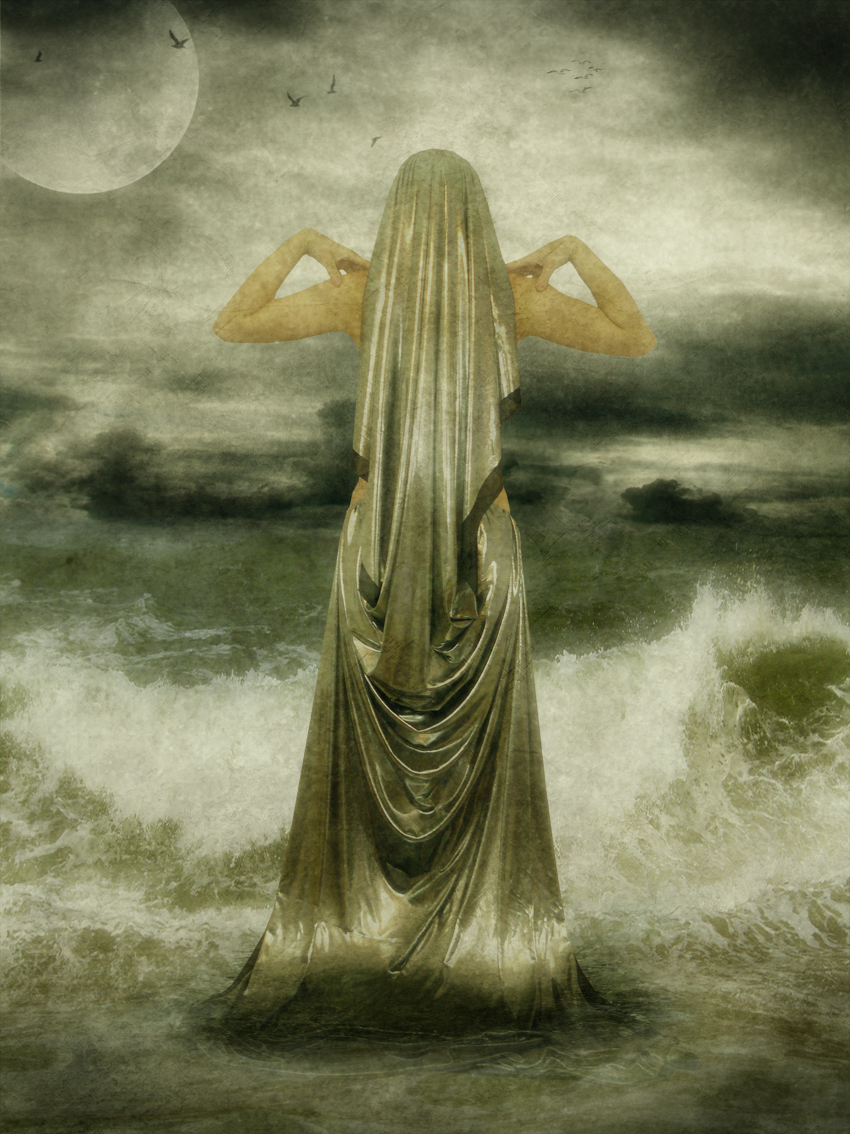
Nerthus by ErebusOdora
It's getting to be that time.  I've been working on my Dedicant Path documentation for ADF on and off for more than two years, and I'm finally nearing the finish line (still have to do a write-up on my meditation practice, but that's going to take some compressing).  I've spoken with Amber, the Grove Organizer for Prairie Shadow Protogrove, and we've scheduled my Oath Rite to take place during our Samhain ritual.  So here I am, desperately trying to write an oath that is simple, addresses all the points I feel are necessary, has the right gravitas, and yet doesn't drag our ritual out to twice its usual running length!  After more than a few drafts, I feel ready to present it for critique - please let me know your thoughts!


I stand here tonight that I may make an oath before the Kindred, my friends, and my Goddess. This oath is the result of more than two years of study and dedicated practice in the tradition of Ár nDraíocht Féin, and the culmination of more than ten years following a Goddess of the dark, still earth.

Today I Oath to my Ancestors, to my lineage that stretches back to the once dark and wild forests, my Disir who guide me wisely, to my great-grandparents and my Grandpa Lee.  Ancestors, accept this offering, and hear my oath.
Today I Oath to the Landvaettir, to the house spirit who dwells in my home, the tree spirits around us, the spirit of the wide prairie and the brown river Goddess that spreads across it.  Landvaettir, accept this offering, and hear my oath.
Today I Oath to my Gods, to Nerthus my patron, the dark Goddess of the fertile earth and the wild places, to Her children Freya and Frey the divine twins, to Thor who brings the rain.  Gods, accept this offering, and hear my oath.

I swear to seek the knowledge of the past, and bring what I find of value in my Ancestor's practice into this time.
I swear to cherish the Earth and the spirits of the earth, and do what I can to reduce and heal the damage caused by my people.
I swear to honor the Gods and Goddesses, to maintain the relationship of hospitality between us, and to continue in my commitment to the service of Nerthus.


These things I swear before the burning Fire that sends up sparks to the sky, the dark Well that flows in the deeps, the sacred Tree that bridges the worlds. These things I swear before my Ancestors, the landvaettir and wights, and my Deities. These things I swear before all those gathered here, on these beads that have long taken my prayers for the Kindred. As I swear, so be it!

Monday, June 30, 2014

High Holy Day Essay: Summer Solstice

For Midsummer, I wrote a ritual for Prairie Shadow Protogrove in a Germanic hearth culture to mirror the honoring of Sunna that we had done at Yule. Once again, Nerthus was our Earth Mother and Heimdall our Gatekeeper, and we invited the Kindred through the Gates of the Fire, Well, and Tree. A friend who's been attending our rituals brought home-made mead which we used for the Waters of Life, and we offered bright-orange tiger lilies from my garden to Sunna. The Kindred accepted our sacrifices, and sent us blessings of growth and physical well-being as determined through tarot card divination.

 Midsummer is always one of my favorite Pagan holidays, because I love the summer and the sun and Her light and warmth. Being able to do a ritual with a good number of Pagans whom by then I mostly knew well was absolutely wonderful; being less nervous performing ritual, I was able to get into it and feel the presence of each of the Kindred as we welcomed Them. I felt Sunna's pleasure at the fiery color of the lillies, and was so blessed by Her light (and also thankful for the shade of our Tree)!  

Sunday, May 11, 2014

High Holy Day Essay: Beltane

At Beltane, I attended a ritual held by the Order of the Red Grail. The ritual itself was very traditionally Wiccan, casting a circle, calling the four Elements and the God and Goddess, and was led by two High Priestesses. In preparation for the ritual, each member of the group had researched a deity associated with love or relationships and acted as that deity in the ritual; each giving speeches trying to prove that they were the 'best' god or goddess of love. I represented Aengus of the Irish pantheon, and had a fantastic time.

 After the ritual, the High Priestess crowned the May Queen (which I was rewarded for my stirring portrayal of Aengus!) and I led the group in a traditional Maypole dance – the pole was beautifully decorated with ribbon by the time we were finished. When the dancing was finished, we had a potluck and enjoyed the beautiful weather and each other's company. It was a very enjoyable ritual for me, though I think the most powerful part of the day was the dance – I always build a lot of energy and get great joy from simple easy exercise, especially when there are so many people to enjoy it with.

Monday, March 31, 2014

High Holy Day Essay: Spring Equinox

For the spring equinox, Prairie Shadow held a Greek ritual honoring and welcoming Persephone back to the world. It was held in my living room, since unfortunately the weather was rather dismal; not very spring-like. Since it was indoors in a relatively small house, we did not process; but each person entered the ritual space after rinsing and drying their hands as an act of purification. We offered to Demeter as Earth Mother and welcomed Hermes as our Gatekeeper for the rite, and gave gifts of flowers to Persephone. I unfortunately do not recall the omen that was given for this rite, but I do remember that our sacrifices were accepted. After the main offering and the receiving of the blessings, we thanked the Kindred and closed the Gates.

 This ritual was also somewhat nerve-wracking for me. Because Amber was very sick that day, I had to lead the ritual myself; and unfortunately I don't have a connection to any Greek deities. There were many members of the Red Grail there (another group I had joined) and they were thankfully happy to help out; reading parts and helping build energy despite my stresses. In the end, it went rather well.

Monday, February 10, 2014

High Holy Day Essay: Imbolc

For Imbolc, I once again put together a ritual for Prairie Shadow Protogrove. We had a Celtic ritual honoring Brigid, held in the study space of a local metaphysical store, since the weather was unfortunately below zero. We had a processional through two candles, purifying the participants with fire. We honored Danu as the Earth Mother, gave offerings to the Fire, Well, and Tree, and welcomed Manannan mac Lir as the Gatekeeper. We welcomed the Three Kindreds to join us, and invited Brigid as the Being of the Occasion. The omen was read, and stated that our offerings were accepted, and the Kindreds gifted us with strong, creative passion in the coming days. We asked for the Blessing on the Waters of Life, and gave some to each participant. Afterwards, each person came up to take a bit of the Fire, so each person could take home a piece of the community flame. We thanked the Kindreds and each deity and spirit we had invited, and closed the Gates.

 After the Yule ritual, I felt much more confident about performing public ritual. This time, I wrote the script to include another more participation from another ritual leader, and also included a few parts for any attendees who volunteered to read. I feel like opening it up to more participation really helped the ritual to flow better and encourage the energy contribution of those attending. Also, I made sure to include many key phrases that I had put in the last ritual - especially phrases the participants were asked to repeat - and I feel like the growing familiarity of the Core Order of Ritual among those attending changed the feel of the ritual greatly, so that it felt truly profound, as I imagine most liturgists and ritual leaders hope ritual will feel. We had twelve people attend despite snow and bad temperatures, and the potluck afterwards was great to get to know those who were there for the first time, as well as to talk more with those who I'd seen before.

Friday, February 7, 2014

C is for Courage

Born to be… by artmajor24, on Flickr. Creative Commons license.
ADF Druidry espouses a system of nine virtues: wisdom, piety, vision, courage, integrity, perseverance, hospitality, moderation and fertility.  Part of the work for the Dedicant's Path is to write an essay about each of these virtues. and since week is the letter 'C', I decided to write about Courage.  Now, all the writing for the DP can get a little long for the reviewers to read, so we're asked to keep our word counts reasonable; I could write a whole essay just on courage in my life!  But here it is in around 200 words.

Courage is defined by Google as "the ability to do something that frightens one" or "strength in the face of pain or grief".  In my life, I've found my own definition of courage to be most in line with the first.  I grew up in a very critical environment, and unfortunately I often find myself afraid to try something because I know I can't do it perfectly, or I don't know exactly how it will turn out.  Often I have to make myself do things that I know objectively would benefit me or others that I care about, but that I am afraid to do.  A group I am part of locally puts on a Winter Solstice service for the UU church every year, and this year they asked me to play guitar for a song.  I'm a decent, though not particularly good player, but performing in front of others honestly terrifies me.  It took a great deal of courage to even play in front of others at our practices, but after several times I began to feel more comfortable.  In the end I summoned the courage to sit before 100 or so UUs and perform, and the added atmosphere garnered many compliments and has helped to grow the local community.

Friday, January 10, 2014

A is for Altars


As a busy person, altars are very important to me.  In fact, I think my altars are actually the lynchpin that holds my spiritual life together.  I love my grovemates and fellow members of ADF, and I love ritual with them, but that's only once every six weeks or so.  I love the members of my coven, and I love ritual with them; but again, it's only a few times a month.

When first discovering Paganism and moving on from Christianity and that idea of religion, I had trouble understanding why most beginners books only had ritual or prayers for the High Days or the Full Moons.  Having been raised to practice religion every day - bible reading in the morning, prayer at meals and at night - I couldn't understand how this more present, accessible Divine was only acknowledged about twenty-one times a year.  It's something I continued to struggle with for many years, often letting my practice lapse to just those twenty-one days and ignoring my spiritual side for the other three hundred and fourty-four.  It obviously wasn't working for me.  Then I discovered ADF, Druidry, and Heathenry.  Though ADF is as formal as you make it, one big advantage for me is the option to make it very formal.  I don't usually go through a full Core Order of Ritual for my daily devotions, the template was incredibly helpful to me in forming a daily practice.  The other crucial piece of the puzzle?  My altar.

It's there every day.  It's a physical reminder of my spirituality, of the hospitality due to the Gods and spirits that I have invited to be part of my life.  With the representations of these beings sitting in my room or my kitchen, they truly feel like guests in my home and life.  Even in the busy rush-rush life of being a mom to three, I can make time to stop and say a prayer of thanks to Nerthus while preparing dinner, because Her altar is right there in my kitchen and I'm reminded of Her every time I go to open the fridge.

Here is the portion of my Dedicant Path work where I wrote about my home shrine(s), including some pictures.  It is quite long, as we are asked to describe the purpose of every item.

On one counter in my kitchen, I keep a shrine to the spirits and Goddesses of the home.  On the far left is a cute small-scale home in a box, which I use as a place to give offerings to my house spirits.  The next statue is a representation of Brigid, and is where I will leave a candle for my flamekeeping shifts or give offerings to Her.  The next statue represents Frige, and is where I will place offerings or say prayers for Her.  To the far right is a representation of a chalice made by my middle daughter at Sunday school, representing our family's dedication to the ideals of Unitarian Universalism.  I thought it appropriate to place it here, because UUism is our "family" religion that all who live in our home can agree with.

On the other side of the kitchen, next to the fruit bowl which is full of oranges and bananas this time of year, is a shrine to a few Earth and land Goddesses.  On the left is a representation of Nerthus, the Earth Mother of ancient Germanic tribes.  She is also strongly associated with water, and so I chose a statue that emphasized that aspect of Her.  In the middle is a figurine that's easily recognized as the Venus of Willendorf, which I use as a representation of the Goddess of the Platte River watershed.  Behind Her is a bottle of sacred water made from water from the Ogallala aquifer, a creek near my house that drains into the Platte River, and the river Herself.  To the right is a representation of the Goddess Yavanna, who many would argue is a "character" in JRR Tolkien's mythology; but who I experience as a distinct divine Goddess.  All of these representations are primarily used as placed to make prayers and offerings to the respective spirits.

My main altar is constructed in three tiers to represent the Three Realms.  On the bottom tier is my Well, a simple black bowl; and also a shrine to my Ancestors, seen on the right.  It features a box handed down by my great grandfather, a handkerchief made by my great grandmother, a skull made of quartz, and a statue of a woman to represent my Idesa (female ancestors in Anglo-Saxon culture).  The bottom tier is also a bit of a catch-all because of its size, and has (from left to right): a chalice to hold the Waters of Life when doing Core Order of Ritual, three candles for the Three Kindreds in Himalayan salt candle holders, a statue of the Goddess Varda (also featured in Tolkien's mythological cycle), two pitchers containing oil and water respectively for offerings, an incense burner for offerings, and a blue ceramic candle holder filled with sand which holds spent matches.  In the center is the Well, as described, and a small plate which holds items of spiritual significance to me: a vial of cinnamon oil gifted by a friend, my homemade set of prayer beads, and a candle inscribed with the symbol of Sunna from a recent Solstice ritual.  The left of the bottom tier features Ancestor representations already discussed, and also a brass incense burner for making offerings.

The second tier features my representation of the Tree, seen there in the center, and also several representations of local Nature spirits.  Here are leaves and a bit of twig from each tree in my yard, a stone I dug from the garden, and feathers my children have found.  There are also some stones of various types gifted to me by friends.  The carving behind the Tree is a seashell, a tree, and a feather; representing the realms of land, sea, and sky so prominent in Celtic cosmology.  On the left side I have grouped representations of the Anglo-Saxon deities I honor most; Woden, Eostre, and Thunor.  In front of Thunor is a sachet I made of several protecting herbs and a quartz crystal that I asked to be blessed by Him, and my hammer necklace.  On the right side are my Celtic deity representations:  a glass horse representing the Goddess Macha, a carving from the doors of the Library of Congress depicting Ogma, and a representation of the sea god, Manannan mac Lir.  In front of Manannan is a necklace I wear dedicated to Him.
On the top tier I keep my Fire, a grouping of three candles usually colored appropriate to the seasons.  I also have a plaque with the words "Fire and Well and Sacred Tree, Flame and Flow and Grow in me".  The cloths used are also colored seasonally; since it is nearing Imbolc at the time I'm writing this, I have used snowflakes and the color white to represent the winter that will begin to fade soon.  I also have a few crystals hanging from pegs, which are there because I am very pleased by things that shine and sparkle.  I feel they help bring the aesthetic of my altar together. 


In the future, I'd like to finish the carvings and staining that I had originally planned when I began constructing my three-tiered altar; including carving representations of each of the Three Kindred.  I'd also like to acquire a better representation for Macha, perhaps a horse made of stone that fits in better with the size and aesthetic of the other figures.  Since I have been connecting more with the Cailleach, a Celtic winter Goddess, I'd also like to find or make a representation for Her.  I would also like to hang a shelf in my kitchen next to the door that leads outside to house the representations of my Earth Goddesses, so they aren't relegated to a rather crowded corner of my kitchen counter.

Tuesday, December 31, 2013

High Holy Day Essay: Yule

I attended a few Yule rituals this year, but I'd like to write again about the ritual put on by Prairie Shadow Protogrove. This was one I cobbled together from a few different rituals I found on the website, and was held at my home. It was a Germanic ritual to honor the return of Sunna at the solstice. The participants came down the porch stairs into my backyard, each sprinkled with a bit of water and given a candle for purification by fire and water as they entered. We welcomed Nerthus as the Earth Mother, and offered to the Fire, Well, and Tree. We invited Heimdall as our Gatekeeper, and then the Three Kindreds. Sunna was called as the Being of the Occasion, and we performed a gradual extinguishing of all the candles, including those held by the participants, mimicking the darkness of the long night of the Solstice - this was based on a Solstice ritual by Ian Corrigan. After taking a favorable omen heralding change and transformation as the gifts of the Kindreds, we asked for blessing on the Waters of Life (a choice of mead or cider). After giving out the Waters, another poem was read and the candles were gradually re-lit, the flame passing from person to person, mimicking the return of Sunna on the Solstice morn. Then Sunna and the Kindreds were thanked, the Gates were closed and thanks given to Heimdall, and the last of the offerings given to Nerthus. The ritual was ended.


 So, about five months after attending my first public Pagan ritual, I was thrown into leading one. I was very nervous, between opening up my home to many people I'd never met, and having to actually stand in front of those people and talk to them with a script featuring many words I certainly hadn't grown up pronouncing. I tend to be hard on myself, and so I will attempt to limit my complaints. The biggest problem was the water that was sprinkled at the start of the ritual - it sloshed out of the bowl and onto my script, which I then had to peel apart whenever I needed to turn a page. My husband also commented that my natural demeanor is rather cheery, which may have interfered with the solemnity of the ritual. Personally, I find it hard to sense energy when I am concentrating on so many other things like reading in front of others, who I'm supposed to be offering to, and so on. It seemed as if the other participants enjoyed the ritual, for which I was glad. I was personally unsatisfied; but I don't think I would have been happy if it had gone anything short of absolutely perfectly, and realistically there were no major disasters and all seemed to go mostly well.

Sunday, December 8, 2013

Three Kindred Essay

The Three Kindred are, in my opinion, the most essential piece of ADF Druidry.  Honoring ancestors, spirits of place, and gods and goddesses was an essential part of the Paganism of the Indo-Europeans.  Though perhaps the ancient Indo-Europeans did not fit the spirits they encountered into boxes as neat as we do today, they are nonetheless helpful categories to aid our understanding of IE spirituality.

The Gods and Goddesses are considered the most powerful kind of spirits by most Indo-European cultures.  Called the Déiwōs, which translates to "Shining Ones" in the reconstructed Proto-Indo-European language (Ár nDraíocht Féin [ADF], 2009, p. 69), the Gods and Goddesses are humanity's allies, and sometimes, friends.  Their power is certainly much greater than our own; many Gods are described as having gifts of foresight or magic, and others are said to possess tremendous strength unthinkable to a human.  They are also immortal, a class of being that does not have a permanent physical form or experience death in the way that living things with bodies do.  Nonetheless, the Gods have chosen to take an interest in humanity, as evidenced by their ongoing interaction with both our Indo-European ancestors and the Pagan community at large today. 

At the center of an ADF Druid's relationship to the Gods is the Proto-Indo-European concept of *ghosti, which means "someone with whom one has reciprocal duties of hospitality" (ADF, 2009, p. 21).  The idea is that gifts to the Gods and Goddesses of Indo-European pantheons begin a relationship of reciprocity, in which the Gods and Goddesses are then encouraged by the concept of hospitality to bestow gifts and blessings on their worshippers.  The nature of this relationship is not exactly tit-for-tat; but instead each member gives according to his or her means.  This means that while a Druid may pour out a shot of mid-range alcohol with a prayer to a God or Goddess, that being will reciprocate in a way worth much more than ten minutes and fifteen dollars; because the resources available to that God or Goddess is much greater than the Druid's.

It is also the duty of the Shining Ones to maintain the cosmic order of things.  Most Gods and Goddesses have specific parts of human culture or the world at large that they have jurisdiction over or are associated with.  For instance, the Norse God Tyr is often looked to in matters of justice, or the Gaulish God Ogmios associated with eloquence and public speaking.  In many pantheons and Indo-European myths, the Gods and Goddesses are shown fighting or at war with a more primal kind of spirit, more chaotic and much less favoring towards humanity; in ADF these spirits are usually identified as the Outsiders.  The Shining Ones fight or distance themselves from these spirits to maintain the balance of the cosmos.

The Spirits of Nature are perhaps the most diverse, and therefore difficult to classify, of the Kindred.  There are spirits of land and place, house spirits, plant and animal spirits, and in some IE cultures, even specific rocks are said to have spirits.   These spirits also seem the most ambivalent towards humanity - unlike the Ancestors or Gods, many of these spirits are hostile towards people, and will not seek a relationship (ADF, 2009, p. 42).  On the other hand, since these spirits are not as powerful as the Gods, for some it is easier to build a close, friendly relationship with them.  Some Germanic peoples, for example, believed that plants had spirits and were useful in healing because of this (Gundarsson, 2007, p. 28).

It is my personal opinion that the hostility of many nature spirits towards humanity may have been overstated or caused by a Christianized population.  It is often mentioned in Irish folklore, for example, that offerings were frequently left out for the Fair Folk - and any offerings missed or stopped were met with anger (Evans-Wentz, 2003, p. 291).  It seems to likely to me that tales of angry or hostile Nature spirits may largely be a result of offerings, once frequently given by the local people, stopped and the spirits themselves renounced in the name of the new god.  In any case, I have found my local nature and house spirits to be receptive to offerings; and though I always extend any overtures with caution, I have yet to experience any negative consequences from attempting friendship with these spirits.

Nature Spirits are the least mobile of the Kindred, though there are a few Icelandic tales of house wights (troublesome or friendly) following a family to their new residence (Gundarsson, 2007).  Spirits of my local park, for example, are best honored in their place of residence; it is unlikely that one would be able to reach them in a far-away city.  However, I have also found that in many cases, land spirits know and interact with one another; so that if for some reason I wanted to relay a message or feeling to a spirit in my local park, I could address the spirit of the Platte River basin and ask that spirit to pass the message along (though whether it would choose to or not is debatable). 

Just as there are many pantheons of Gods and Goddesses and many kinds of Nature Spirits, there are also many kinds of Ancestors.  Though all humans who have passed from this life and their mortal bodies are Ancestors, and all are honored when we call on them, there are of course some who are singled out for greater honor and closer relation to Druidry and individuals today.

The first and most obvious are Ancestors of Blood, those whose DNA directly contributed to making us who we are.  Contrary to a popular modern belief about the unimportance of "sperm donors" or "egg carriers", the DNA of our family plays a big part in our personalities, character traits, and areas of struggle in our lives.  Equally important, however, are Ancestors of Culture - those Ancestors that we choose to honor or take on because of their actions or important contributions to either modern or ancient society as a whole.  For instance, though I have no idea if she is an ancestor of blood, I honor the Celtic warrior-woman Boudicca as an ancestor of culture because of her heroism and bravery in a time when women had a great deal less power than today.  I also honor the ancestors of my adopted father as ancestors of culture - though they did not contribute to my DNA, I gained them as ancestors when my father took me as his child.

Though we often think of ancestors as far-distant figures of the past, or great Heroes of long ago, it is also important to remember our Ancestors who have only recently passed.  One important ancestor to all of ADF Druidry is Isaac Bonewits, who I am sure continues to guide and watch over his organization and its members from the otherworld.  Though limited in life, the beliefs of the Indo-Europeans tell us that in death, people gain a degree of might, magic, and foresight that rests somewhere between the Gods and men.  Praying and offering to the ancestors is often just as effective as praying to the Gods - perhaps even more so, as the ancestors are kin, who have a vested interest in seeing their relations healthy and happy.

The Three Kindred - Ancestors, Nature Spirits, and Shining Ones - are all equally important to the faith of ADF-style Druidry.  Each one of the Kindred brings unique attributes that are helpful to humanity in some way or another, and also helps us to understand the wider world and otherworld in a more complete way.


Ár nDraíocht Féin, (2009). Our Own Druidry. 1st ed. United States: ADF Publishing.

Kvedulf Gundarsson, (2007). Elves, Wights, and Trolls. 1st ed. United States: iUniverse.


W.Y. Evans Wentz, (2003). The Fairy Faith in Celtic Countries: The Classic Study of Leprechauns, Pixies, and Other Fairy Spirits. United States: Citadel.

Saturday, November 9, 2013

High Holy Day Essay: Samhain

I ended up attending a few more functions put on by Pagans of Nebraska, and it was there that I met fellow ADF member Amber Doty, at the time the only other ADF member in Nebraska. We talked about starting up a group, and it was on the 18th of October that Prairie Shadow Protogrove was born. Our first ritual was held at Samhain. Amber wrote the ritual with a Hellenic hearth culture, and the ritual was focused mainly on the Ancestors. There was a processional between two sticks of incense into the ritual area, held in Amber's large and open backyard. After the processional was a brief meditation, followed by prayers of welcome and offerings to Gaia, the Earth Mother. Offerings were made to the Fire, Well, and Tree, Hermes was called as the Gatekeeper, and there was another brief guided meditation for opening the Gates. The Kindreds were welcomed and offered to. For the main body of the ritual, the participants were invited to talk about their Ancestors; Amber told us about a man named Dale, a friend of hers who had passed on but inspired her to found Prairie Shadow Protogrove. The final offerings were made, a favorable omen was taken, and cider was used as the Waters of Life, held up and blessed by all the Kindred. The Waters were taken around the half-circle that had formed, and poured for each person. The Kindreds were thanked, the Gates were closed with another meditation, Gaia was thanked, and the rite was closed.


 This was my first group ADF rite. While it wasn't without its flaws, most of these were natural to a first-time ritual with any group. The energy was not as present as I had felt in other rituals, but no one was visibly distracted or not paying attention. The Fire had some problems staying lit when several offerings were poured on it in a row, a lesson we took to heart for the next ritual. Honestly, it was so refreshing to be doing ADF ritual, pretty obviously written for a group of people, with an actual group of people! I know there are many solitaries who happily use the Core Order of Ritual, but I could never quite make it feel right for myself - but in a group of 10-12, it seemed that just the right dynamics were present. The energy created by Amber and I's excitement at the group's first ritual was strong enough to overcome the hurdles that we discovered along the way.

Monday, September 30, 2013

High Holy Day Essay: Mabon (take 2)

For the Autumn Equinox, I attended a ritual held by the Order of the Red Grail. I had attended one Full Moon ritual with the group in August and enjoyed it very much. Again, the ritual was typically Wiccan in structure, using a procession into a circle to begin the rite. The quarters were called by four different participants, the God and Goddess invited by the two High Priestesses. The centerpiece of the ritual was a piece of ritual drama featuring Persephone's Descent into the Underworld. Each participant became an actor as well, playing the dead souls that lived in Hades' realm. Persephone was taken to the Underworld and was said to embark on a quest to build a better world for the dead to live in. Persephone then led a dance of the dead, each person getting an instrument such as a tambourine to play while they danced, raising energy by increasing the tempo until a final crescendo. I don't know much about Hellenic lore and couldn't say how accurate to it the play was, but it was quite enjoyable to participate in. Then the God and Goddess and the quarters were bid farewell, and the circle was closed. Afterwards, the group holds a potluck to encourage community which was very nice.

 I enjoyed this ritual a great deal more than the Lughnasadh ritual I attended. Those with reading parts were either very good readers or had practiced a bit beforehand, and that little bit of effort contributed greatly to the energy of the ritual. Also introducing something new and novel like the ritual drama, and pairing it with movement and active participation in the ritual dance, had a great effect. I was a solitary Wiccan for about 8 years before deciding to pursue Druidry, and when the elements were invoked in this circle I felt their familiar presence wash over me. I also felt very connected to the other ritual participants, and had a great deal of fun at the potluck despite my usual shyness.

Saturday, August 24, 2013

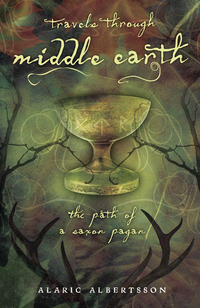
Book Review - Travels Through Middle Earth: the Path of a Saxon Pagan, by Alaric Albertsson

Travels Through Middle Earth: The Path of a Saxon Pagan is a lovely introduction to Saxon Neo-Paganism. Many different aspects of the path are covered, from the Deities and the Spirits all the way to making your own mead! I did read the other recommended books for an Anglo-Saxon hearth culture (Brian Branston's Lost Gods of England and The Real Middle Earth by Brian Bates) but was left unfulfilled - Branston's work was very academic and interesting, but lacked spiritual recommendations; and Bates's book was a bit too loose with history for my tastes. Then I read Travels Through Middle Earth, and it was exactly the kind of book on Anglo-Saxon Paganism that I had been looking for; a good mix of scholarship and the personal experience of a man who has been walking this path for many years.

Travels Through Middle Earth is an introduction to Anglo-Saxon Paganism, and because of that it contains a lot of the usual 101 information - basic overviews of deities and holidays, many of which you can find in other Pagan introduction books. But where this book stands out is Alaric's careful attention to the mindset and world-view of the Anglo-Saxons. I particularly resonated with his point about language and culture; they are inextricably intertwined in the common phrases we use every day, without thinking. And of course, a people's religion is intimately bound up with their culture. This makes the English-speaking world particularly suited to the worldview of the Anglo-Saxons (though of course not limited to it - I myself also honor a Celtic hearth culture, and I wasn't raised speaking a Gaelic language).

Alaric also, while introducing the usual 101 holidays of the Wheel of the Year, goes deeper into their older meanings; and even talks about some interesting holidays that are much less well known in the general Pagan community, such as Mother's Night, a celebration of female ancestral spirits. He also gives many good ideas for celebrating these occasions, while staying true to the history and allowing for the fact that most of these customs are much more recent than our Pagan ancestors, but still applicable.

I have used some of the ideas in this book already in my own practice, setting up a wéofod (shrine) for Thunor and Frige. I appreciate Alaric's emphasis on consistent practice, and the book has inspired me to be more regular in my interactions with the Deities and Spirits. I would absolutely recommend this book to anyone interested in Anglo-Saxon, or any sort of Germanic Paganism; I feel Travels Through Middle Earth is a fantastic resource to those who may just be starting out, and also contains some wonderful gems for those who have been walking the path for awhile now.

Saturday, August 10, 2013

High Holy Day Essay: Lughnasadh

I began my year of High Day celebrations on Lughnasadh, celebrating with a group called Pagans of Nebraska.  The ritual was typically Wiccan, beginning with a sage smudge to purify those entering the circle.  Once everyone had entered and formed the circle, four people standing at the quarters called the four elements: Air, Fire, Water and Earth.  Then a man and a woman standing in the center of the circle called on the God and Goddess respectively, and thanked Them for the gifts of the harvest.  After the leaders had finished, they went around the circle distributing water and cinnamon bread to the participants.  Then the God and Goddess were thanked again and bid farewell, and the elements were similarly thanked.  The circle was closed and the participants free to socialize.
This was my first foray into public ritual, and honestly I didn't much enjoy it.  There seemed to be very little energy; possibly due to the poor reading of many of the invocations, or the seemingly disinterested and cellphone-glancing participants.  The ritual leader at one point had to stop and turn off his cell when it rang in the midst of the ritual.  The setting also left much to be desired; a little green patch of grass between two parking lots, a rather busy road, and a brick building.  All in all, I was rather disappointed in the experience.

Wednesday, August 7, 2013

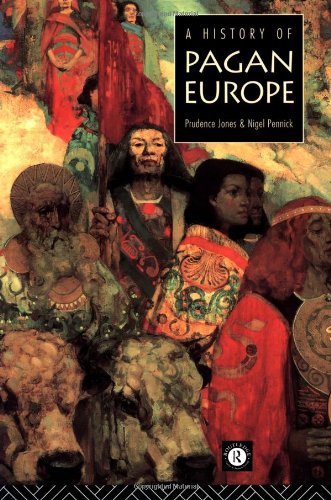
Book Review : A History of Pagan Europe, by Prudence Jones and Nigel Pennick

A History of Pagan Europe is an all too brief but tantalizing overview of the evolution of Pagan religions in Europe, from Greek and Roman to Celtic and Slavic cultures.  Each culture is covered from its earliest archaeological and recorded history, until the arrival of Christianity and the conversion of the people.  In covering this incredibly diverse group of peoples, it is impossible to go into much detail, but the overview gives a fascinating picture of the many differences and also many similarities between the disparate cultures of historical Europe.
             This book is particularly significant because of the invaluable information that can be gained by looking at these cultures in parallel.  By virtue of being adjacent and closely related to one another, each culture has influenced and affected others around it, and before and after it in history; and seeing these cultures all in one place helps to compare and contrast them in a way that is more informative then studying the cultures in isolation.  As a Pan-Indo-European organization, this book is particularly well suited to ADF and its members; we can all gain valuable insight into the practice of our ancestors and also of our fellow ADF members.
            This is the book that helped me to choose my hearth cultures.  In learning about the Paganism of the British Isles, and the many different traditions and cultures that have dwelt there over the years, I was drawn in and truly inspired.  My maternal grandfather is of English stock, and my father's family has maintained strong cultural ties to Ireland; and I found it fascinating to read of the history of these peoples.  I haven't really studied history before, and so A History of Pagan Europe, especially the chapter on the British Isles, opened up my mind and made clear so many things that I'd only vaguely understood about my distant ancestors before.  This book inspired a few conversations with my grandfather about his ancestors living in England and coming over to America; which helped me form a closer connection with my ancestors then I had had before.  I'm now looking more deeply into both Celtic and Anglo-Saxon histories and cultures, and making offerings to some of their deities, just as my ancestors would have done.
            I really enjoyed this book, and would absolutely recommend it to those who were new to ADF or uninformed about history, like I was before reading it.  It did seem to be rather simplistic, as it certainly had to be in covering such a broad subject, so I might not recommend it to someone who already had a good amount of knowledge on the subject.  I also did notice some biases when reading the text, particularly an anti-Christian bias.  Perhaps this is a reaction to the anti-Pagan bias of much of the source material, but nonetheless it was bothersome for an academic text.  Also, I found that one of the stated purposes of the book - to show that Pagan culture and religion survived to this day in some form - didn't really pan out as the authors seemed to have intended.  I enjoyed the overview of history, but I didn't feel that nearly enough evidence was presented to support that conclusion. 


            Overall, I loved the book and found it very helpful to me, both in my general knowledge of history and in inspiring my personal hearth culture search.  I think it's a great addition to the Dedicant Path reading list, and would encourage most of my fellow Dedicants to take the time to read it.

Monday, October 1, 2012

High Holy Day Essay - Mabon

Mabon is done and past, and my oldest daughter and I had a lovely ritual to celebrate.  Now, this essay is for my ADF Dedicant's Path requirements, and it's recommended that you keep it around 100 words; so I'll have to try not to be too wordy.

On Monday, September 24th, I began setting up for what I thought would be a solitary Autumnal Equinox ritual in the Proto Indo-European hearth culture; but my oldest daughter (age 4) decided to join me as well!  We followed the ADF Core Order of Ritual, ringing a bell to initiate the rite, then taking nine deep and cleansing breaths to purify and center ourselves.  We offered oats and a cherry tomato from the garden to the Earth Mother, and stated that our purpose was a celebration of our wonderful harvest.  We offered to the Fire, Well, and Tree, opened the Gates, and invited the Kindred while giving them offerings of incense and libations of water.  We did not invite any Deities of the Occasion, as my path is centered around the Earth Mother and this seemed very much one of Her holidays.  We offered more offerings to Her, and took the Omen with Tarot cards: first was the Nine of Swords, and so we went back and offered more incense to each of the Kindreds.  The second card pulled was the Sun, so we moved on to calling the blessings.  We called the blessings into a chalice of water and each drank deep.  We then thanked the Kindreds and closed the Gates, and finally thanked the Earth Mother and closed the rite.

It was a very nice ritual, though peppered with questions from my daughter since she's never attended a formal ADF-style ritual.  We both felt it was a very sacred time, and felt the Earth's energy as we went outside to pour out the libations and other offerings in the garden.  I did feel a bit strange working out the 'Deities of the Occasion' portion; as I said, the Earth Mother is sort of my patron deity, and so I choose to honor Her during the agricultural festivals.  It's hard to capture the beauty and sacredness of such a ritual with  a word limit and need to describe in detail, but it was a very beautiful occasion.