Showing posts with label Winternights. Show all posts

Wednesday, October 8, 2014

Blōtmōnath, Winter Nights, Dísablót, Samhain - All the Holidays!

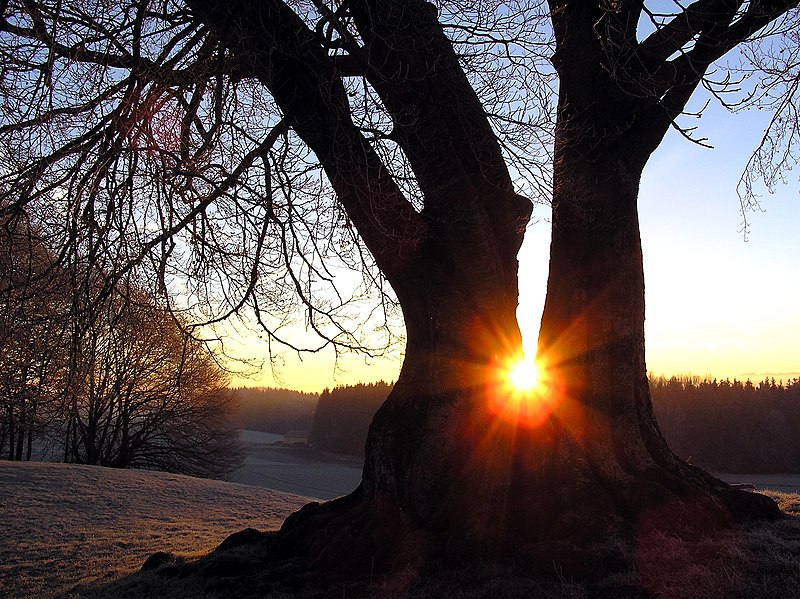
by Boschfoto on Wikicommons
Creative Commons License
Sometimes, being a Heathen with a leaning towards the historical can get a little confusing.  Depending on exactly what Germanic culture you're working within, this time of year is good to sacrifice cattle to the gods (Anglo-Saxon Blōtmōnath), offer to the Dísir (Scandinavian Dísablót), or possibly even to honor Odhinn as may have been done during the Icelandic Winter Nights.  For those who follow a more pan-Germanic approach, or draw inspiration from more than one tribe or geographical area, this is a lot to sift through.  For a great discussion of Winter Nights, head over to tumblr blog The Frozen Oak.

I personally tend towards the Anglo-Saxon direction, and so I save honoring the Dísir for Mōdraniht in December.  That leaves Blōtmōnath, the month of sacrifices when cattle would be dedicated to the gods.  According to Swain Wodening's reconstructed Anglo-Saxon calendar,  Blōtmōnath starts on November 3rd this year.  There's a lot of talk in Neo-Pagan circles about Samhain being the 'meat harvest' and I think this is one of the inspirations of that idea.  This time of year, our ancestors who had to carefully ration food to make it through the winter would figure up just how much feed they had, and how long that would last their current herd of cattle.  Usually, it wouldn't go quite far enough - and then the cattle would be ritually slaughtered, and the meat feasted upon and saved for the winter.

Now, modern-day Heathens, especially those living in suburban or urban areas, are not generally going to be able to ritually slaughter their own animals.  Instead, I choose to observe this time of year as one of awareness and remembrance for the gifts given to me: both by the animals who gave their lives that I could eat, and by the gods who create and sustain the lives of all things on this earth.  In keeping with that idea, not only do I like to have one large family feast featuring a roast or some other delicious meat dish, but I find it helpful to remember to address a prayer to the spirit of the animal, and the gods that went into its growth, each time I cook or eat something using meat.  This is one I wrote to use when honoring the cow from which our roast will come this year.

Nerthus, Sunna, Thor, and Frey:
For the black earth,
for the shining sun,
for the pouring rain,
for the sweet grass,
I thank you.

Strong cow who roamed the black earth,
lay in the shining sun,
drank the pouring rain,
grazed on the sweet grass,
for your gift of life,
I thank you.

Friday, November 15, 2013

W is for Winternights

In the waning days of Autumn, those of a Celtic or a more generic Pagan persuasion will often celebrate Samhain near the 31st of October.  Many people following a Northern European Pagan path will also celebrate many of these same themes near this same time - many Heathens call this holiday Winternights.

Historically, Germanic peoples thought of the year in terms of two seasons rather than our modern four (much like their neighbors, the Celts).  These seasons were summer and winter, and were roughly divided between long-days and short-days.  Therefore, one of the most important days of all was the beginning of winter, also known as Winter Day.  The Ynglinga Saga, written by Icelander Snorri Sturluson around 1225 (wikipedia is helpful for remembering specifics), mentions three sacrifices, including this one: "On winter day there should be blood-sacrifice for a good year," (Ynglinga Saga, chapter 8).  Modern Germanic Pagans such as the Asatru have adopted this holiday, though in the Heathen community it becomes more of a harvest and ancestor celebration; actual blood sacrifice being relatively rare these days (Asatru holidays).  The Catholic holiday of St. Martin's Day is thought to be a remnant of this old celebration (Albertsson, Travels Through Middle Earth).  For many modern Heathens, the celebration is held in early or mid-November; for others, it is held in mid-October - the variance of seasons across the Germanic lands makes pinning down a specific date very difficult.

 The Anglo-Saxons, a Germanic people that made England their home sometime in the fifth century, are thought to have held their celebrations near the Full Moon in the month (look here for more awesome AS calendar info), therefor I have taken to celebrating Winternights near the Full Moon of Blótmónað (roughly corresponding to our month of November).  So on Sunday night, my children and I will be cooking a wonderful feast, pouring out some ale to the deities, ancestors, and land wights, and talking about the change in season that has taken over the land.  Winter nights are here.

Just as a note: my Germanic path is rather loose Anglo-Saxon Heathenism, and I am not as familiar with the Old Norse sources as some Asatru or continental German reconstructionists.  So if I have anything incorrect or in a misconstrued context, please let me know in the comments - I'm always open to correction!