Showing posts with label nature spirits. Show all posts

Sunday, April 19, 2015

Nature Spirits, Nerthus, and Celebrating Earth Day

photo by David Luther Thomas
creative commons license
What does Earth Day mean to you as a Pagan?  For me, Earth Day (and its constant Nebraskan companion, Arbor Day) is a secular holiday that nonetheless holds a great deal of religious meaning.  I hate to say things like "the nature spirits are the most important part of my practice" because of course my ancestors and the deities are also incredibly important.  But the land wights are certainly more present in my day-to-day life.  Just looking out my windows, walking my daughter to school, or even driving down the street on my way to work, I encounter hundreds of them, and there's no ignoring it.  People who would never think to discuss their God(s) or ancestors will comment often on the weather, the flowers, etc.  We are always thinking about our fellow earth-dwellers, all the time.

This is a ritual I wrote to celebrate the Germanic Goddess of the Earth, Nerthus.  I have written about Her before, a relatively 'dark' mother Goddess who allegedly received human sacrifice after parading about the land bestowing Her bounty.  Of course I am Her devotee and fairly biased, but I believe that as the earth becomes more and more damaged by human actions, more people will begin to see the darker side of the land.  I find it powerful and motivating to stand in awe of Her, not motivated by love or trust; but sometimes by genuine fear.  In my mind, it is She who sustains all life, and if She so chose could end that sustenance at any time.  She is truly awe-worthy.  It is my hope that this Earth Day ritual captures some of that wonder.

There are a few rituals for Nerthus out there, most centering on the journey of Her wagon bringing peace and feasting to every village She visited.  Since this is an Earth Day ritual, however, I find it more appropriate to focus on the things I can do for Nerthus, rather than parading Her about and asking Her blessings on the people who hold partial responsibility for the damage done to the land.

Set up a small shrine out of doors; in your backyard, a local park, or wherever you can be relatively assured of solitude.  If absolutely necessary this can be done indoors as well, be sure to face a window or have some reminder of your local land available.

Needed items:
Representation of Nerthus - something as simple as a bowl of water to represent Her lake will work
Found objects from the land to decorate shrine - my permanent shrine has dried leaves and twigs from each tree in my yard, as well as feathers and other found things; this is a good place to start if you're not sure what to use
Offerings for Nerthus and land wights - I often use birdseed or dried corn, but anything that does not
actively harm the land would probably be acceptable

Plans for an Earth Day activity to help the Earth

Approach the shrine, calling out:
"I call to all the spirits of this land:
the dancing wights of stream and creek,
the swaying spirits of the trees,
the singing grasses played by the wind.
I call to the stones, solid and stoic,
to the dark and fertile earth beneath my feet,
to the flowers that fly open and fade away.
I call to the furred spirits, waiting for twilight,
the feathered wights that serenade the dawn,
the tiny crawling beings, spirits of scales and slick skin,
to all the spirits of this land.
Be welcome and pray welcome me.
Accept this offering!"
Scatter or place offerings for the wights before the shrine.

Bending or sitting as you are able, place your hands upon the earth.
"Hail Nerthus, veiled Goddess,
dark and silent in your sacred grove,
hiding your eyes from the hurt of the Earth.
Vibrant with life, shining with death,
keeper of the never-ending circles all things dwell within,
green that grows from dark decay.
I see the broken land, I work to right it;
join your power to mine, and bring life from this death,
lend your aid to me and mine as we heal the hurts."
Scatter or place offerings to Nerthus before the shrine.

This is a great time to actually do some kind of service to the Earth - perhaps going around picking up trash, planting a tree, or any other activity you may have planned for Earth Day.  If you are not able to do it right away, simply tell the spirits what you plan to do in service to the cause of helping the land.

"Hail to Nerthus, sweet mother of earth,
and all the wights that dwell here in this place.
I thank you for your gifts of sustenance, gifts of beauty.
Remember me as I will remember you.
Hail and farewell!"

The found objects should be left to continue to give beauty to this piece of land, unless you feel one is meant to come home with you.


Sunday, April 5, 2015

River Goddesses, Water of the Earth, and Local Cultus

Platte River by Jetuusp, Creative Commons License
This week's topic for the Pagan Experience is Water.  I'm sure I'll get to read quite a few posts on Monday about the element of Water in a Wiccan or Neo-Wiccan context, and I'll enjoy them - but I've come to the point where it's not really relevant to my practice at all.  Rather than the overarching idea of Water as a being or spirit that encompasses all that is wet in the world, I have instead begun honoring many local spirits.  They are certainly related to water, but that is not all that they are.

The first is my river Goddess, the lady of the Platte River that spreads brown and wide across the prairie.  She extends Her tendrils into hundreds, maybe thousands of tributaries across the land where I live, and as a child I grew up near and found refuge in several of them.  She has been with me nearly all the days of my life.  I understand Her as the life-bringer to our dry land; farmers use Her water for irrigation for their crops, so much so that Her volume is much lower today than it was before mass European immigration.  In this way, Her giving of life is a very real and visceral thing - it is not an endless resource to bestow on all, but instead as we use this precious water, it directly takes away from Her vitality and the habitat of all who dwell in Her ecosystem.  Part of my work in honoring Her is educating the future generations that I work with about good water management practices, and how the river contributes to the entire ecosystem that we must live within.  I also make it a point to visit one of Her tributaries (it is just across the street from me) and leave an offering once a week - something biodegradable, that will hopefully aid the river and its life.

The second great spirit of water that I recognize is the Ogallala Aquifer.  This is a huge lake that spans many of the midwestern states, located far underground.  I don't have any direct experience with this water (other than drinking only well-water for several years of my life, which of course came directly from that source), but it is a place and a spirit that I frequently visit in my meditations.  From my experiences there, this is a deeply ancient spirit, dark and cold and clear where the Platte is warm and brown with sunshine.  Being deep under the earth, it is a place where nothing grows, where nothing lives - an old, old spirit of water surrounded by even older rocks for many years.  Its personality seems to be equally as different from my river Goddess.  I haven't ever gotten a feeling of gender from this spirit.  It seems to be outside of those kinds of concerns of things that live and breathe on the surface of the earth, where life comes and is gone in the blink of an eye.  It can be deeply hostile - the aquifer is also being drained at an astounding rate by farmers always seeking more irrigation, and to me it feels as if it resents this strongly.  I have spent many years building this relationship, and yet I am still very much a stranger in a strange land when I try to approach the aquifer on its own turf.

These are my primary spiritual interactions with the idea of water, these two spirits that hold the vast majority of the water in my region, who have always sustained me with water to drink, who water and give life to much of what I eat.  They are not the element of Water, they are not associated with emotions or changeability in particular - they are distinct spirits, beautiful and strange deities, and they are directly responsible for my family's ability to live here in this arid land.  I feel as if I cannot honor them enough for these gifts.

Wednesday, February 25, 2015

Konudagur - a Celebration of Spring

Spring Maiden
by Frank Dicksee
As explained by tumblr user Thorraborinn here, the first day of the Icelandic month of Góa is a day celebrating women and wives.  Góa is alternately either the daughter or the wife of the frost-king Thorri, who disappears at midwinter, and a blót is given to bring her back.  I have written a small ritual to honor this tradition of welcoming back the spring.

Bring a small meal and drink to the threshold of your home.  Call out and address Góa, saying:

Hail the daughter of the Frost King,
who hides in the winter
and returns in the spring-long day.
Your eyes are thawing pools,
your hair like shining sun,
your limbs long and empty branches
soon to sprout new leaves.
I come bearing gifts for the lady of spring,
food to nourish new growth,
to bring forth green sprouts,
to warm the thawing earth.

Open the door, go outside, and pour out the drink on the earth, saying:

Be welcome, dear Góa,
and go into the house;
don’t be outside in the wind
in the spring-long day.
(translation by Thorraborinn)

Come back inside, bringing the plate of food to the table, and set it out as you would for any other guest.  Dine with Her and leave the offerings outside afterwards, if possible.

Sunday, February 8, 2015

Week 6: The Earth is Full of Life


Ah, the earth.  Is there anything more ubiquitous in modern Paganism?  Many, if not most, Pagans will use terms like 'earth-centered' or 'nature honoring' to describe their religion or practice; and those who do not usually make a point of letting people know since it's such a common assumption.  I also identify as having an earth-centered spiritual path; but this means something a bit different to me than many Pagans.

Rather than a pantheistic view of the earth as mother-of-all, all-encompassing Goddess, my idea of honoring the earth is a recognition of the incredibly varied tapestry of spirits that dwell on and within it.  The Goddess I am dedicated to, Nerthus, is typically described as an earth mother; but this is not the best descriptor for Her.  She is not found in all places with dirt, or indoors, without being called or welcomed there.  I also honor other deities with ties to the earth or planting and cultivation: Freyr, Gerda, Gefjon, and others.

In addition to the deities, there is a whole world of spirits to welcome and build relationships with.  The altar I've built in my garden specifically honors a tree Goddess, while also acting as a shrine for many of the land wights - earthworms, squirrels, tree spirits, the local river Goddess, etc.  These relationships make up a huge part of my personal spiritual practice, forming the backbone of how I relate to the world around me.  Learning to identify each individual voice in the chorus of wights that make up the land around me was a huge challenge as I moved from a pantheistic worldview to a more animistic one, but it was a challenge that broadened my spiritual horizons hugely.

As I prepare to plant my garden this spring, I also continue to build relationship with the many wights that dwell in and pass through this land.  It's a blend of the concept of getting out and experiencing the land and spiritual appreciation of the many beings that share this home with me.  The earth is alive with many spirits, many stories, many personalities that are all worthy of attention.

Monday, January 26, 2015

Week 4: Álfablót Anytime

photo by Aymi and Laurel
creative commons license
One of my favorite things about Heathenry - and possibly what initially drew me to the path - is the emphasis on honoring ancestors and land wights as much, or more than, the deities.  Don't get me wrong, I like the Gods, but being able to go out and sit in the garden and connect with the land wight there is so much more concrete and immediate than reaching out for a deity that travels this world and the otherworlds.

Álfar is an old Scandinavian term that is a subject of some controversy in Heathen circles - whether it refers to the spirit of a male ancestor, a land spirit, or some mix of the two is under some discussion.  The old holiday  Álfablót was a time of sacrifice to these beings, held individually in the autumn at each farmstead.  Since there aren't actually any grave mounds on my property, I chose this time to do a special sacrifice to the land wights.  But one day a year is not nearly enough, in my opinion.  Honoring the land spirits had to become a major practice for me, simply because they are such an ever-present part of my life.

And so every Friday, I go out to the altar in my garden, bringing a bit of food or drink for the land wights.  It doesn't have to be an elaborate blót - in fact, it rarely is - all that's needed is to call the spirit's attention to the offering.  This consistency is important towards building a relationship with a land wight; it establishes a mutual hospitality where gifts are given on both sides - and a land wight's gifts are not to be underestimated.

Spirits of the earth and soil,
of things green and growing,
expanding and entwining,
rooted deep in the dark,
hear me now.
Spirits of the lithe and limber,
of wandering wings and fleet of foot,
sprinting and spry,
digging and devouring,
hear me now.

Hail to the land and the wights of the land.
A gift is given, and another is given in turn.
May we meet again on the dark earth.

Wednesday, October 8, 2014

Blōtmōnath, Winter Nights, Dísablót, Samhain - All the Holidays!

by Boschfoto on Wikicommons
Creative Commons License
Sometimes, being a Heathen with a leaning towards the historical can get a little confusing.  Depending on exactly what Germanic culture you're working within, this time of year is good to sacrifice cattle to the gods (Anglo-Saxon Blōtmōnath), offer to the Dísir (Scandinavian Dísablót), or possibly even to honor Odhinn as may have been done during the Icelandic Winter Nights.  For those who follow a more pan-Germanic approach, or draw inspiration from more than one tribe or geographical area, this is a lot to sift through.  For a great discussion of Winter Nights, head over to tumblr blog The Frozen Oak.

I personally tend towards the Anglo-Saxon direction, and so I save honoring the Dísir for Mōdraniht in December.  That leaves Blōtmōnath, the month of sacrifices when cattle would be dedicated to the gods.  According to Swain Wodening's reconstructed Anglo-Saxon calendar,  Blōtmōnath starts on November 3rd this year.  There's a lot of talk in Neo-Pagan circles about Samhain being the 'meat harvest' and I think this is one of the inspirations of that idea.  This time of year, our ancestors who had to carefully ration food to make it through the winter would figure up just how much feed they had, and how long that would last their current herd of cattle.  Usually, it wouldn't go quite far enough - and then the cattle would be ritually slaughtered, and the meat feasted upon and saved for the winter.

Now, modern-day Heathens, especially those living in suburban or urban areas, are not generally going to be able to ritually slaughter their own animals.  Instead, I choose to observe this time of year as one of awareness and remembrance for the gifts given to me: both by the animals who gave their lives that I could eat, and by the gods who create and sustain the lives of all things on this earth.  In keeping with that idea, not only do I like to have one large family feast featuring a roast or some other delicious meat dish, but I find it helpful to remember to address a prayer to the spirit of the animal, and the gods that went into its growth, each time I cook or eat something using meat.  This is one I wrote to use when honoring the cow from which our roast will come this year.

Nerthus, Sunna, Thor, and Frey:
For the black earth,
for the shining sun,
for the pouring rain,
for the sweet grass,
I thank you.

Strong cow who roamed the black earth,
lay in the shining sun,
drank the pouring rain,
grazed on the sweet grass,
for your gift of life,
I thank you.

Saturday, September 27, 2014

Winterfinding Ritual


As the daylight begins to wane, cooler nights settle over the land and cause all sorts of changes in the world around us. Many ancient Germanic peoples held sacrifices or festivals to honor this time of the year and to give thanks for a good harvest - and when building a relationship with the land, it is always good to say thanks.

Swain Wodening’s reconstruction of the Anglo-Saxon calendar, unfortunately no longer available online, sets today as the start of the month Winterfylleð. According to the Venerable Bede this translates to ‘winter full moon’. Called Haustblót in Icelandic (autumn sacrifice) or Álfablót (elves’ sacrifice) in Scandinavian sources, the end of autumn was a good time to offer to the land and the spirits. Whether you’d like to try it today, on the full moon, or at a seasonally appropriate time for your locale, this is a simple but powerful ritual to acknowledge the gifts of the harvest and the coming of winter.

Things to gather: representation of Frey, locally harvested produce that can be made into a meal or left fresh, mead or other celebratory drink


Carry the representation of Frey around the space set out for the ritual, whether that be your home, yard, or other area, saying “Frey, who blessed the fields and gives bounty to humankind, we thank you and offer you gifts now in return for your kindness.”

Set the image of Frey before you, and walk the edge of the space again, noticing the changes that are coming over the land. Use your own words that resonate with your local land, or say “Trees that have begun blazing with color, squirrels that are hastily gathering nuts, cold earth ready and waiting to rest: you herald the coming of winter. Landvaettir, wights, alfar that surround this place, I thank you for your bounty, and offer you gifts now to see you through the coming cold.”

Come back to the center or your altar, and lift the cup of drink in a toast. After each hail, pour out some drink, drink some yourself, and offer a portion of the produce.
“Hail my ancestors who prepared well for the dark of winter! Watch over me in these days of coming cold. Feast and drink with me, in thanks for your protection!”
“Hail the alfar and wights of the land, fertile soil and growing food! Feast and drink with me, in thanks for your harvest!”
“Hail Frey, Lord of Alfheim, who blessed the fields to grow! Feast and drink with me, in thanks for your bounty!”


If you have some things in particular to be thankful for this season, you should also toast the gods or wights responsible and share with them as well. When you are finished, pour out the rest of the drink and leave the produce to be composted or where it will be found by wild things.

Monday, September 22, 2014

Pagan Pride Day and an ADF Equinox Ritual

Pagan Pride Day Altar
This past Saturday, the Pagan Pride Day I'd spent the better part of my summer and fall helping to plan for was finally in full-swing.  We had about 120 people stop by, a good number of vendors and workshops, and overall I considered it a great success.  But it was also incredibly draining for me.  This actually is a fairly rare phenomenon - usually I get energy from events, even ones that I put a lot of work into planning and executing.  But Sunday, the day after, I was just exhausted both physically and emotionally.  Leading two rituals, giving a workshop, and generally schmoozing all day just wore me out - not to mention being out in the sun for 11 hours.

Our closing ritual was an ADF one, led by Prairie Shadow Protogrove, honoring the spirits of the harvest as the beings of occasion.  I wrote this one awhile ago, actually sitting at the park location for some of my writing.  I think it's one of the best rituals I've ever written, actually; and it's one of the most participated in rituals we've ever held.  Everyone came up and gave praise offerings, all in a line - it was almost like watching communion at a church, except this was people who were giving to the gods.  While reading the welcoming phrases, I felt I was truly connecting with the spirits of that lovely place; a place I'd spent a few years living near, spirits I had grown up loving and honoring.  When I called to the spirits of the shoreline to aid in the opening of the Gates, I remembered being a little girl exploring the icy edges of that lake, falling through a weak spot and ending up soaked up to my knees.  When I called to the spirits of the treeline, I remembered climbing high up in the branches of the pines, hands sticky with sap, waving in the wind.  These spirits were my friends from long ago.  It was incredibly powerful.

I've always had a close connection with the natural world, ever since my Grandmother took me out walking and talking to trees as a little girl.  I know I've written about it here before.  I heard someone say at Midnight Flame, an ADF festival I attended recently, that in ADF there are many people who feel drawn largely towards one of the specific Kindred, and I think that I am one of those people.  I honor the Gods, I love my Ancestors, and make regular sacrifices to both - but there is something so immediate, so material about the oak in my backyard when compared to those beings.  I can touch it, feel it, understand what it wants.  The squirrels that run through my yard and feast on acorns chat with me, look at me, engage with me - just as I engage with them.  I have always loved them, because they have always been there.  The land wights are not an abstract concept that I learned about later in my life, but a presence that I grew up with, that I ran to for refuge when people felt too difficult.  This is not to say that those who are deity- or ancestor-centered are wrong for connecting more with those Kindred - it's just a difference that helps make up the diverse tapestry of ADF.


Monday, September 15, 2014

My Oath Rite

Nerthus by ErebusOdora
It's getting to be that time.  I've been working on my Dedicant Path documentation for ADF on and off for more than two years, and I'm finally nearing the finish line (still have to do a write-up on my meditation practice, but that's going to take some compressing).  I've spoken with Amber, the Grove Organizer for Prairie Shadow Protogrove, and we've scheduled my Oath Rite to take place during our Samhain ritual.  So here I am, desperately trying to write an oath that is simple, addresses all the points I feel are necessary, has the right gravitas, and yet doesn't drag our ritual out to twice its usual running length!  After more than a few drafts, I feel ready to present it for critique - please let me know your thoughts!


I stand here tonight that I may make an oath before the Kindred, my friends, and my Goddess. This oath is the result of more than two years of study and dedicated practice in the tradition of Ár nDraíocht Féin, and the culmination of more than ten years following a Goddess of the dark, still earth.

Today I Oath to my Ancestors, to my lineage that stretches back to the once dark and wild forests, my Disir who guide me wisely, to my great-grandparents and my Grandpa Lee.  Ancestors, accept this offering, and hear my oath.
Today I Oath to the Landvaettir, to the house spirit who dwells in my home, the tree spirits around us, the spirit of the wide prairie and the brown river Goddess that spreads across it.  Landvaettir, accept this offering, and hear my oath.
Today I Oath to my Gods, to Nerthus my patron, the dark Goddess of the fertile earth and the wild places, to Her children Freya and Frey the divine twins, to Thor who brings the rain.  Gods, accept this offering, and hear my oath.

I swear to seek the knowledge of the past, and bring what I find of value in my Ancestor's practice into this time.
I swear to cherish the Earth and the spirits of the earth, and do what I can to reduce and heal the damage caused by my people.
I swear to honor the Gods and Goddesses, to maintain the relationship of hospitality between us, and to continue in my commitment to the service of Nerthus.


These things I swear before the burning Fire that sends up sparks to the sky, the dark Well that flows in the deeps, the sacred Tree that bridges the worlds. These things I swear before my Ancestors, the landvaettir and wights, and my Deities. These things I swear before all those gathered here, on these beads that have long taken my prayers for the Kindred. As I swear, so be it!

Tuesday, September 9, 2014

The Squirrel as Gatekeeper

US Fish and Wildlife Service, Public Domain
I've been thinking a lot about Gatekeepers lately.  In ADF ritual, the Gatekeeper is invited both as a spirit that aids the opening of the Gates to our Ancestors and the Shining Ones, and often also as a guardian that protects the ritual space from more malicious spirits.  Trying to establish relationships with more nature spirits and nature-oriented deities of the various Germanic pantheons, I've been having some trouble finding a deity that is interested in the job on a long-term basis.  Freyja helps out on occasion, and for our Grove's Norse rites I usually call on Heimdall, but He's pretty clear that it's a community duty for Him, and I am Not His.

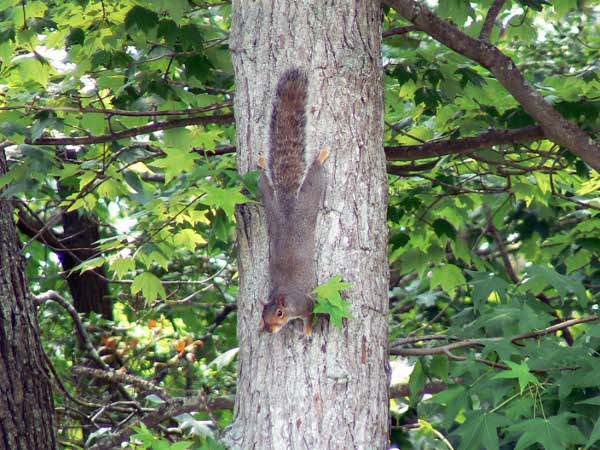
I just returned from Midnight Flame, a wonderful ADF festival (more on this in another entry!) held in Michigan.  What struck me most about that land in contrast to my own was two fold: first, the trees are so skinny!  And perhaps because of this, I don't recall seeing a single squirrel, of the typical type that is found practically wherever one steps in eastern Nebraska.  Upon coming home, I was struck by the ubiquitous nature of this animal; and also by the connection that I'd built to them over my life.  I talk to them, and often they will chitter at me as I sit on the back porch invading "their" space.  They literally play with my children, scurrying up and down our trees like they invented hide-and-seek.  I thought of Ratatosk, the legendary squirrel mentioned in both the Poetic and Prose Eddas, traveling between the roots and the boughs of the World Tree to speak to the creatures dwelling there.  I thought of our squirrels, who build nests high up in our trees, and bury their nuts near their roots.  Of all the nature spirits who spend their lives with us in this suburban city, the squirrels seem like the most natural and obvious example of a Gatekeeper.

I was thinking on all this throughout my first morning back home; and that afternoon my husband asked if I would mow the lawn this time around.  I like to look around when I'm mowing and practice some nature awareness with at least one of my senses, so I did some quick centering and headed out.  It was in my front yard, underneath the giant maple that watches over our house, that I found pieces of a squirrel nest scattered.  Laying below were two small, probably adolescent squirrels; their flesh mostly eaten but their fur and bones remaining.  Their skulls were crushed, presumably damaged in the fall.  I wanted to lay them to rest by burying them beneath the tree that was their home, and as I picked up the second squirrel, the end of its small, furry tail came off in my hands.  It was totally free of flesh, and dried as if it had been tanned.  I consider it a gift of the nature spirits, an acknowledgement of my desire to pursue a relationship with the squirrel spirit.  After burying the dead and making my offerings, I brought the tail inside to freeze, to remove any mites or other stray creatures; after which it will sit on my altar next to the Tree - a fitting memory, and the beginning of a new journey.

Friday, March 28, 2014

G is for Garden


Thank goodness for being able to schedule posts, because I've been pretty absent over the past couple of weeks.  Between illness in the family and the loss of someone I'd grown up with but hadn't seen for quite awhile, I haven't really been up to writing.  But here I am, getting some words out into web.

This week I'd like to write about gardens, and how gardening is my most satisfying expression of my Paganism.  My patron Goddess is Nerthus, whom Tacitus in his Germania called the Earth Mother of Suebi tribes.  Though She is a complicated deity, and has many influences and interests outside of green and growing things, it is the primary way I encounter and honor Her.  Not only is She very present in the act of gardening; but in replacing generic green grass with plants that give food and support to both humans and animals, I feel the affirmation and appreciation of the local land wights as well.  After caring for my garden for a few years, I have become very close to the spirit of the soil there.

The first step to a good garden is clearing and preparing the earth.  It is in this step that I feel closest to the primal Earth.  Coming to gardening without knowing anything about it, I assumed the soil before planting would be pretty boring, requiring only a few holes and seeds to bring it to life.  But the truth is that the soil is already alive!  Each spade turned over reveals beetles and earthworms, centipedes and pill bugs, living off of and giving life to the decayed matter that makes up a large part of a garden's earth.  Working compost into the soil gives even more life, adding fuel to the biological processes that are already taking place, providing nutrients to feed an already thriving, but tiny, ecosystem.  The soil itself has a life to it - the feel, the texture, the smell, is different in every location.  Here in Nebraska, my soil is rather dense and clay-like, difficult to break apart and plant in; after a lot of shoveling and a bit of compost, it becomes more like the black, rich dirt we instinctively know is right for planting.

The next step is putting in the seeds, and watching over them while they sprout and begin to grow.  This is perhaps one of the most exciting times in the garden - growth is fast, new leaves are added every day, and the hard work of the gardener is quickly on display.  It's also one of the most magical.  It seems almost impossible that such large plants, such vibrant life, could come from such tiny seeds.  As each plant grows, its own unique personality and uses can be seen.  Some are showy and bright, spreading wide and tall, with beautiful flowers.  Some are more inclined to grow close to the ground, with just small green leaves to show their presence.  Some guzzle down the water from the rains, and some seem to prefer a drier summer.  Getting to know the plants, their ways of growth and their preferred conditions, has been my biggest and most rewarding challenge as a gardener.


Here in Nebraska, for many fruit-bearing plants, after the planting and initial growth comes a long summer full of watering, weeding, and various garden-care tasks that can seem to stretch on forever with little result.  Growth has slowed and become less apparent (though those plants are certainly still growing!) and pests move in that can be difficult to drive off.  Flowers come and go, and it's not until August or even September that tomatoes, peppers, and others are big and ripe enough to be harvested.  I always tell my children this is the season of patience - if we continue to put in the work and care for what we've planted, we will reap the rewards in the fall; but if we forget or put it off as sometimes happens, the little lives we are responsible for can suffer greatly.  During this time, I see the plants almost like another part of the family.  I am responsible for their care, for their well-being.

And then in the fall, we are richly rewarded with a lovely harvest.  There's nothing like biting into a tomato gifted from a plant that has received offerings of water and care through many months, warmed by the sun and fed by the cool earth.  After those glorious few weeks, the frost sets in, and it's time to pull up the annuals and trim the perennials, and place them on the compost pile to give life to next year's garden.  This process, repeated year after year, has attuned me not only to the local seasonal cycle but to the tiny ecosystem that fills the world of my backyard.  This intimate knowledge, this camaraderie built with giving and receiving over the years, feels more Pagan to me than anything else I do in my practice.

Monday, February 3, 2014

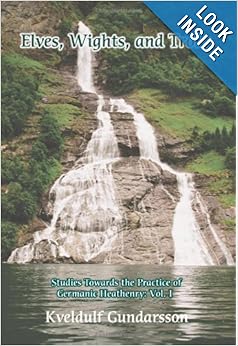
Book Review: Elves, Wights, and Trolls by Kveldulf Gundarsson

My personal spiritual practice has always been largely focused on local land spirits; and so when I began to explore Heathenry more deeply I was very interested in learning about nature spirits from a Germanic point of view.  Elves, Wights, and Trolls by Kveldulf Gundarsson is pretty cheap to pick up used, and is such a fantastic resource that, in retrospect, I would have paid 3 times the price.

As the title says, this book is a study of all kinds of spirits the ancient Germanic peoples would have classified as 'other' - or not Gods.  Gundarsson does a good job describing the fluidity that these categories had to the ancients that we, as modern peoples who like putting things in their little distinct boxes, don't often grasp right away.  Honestly, on picking up this book, I was hoping to receive some clarification on what exactly a Jötunn was, compared to a land wight, compared to the alfar, compared to a troll or any number of other words the Germanic peoples had for these beings.  There was not a lot of clarification, just an acknowledgement that the evidence seems to say that these categories were not at all distinct; and certainly none of them were definitively classified as 'good' or 'evil' to the Germanic peoples.  Gundarsson does give some ideas as to what the distinctions may have meant in the past, but this UPG is pretty clearly marked out.

There is a separate chapter for each type of being, mostly devoted to folk stories of the spirits, and appearances and actions in the lore that we do have.  Through these remnants, Gundarsson attempts to re-imagine what these beings may have been to the ancient Germanic peoples; and gives helpful suggestions on offerings, which spirits to propitiate with them, and which spirits to avoid.  My personal favorite was the portion on house spirits, which not only contains several folk tales, but many cautionary mentions that folk practice seems to suggest are prudent.  As someone who grew up in a home that still held some lingering beliefs about house spirits, it was very enlightening to see where some of these ideas and practices may have originated.

There are very interesting portions on the Jötnar, and Gundarsson is not hostile towards them in his writing.  He even suggests that Thor fought the Jötnar, especially females, in the lore because the main foe of the ancient Germanic peoples was the harsh environment they lived in - but now that humanity has shown itself capable of permanently damaging the environment, perhaps the scales ought to tip from malice towards concern for the Jötnar.

The one concern I had was Gundarsson's tendency to ascribe equal importance to all his sources - whether archaeology, ancient lore, or very recently recorded folk tales.  While interesting, there is certainly a vast amount of difference between the archaeology's conclusions about the culture of Germanic peoples around 0 BC and the culture of Northern Europe in the 19th century when many folk tales were recorded.  Gundarsson does make a great effort to reference his information, which diminishes the problem greatly, but I feel it still effects his conclusions in a way that I personally don't prefer.

All in all, it is a fantastic book, and belongs on the bookshelf of any land-honoring Heathen.  I also think it would be helpful to any Pagan looking to honor land spirits, even if they are not specifically interested in Germanic culture, because of its wealth of information - seriously, this book is just packed with info.  I've read quite a few books on the fae of Celtic lore, and none I've found have been so helpful or informative as Gundarsson's is on the land spirits of Germanic lore.

Friday, January 17, 2014

B is for Birch

Photo by Cassi Saari.  Creative Commons license.
I have always had a closeness with birch trees.  The stark white bark of many varieties is strikingly beautiful, especially in the midwest where colors rarely vary from green or brown.  I first began to take special note of them when reading JRR Tolkien's The Silmarillion, specifically his myth of the Two Trees, one gold and one silver.  From the silver tree descended the White Tree of Gondor, and my youthful mind conjectured all birch trees must have come from that noble line.  Later, as I began learning more Germanic and Celtic lore, I noticed the birch tree figured in cultures' lettering systems.

Proto-Germanic Rune Berkanan
The birch is repeatedly associated with birth and new beginnings in both Germanic and Celtic cultures, and this is intrinsically tied to the mundane nature of the tree.  They are known as a pioneer species: when a forest fire or other natural disaster happens, the birch tree is one of the first trees to colonize the bare land.  In grazing pastures or open areas, birch seedlings are those cleared most often.  We can see this reflected in the meaning of both the Proto-Germanic rune Berkanan, as well as the Ogham letter Beith.  The pure white bark of the birch, combined with its association with fire-cleared land, explain why it is believed by many to be a purifying tree.  Its rapid colonization of bare land tells us why this tree is associated with birth and new life.  As above, so below is an ancient concept: what a thing does in the mundane world is a good representation of its function on the spiritual or magical plane.

In Lebor Ogaim, also known as the Ogham Tract, is at least as old as 1390; and it tells an account of Ogma's invention of the Ogham alphabet.  Seven Beiths inscribed on a birch tree was the very first message ever recorded using the Ogham script.

The symbolism of purity and new beginnings as embodied in the birch tree has not stayed solely in the realm of Celtic or Germanic Pagans, but has become a symbol recognized by many under the Pagan umbrella.  It has also become strongly associated with mother-type Goddesses, but there is no evidence to suggest that Goddesses such as Brigid or Frige were ever explicitly linked with the birch tree.  The theory that Berkanan's shape is a pictogram for a pair of breasts is probably also nothing but conjecture, considering that its shape was likely adopted from a Latin letter which as far as we know had no relation either to the birch tree or the concept of motherhood.  Nonetheless, it has become so ingrained in Neo-Pagan culture that it is worth acknowledging that this symbolism is helpful to many people.

As with all nature spirits, my opinion is that the best way to get a feel for its energies or to bring its spirit into your life is to go out and get to know one!  Birch trees are often used as an ornamental tree here in the midwest, and so are easily found in public parks or arboretums; I advise finding a particular one that seems most open to interaction.  I find offerings of water are often appreciated by tree spirits, but you may want to bring only a poem or song depending on where the tree is located.  If nothing else, they are fascinating trees to study, and a Pagan can rarely go wrong spending some time beneath trees!

Sunday, December 8, 2013

Three Kindred Essay

The Three Kindred are, in my opinion, the most essential piece of ADF Druidry.  Honoring ancestors, spirits of place, and gods and goddesses was an essential part of the Paganism of the Indo-Europeans.  Though perhaps the ancient Indo-Europeans did not fit the spirits they encountered into boxes as neat as we do today, they are nonetheless helpful categories to aid our understanding of IE spirituality.

The Gods and Goddesses are considered the most powerful kind of spirits by most Indo-European cultures.  Called the Déiwōs, which translates to "Shining Ones" in the reconstructed Proto-Indo-European language (Ár nDraíocht Féin [ADF], 2009, p. 69), the Gods and Goddesses are humanity's allies, and sometimes, friends.  Their power is certainly much greater than our own; many Gods are described as having gifts of foresight or magic, and others are said to possess tremendous strength unthinkable to a human.  They are also immortal, a class of being that does not have a permanent physical form or experience death in the way that living things with bodies do.  Nonetheless, the Gods have chosen to take an interest in humanity, as evidenced by their ongoing interaction with both our Indo-European ancestors and the Pagan community at large today. 

At the center of an ADF Druid's relationship to the Gods is the Proto-Indo-European concept of *ghosti, which means "someone with whom one has reciprocal duties of hospitality" (ADF, 2009, p. 21).  The idea is that gifts to the Gods and Goddesses of Indo-European pantheons begin a relationship of reciprocity, in which the Gods and Goddesses are then encouraged by the concept of hospitality to bestow gifts and blessings on their worshippers.  The nature of this relationship is not exactly tit-for-tat; but instead each member gives according to his or her means.  This means that while a Druid may pour out a shot of mid-range alcohol with a prayer to a God or Goddess, that being will reciprocate in a way worth much more than ten minutes and fifteen dollars; because the resources available to that God or Goddess is much greater than the Druid's.

It is also the duty of the Shining Ones to maintain the cosmic order of things.  Most Gods and Goddesses have specific parts of human culture or the world at large that they have jurisdiction over or are associated with.  For instance, the Norse God Tyr is often looked to in matters of justice, or the Gaulish God Ogmios associated with eloquence and public speaking.  In many pantheons and Indo-European myths, the Gods and Goddesses are shown fighting or at war with a more primal kind of spirit, more chaotic and much less favoring towards humanity; in ADF these spirits are usually identified as the Outsiders.  The Shining Ones fight or distance themselves from these spirits to maintain the balance of the cosmos.

The Spirits of Nature are perhaps the most diverse, and therefore difficult to classify, of the Kindred.  There are spirits of land and place, house spirits, plant and animal spirits, and in some IE cultures, even specific rocks are said to have spirits.   These spirits also seem the most ambivalent towards humanity - unlike the Ancestors or Gods, many of these spirits are hostile towards people, and will not seek a relationship (ADF, 2009, p. 42).  On the other hand, since these spirits are not as powerful as the Gods, for some it is easier to build a close, friendly relationship with them.  Some Germanic peoples, for example, believed that plants had spirits and were useful in healing because of this (Gundarsson, 2007, p. 28).

It is my personal opinion that the hostility of many nature spirits towards humanity may have been overstated or caused by a Christianized population.  It is often mentioned in Irish folklore, for example, that offerings were frequently left out for the Fair Folk - and any offerings missed or stopped were met with anger (Evans-Wentz, 2003, p. 291).  It seems to likely to me that tales of angry or hostile Nature spirits may largely be a result of offerings, once frequently given by the local people, stopped and the spirits themselves renounced in the name of the new god.  In any case, I have found my local nature and house spirits to be receptive to offerings; and though I always extend any overtures with caution, I have yet to experience any negative consequences from attempting friendship with these spirits.

Nature Spirits are the least mobile of the Kindred, though there are a few Icelandic tales of house wights (troublesome or friendly) following a family to their new residence (Gundarsson, 2007).  Spirits of my local park, for example, are best honored in their place of residence; it is unlikely that one would be able to reach them in a far-away city.  However, I have also found that in many cases, land spirits know and interact with one another; so that if for some reason I wanted to relay a message or feeling to a spirit in my local park, I could address the spirit of the Platte River basin and ask that spirit to pass the message along (though whether it would choose to or not is debatable). 

Just as there are many pantheons of Gods and Goddesses and many kinds of Nature Spirits, there are also many kinds of Ancestors.  Though all humans who have passed from this life and their mortal bodies are Ancestors, and all are honored when we call on them, there are of course some who are singled out for greater honor and closer relation to Druidry and individuals today.

The first and most obvious are Ancestors of Blood, those whose DNA directly contributed to making us who we are.  Contrary to a popular modern belief about the unimportance of "sperm donors" or "egg carriers", the DNA of our family plays a big part in our personalities, character traits, and areas of struggle in our lives.  Equally important, however, are Ancestors of Culture - those Ancestors that we choose to honor or take on because of their actions or important contributions to either modern or ancient society as a whole.  For instance, though I have no idea if she is an ancestor of blood, I honor the Celtic warrior-woman Boudicca as an ancestor of culture because of her heroism and bravery in a time when women had a great deal less power than today.  I also honor the ancestors of my adopted father as ancestors of culture - though they did not contribute to my DNA, I gained them as ancestors when my father took me as his child.

Though we often think of ancestors as far-distant figures of the past, or great Heroes of long ago, it is also important to remember our Ancestors who have only recently passed.  One important ancestor to all of ADF Druidry is Isaac Bonewits, who I am sure continues to guide and watch over his organization and its members from the otherworld.  Though limited in life, the beliefs of the Indo-Europeans tell us that in death, people gain a degree of might, magic, and foresight that rests somewhere between the Gods and men.  Praying and offering to the ancestors is often just as effective as praying to the Gods - perhaps even more so, as the ancestors are kin, who have a vested interest in seeing their relations healthy and happy.

The Three Kindred - Ancestors, Nature Spirits, and Shining Ones - are all equally important to the faith of ADF-style Druidry.  Each one of the Kindred brings unique attributes that are helpful to humanity in some way or another, and also helps us to understand the wider world and otherworld in a more complete way.


Ár nDraíocht Féin, (2009). Our Own Druidry. 1st ed. United States: ADF Publishing.

Kvedulf Gundarsson, (2007). Elves, Wights, and Trolls. 1st ed. United States: iUniverse.


W.Y. Evans Wentz, (2003). The Fairy Faith in Celtic Countries: The Classic Study of Leprechauns, Pixies, and Other Fairy Spirits. United States: Citadel.

Tuesday, October 22, 2013

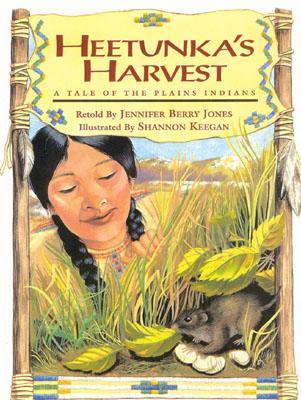
Children's Book Review: Heetunka's Harvest

Heetunka's Harvest: A Tale of the Plains Indians
Retold by Jennifer Berry Jones

I picked this book up from the library's pile of Fall-themed children's books because the mouse was cute.  I usually do a bit of a content preview because there's often either a bit of Jesus or unnecessary violence hiding in this midwestern library's children's section; but I didn't have the time, and so grabbed a couple of titles that looked promising.  Maybe I should do that more often!

This is a wonderful story for any Pagan children, regardless of their cultures or the deities their parents honor.  It is a story about sharing with and caring for nature and the nature spirits all around us; a story about our essential connection to them.

Heetunka is a plains mouse that gathers little white beans every winter.  In the story, a group of Souix Indians come to trade with her in the fall season, leaving corn or suet in place of the beans they take from her storehouse.  One woman, not considering the life of Heetunka, decides to be greedy and take all the beans without leaving anything in trade.  Because of her rash actions and haughty attitude, eventually she is punished by a prairie fire burning the tipi to the ground.

This story has a wonderful message about the interconnctedness of all life, and the importance of being good and kind even to those who seem like they can't do anything to harm us.  There is an end of fall/harvest theme that would work well around Mabon, Samhain or Winterfinding.  One word of warning: there is a brief speech by the woman's husband which came across rather rudely; but as a parent I'm very used to selectively editing stories as I read them.  If this is something you'd like to have an older child read, it may be good to discuss the actions of the husband as inappropriate also.  Otherwise, the book sparked a wonderful discussion between my five year old and I about the web of life, and how our actions affect many other beings that we share our world with.

Tuesday, October 8, 2013

Animism, Disease, and Elf-Shot

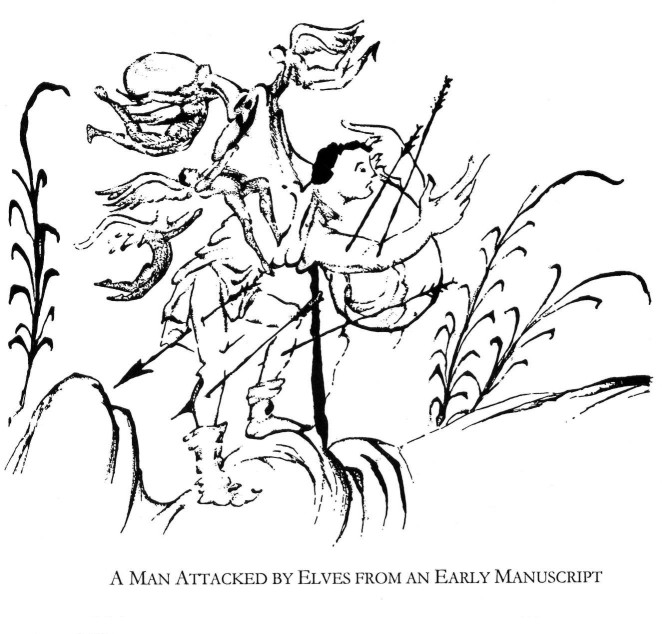
In Anglo-Saxon England, some diseases and many sudden pains were blamed on elf-shot, that is tiny or invisible arrows shot by elves into humans.  By the later middle ages, elves and fairies had become synonymous, and stone age arrowheads seen as evidence of their mischief; but this was not the case in the Anglo-Saxon era.

For a while I've had a hard time wrapping my head around this.  I'm a scientific person, married to an atheist with zero belief in the supernatural, and when hit with an ailment my first instinct is to take an aspirin and get some sleep.  It just wasn't in my worldview to believe there could be something more behind a lot of the sicknesses that science has pretty clearly identified.

But a thread on a forum I frequent has recently given me a new perspective on this issue.  It began with a poster asking about how animists treat bugs and other pests; can you kill something with a clear conscience if you believe it has a spirit?  For me, it was an easy answer - I don't generally bother things that don't bother me, but I don't feel badly about getting rid of bugs that are negatively affecting the life of me or my family in our own home.  But another poster in the thread brought up a good point about bacteria and even viruses - do animists believe that these have a spirit?

Que the "Aha!" moment for me!  As an animist, I do believe that bacteria and viruses have a spirit - but as beings that live on the sickness of humans or other animals, they are certainly negative spirits in our eyes.  And I believe now that this is where the entire notion of evil spirits comes from - early healers, trained both medically and spiritually, sensed the presence of these spirits who intended harm to human life, and developed both medicines and spiritual techniques to fight them.  This makes sense to me on a scientific and a spiritual level; and honestly, these are the kind of moments I live for - when something finally just makes sense.

Sunday, October 6, 2013

T is for Trees

I'm Molly, and I'm a tree hugger.  From when I was a little girl, my grandmother took me around to different parks, putting my hands and face on the trees and really experiencing what they were.  We hugged maples, walnuts, birches and oaks.  We walked under their boughs and listened to their songs.  We scaled their heights and swayed with their bodies.  The trees were my first friends, and have remained so throughout my life.

I have a few trees in my yard now that I've built relationships with, and a few in the park near my house.  But the one I'm closest to is a beautiful oak tree.  It's fairly young as oaks go, maybe thirty or forty years old, and its trunk is still rather slender.  But it is strong and sturdy, with lovely glossy green leaves in the summer and a bumper crop of acorns.  In the fall, its leaves turn a shining mahogany color, a rich brown that fills the back yard.  When I first moved here more than three years ago, it caught my attention as being the most climbable tree in the yard - I just needed a step stool to give me a boost, not like the extension ladder I'd need to reach the lowest branches of the nearby maple.

I approached it as I would a new neighbor.  I brought cool clean water and a cookie that I had baked, and offered them.  I sat with the tree for awhile, getting to know its energies and showing it some of my own.  For the next few days, I continued to offer water every day and stay for awhile to become more familiar.  We didn't exactly communicate, I can't hear the voice of the tree or anything like that - but I began to get a sense of familiarity when I offered the water, as if the oak was growing glad of my presence.  The next day I asked permission to climb the tree; and sensing no opposition, I got out my footstool and got up there.  It hadn't been cared for in awhile, and there were many dead branches that had caught on their way down and needed to be cleared out.  I got as many as I could, and then stayed for awhile in the swaying branches.

Since then we have begun what feels like the comfortable relationship of good friends.  When I am outside, I make it a point to take a cup of water from the tap and pour it out near the base.  I try to get up in its branches fairly regularly to help keep them clear of debris.  This year, I've begun a nature journal to chronicle its changes from year to year.

I've heard many people say that the nature spirits are angry, that they are not interested in relationships with humans because of the large amount of damage our species has inflicted on the land.  I have to say, this has not been my experience.  I feel that, in general, the spirits of the land such as the trees are glad to be recognized.  There are people like my grandmother who, though they are certainly not Pagan and in fact may be staunch Christians, have still acknowledged them throughout the years.  I believe the nature spirits have missed us, and are waiting for conscientious humans to try and reconnect with them.  So next time you're at the park, or if you have a special tree in your back yard, try and get to know it!  I think they're truly interested in building relationships with us again.