Showing posts with label holidays. Show all posts

Sunday, April 5, 2015

Prayer and Offering for Eostre

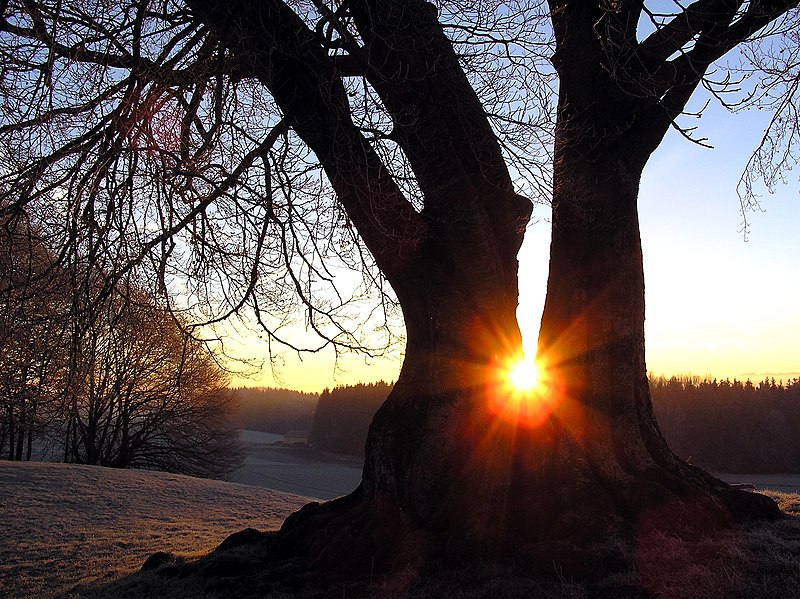
by Norbert Nagel, Creative Commons License
Hail Eostre, the rising dawn and the coming spring!
As Your golden rays gleam above the horizon,
the buds begin to bloom and open,
heralding the return of light and life!
Beautiful Goddess framed in flowers,
the beginnings of apples, peppers,
all fruit that flourishes on branch and vine,
bring brilliance and bounty to me and mine.

My favorite offering for Her this time of year is dyed eggshells.  First poke two holes at either end of an egg, and blow the contents out into a little dish to save for omelettes or whatever you like.  Then the eggshell can be dyed in natural dyes, and it will color both the inside and outside of the egg.  I have had a good time crushing several eggs together until they form a colorful sort of eggshell gravel, but they can certainly be offered whole as well depending on what you’d like!

Monday, March 23, 2015

Another Post About Eostre

Okay, they've been everywhere this past week - posts about Ostara the holiday, about Eostre, debating Her claim to historical fame, Her attributes, Her associations.  She has been paired with foxes, described as young and perhaps childish.  So as we head into the Anglo-Saxon month of Eosturmonath (rougly equivalent with our modern April), I'd like to write about some of my own impressions of Her.

For me, She is not just a Goddess of the spring.  It is one of Her domains, yes, and a very important one.  But primarily for me, She is the Goddess of the dawn.  The linguistics of Her name supports this - Eostre is etymologically linked to *austrōn, a Proto-Germanic reconstruction meaning 'dawn'.  Through this, She is linked to a fair number of Indo-European dawn deities, including the Vedic Ushas, the Roman Aurora, and Greek Eos.

This time of year, I am still rising just a bit before dawn.  As I wake to dark windows and a silent home, I remember a bit of a poem by Rumi that I loved as a teen: "The breeze at dawn has secrets to tell you.  Don't go back to sleep!".  I come before my east-facing patio door, a large window that looks out over my backyard, and say my prayers to the deities of the sun and the morning that I honor: to the morning star, to the sun, to the opener of the gates of dawn. 

It is Eostre who holds that honor for me, afire in a blaze of golden and red and pink glory.  She throws open the gates, Her face shining with the holy light of the sun as Sunne passes by.  Her arms are raised, drinking in the glory, Her gown whipping against Her with the wind raised by the force of the sun.  She looks to the heavens above the earth in acknowledgement, but also with a sense of triumph: the stars will be put out, and She will be responsible for bringing real light to the world.  She is fire and glory and too bright to comprehend, a deity who will not tone down Her shining, holy light for my sake.  This is my Eostre, how She appears to me each morning as I implore Her to please open the gates.

Wednesday, March 18, 2015

My Heathen Religious Calendar 2015

I made a post about this last year, and have had a few requests for an update, so I thought I'd finally get around to posting even though it's already March!  It's not all Anglo-Saxon this time - I've added a few Icelandic holidays for spirits that seemed to want to catch my attention this past year.

January 23rd - Thorrabloat (welcoming and appeasement of Thorri, a spirit of winter)

February 3 - The Charming of the Plow (in which cakes are offered to the earth, a practice attested to by Bede for the month of Solmonað)


February 22 - Konudagur (celebration of Góa, an Icelandic spirit of spring)

March 5 - Festival for Hreða (the full moon, and midpoint, of Hredmonað)

April 4 - Eostara, spring festival for the goddess Eostre (the full moon, and midpoint, of the month Eostara)

June 17 - Litha (placed on the new moon closest to the solstice; this would have been the day between two months called Before-Litha and After-Litha)

August 29 - Hlæfmæst (literally 'loaf-feast', on the full moon midpoint of Háligmonað)

September 27 - Freyfaxi (unattested in England, but an important Heathen harvest festival; I chose the full moon of September as it often lines up with other Freyfaxi celebrations)

October 27 - Winterfylleð (Winterfinding is the name of the month; given similar holidays attested in Norse sources, I have chosen to honor it with a feast-day, again on the full moon)

November 25 - Winternights (again, this is not a historical English celebration, but its importance in modern Heathenry brings me to celebrate it)

December 21 - Mōdraniht (I have chosen to celebrate this the night before the solstice, though there is some debate on where in December it should be celebrated)

December 22 - Solstice (I choose to honor Sunne on this day, though as far as I know this is historically unattested)

Jan 1 - Twelfthnight (this is attested in Norse sources, but given the history of the 'twelve days of Christmas' in England, I find it perfectly acceptable to extend the festive holiday season)

Wednesday, February 25, 2015

Konudagur - a Celebration of Spring

Spring Maiden
by Frank Dicksee
As explained by tumblr user Thorraborinn here, the first day of the Icelandic month of Góa is a day celebrating women and wives.  Góa is alternately either the daughter or the wife of the frost-king Thorri, who disappears at midwinter, and a blót is given to bring her back.  I have written a small ritual to honor this tradition of welcoming back the spring.

Bring a small meal and drink to the threshold of your home.  Call out and address Góa, saying:

Hail the daughter of the Frost King,
who hides in the winter
and returns in the spring-long day.
Your eyes are thawing pools,
your hair like shining sun,
your limbs long and empty branches
soon to sprout new leaves.
I come bearing gifts for the lady of spring,
food to nourish new growth,
to bring forth green sprouts,
to warm the thawing earth.

Open the door, go outside, and pour out the drink on the earth, saying:

Be welcome, dear Góa,
and go into the house;
don’t be outside in the wind
in the spring-long day.
(translation by Thorraborinn)

Come back inside, bringing the plate of food to the table, and set it out as you would for any other guest.  Dine with Her and leave the offerings outside afterwards, if possible.

Wednesday, February 18, 2015

Februalia with Prairie Shadow Protogrove

 I haven't written about most of the group rituals I've participated in lately - it was a requirement for the Dedicant's Path, but since I've finished that bit up it's fallen to the wayside.  I feel like I should, though.  I know before I started being a social Pagan I googled the groups in my area; and there was not a lot of information out there.  For most, there just a listing on Witchvox and, if I was lucky, a public ritual schedule.  Just in case anyone is googling Prairie Shadow Protogrove (or Prairie Shadow Grove!), hopefully I'll have summaries of recent rituals that will give you an idea of what to expect.

As an ADF Grove, we perform rituals near each of the High Days (more commonly known as the Wheel of the Year).  Since we are a pan-Indo-European group though, these rituals aren't always what you'd expect.  This February, we celebrated a Roman rite called Februalia - a festival of purification.  It was written by our resident expert on all things Roman and Greek, Senior Druid Amber Doty.  We celebrated Februus, the patron of the festival, as our deity of occasion; and invited Janus and Hestia as well.  The purification portion of the ritual particularly spoke to me - I had a frightening encounter earlier that week, and being able to wash that feeling away was absolutely a blessing.  All in all, it was a fantastic ritual, and I couldn't be more appreciative of what Amber has done in building this grove!

Saturday, January 24, 2015

A Thorrablót Ritual for Thorri

Photograph by Ian Capper, shared via Creative Commons License
As Vanatru or Earth-centered Heathens, it's easy to love the Vanir.  They're flashy, they're green, they grant prosperity and fertility - usually thought of as warm and friendly in contrast to the more 'stern' of the Norse deities such as Odhinn and Tyr.

Where I live on the Midwest prairie, it's hard to forget about winter.  And yet I think many Pagans often forget about honoring this time of darkness and cold.  In my many gardening adventures, one important thing I've learned is that many of the plants that grow in my home state can't grow farther south, where the winters are short and warm if they exist at all.  They require this period of dormancy, of rest in the cold earth.  And yet, it's important that the land doesn't become too cold - below zero temperatures for weeks at a time can spell disaster for many plants typically grown in Nebraska.  As a person who honors this land and its weather, not recognizing and encouraging a natural, normal winter takes away from my practice and my relationship with the land.

And so we come to the old Icelandic holiday of Thorrablót.  Last year, I addressed some etymological questions about this day as Thor's, and came to the conclusion that as an Earth-centered Heathen, this day and season more appropriately belong to Thorri, a spirit of winter and cold.  Anglo-Saxon Heathens may choose to honor Jack Frost, who has similar folklore origins.  This year, I've taken the time to write a small ritual to propitiate this king of frost, that the spring may come in a timely fashion.

First, prepare a small feast or special meal that can be shared with the spirits; if you want to go all out, there are many traditional Icelandic dishes associated with the holiday.  Also have a special drink on hand - preferably mead, but any alcohol or 'fancy' drink will do.  In fact, if you prefer the non-alcoholic route, hot cocoa or mulled cider would be a particularly suitable offering!

via Creative Commons License
Once the meal is ready, make up a small plate and take it and the drink outside with you, into the cold.  If you have an outdoor altar, perform the ritual there - otherwise the threshold of the home or natural place that calls to you are good options.  Call out and address Thorri, saying:

"Hail King of the Frost, son of Snow-King,
You rule this icy winter.
The chilling winds that blow are Yours,
the gray clouds that hide the sun are Yours,
the frozen crystals that cover the ground are Yours.
I come bearing gifts for the Frost-King,
food for the spirits to warm Your heart,
to turn aside the winter winds,
to relent in the cold that covers all."

Set the plate of food on the altar or ground, and raise your glass.
"Hail Thorri, great King, who gives the world rest,
Ancestor of my heart, bringing sparkling frost,
I honor Your gifts and welcome their return
in their due course, in Your right season.
Hail to Thorri!"

Drink half the glass and pour the other half out.  You may eat your feast outdoors, or if weather or other circumstances prevent, inside looking out at the winter landscape.

Thursday, December 18, 2014

A Yule Toast to the Gods of Peace and Good Seasons

photo courtesy of wikicommons

The Saga of Hákon the Good was written sometime in the 1260's, describing the reign of King Hákon I, who took the throne in 1217 and died in 1263.  There is a lot of interesting Heathen details scattered throughout this work, which talks about the time of transition from Pagan beliefs into Christianity for Norway.  But one of the gems is the description of a Yule ritual, at which a feast is eaten and offered to the Gods, and many toasts are drunk to the deities.  The ritual I have written here is an attempt to give form to the rather dry writing of the Saga, but certainly shouldn't be mistaken for a historically accurate representation!

Gather your holy liquid - either mead or water depending on how sticky you want things to get!  Say a prayer over the liquid, such as:


"This water is consecrated to the Gods, the wights, and my ancestors who watch over my steps.  May it please the spirits and make holy all it touches."

In the Saga, the liquid is sprinkled over the altars, the gathered people, and both the inside and outside of the temple.  For my celebration, I sprinkle my indoor altar, the thresholds of my home, and around the trees and garden - do whatever feels right for your home or gathering.  Repeat while sprinkling:
"Hail to the Gods and Goddesses.  Hail to the wights of the land.  Hail to my ancestors of blood and spirit.  Make this place sacred by your hand."

 Once you are finished, come to your table or hearth and set the remainder of the liquid aside.  Sit down to feast and offer it to the spirits, saying:
"This feast is consecrated to the Gods, the wights, and my ancestors who watch over my steps.  Thank you for your bounty."


Pour out a glass of whatever you are drinking - I always find that mead is beloved of many of the northern Gods and spirits, but fresh water is also appreciated by deities of the earth.  Lift it in a toast, saying:
"Hail Odhinn, the one-eyed wanderer, giver of Runic knowledge: for success and victory in the year to come, I ask You!" Drink the toast.

Pour another and say:
"Hail Njord, God of the waters, giver of bounty: for prosperity and a good season in the year to come, I ask You!"  Drink the toast.

Pour another and say:
"Hail Frey, married to the land, bringing peace in Your wagon: for joy and bounty in the year to come, I ask you!"  Drink the toast.


Pour another and say:
"Hail the Hidden folk, landvaettir and wights who dwell in this place: for friendship and peace in the year to come, I ask you!"  Drink the toast.

Pour another and say:
"Hail my Ancestors and departed friends, who are remembered on this night: stay with me in the year to come, I ask you!"  Drink the toast.

Outside or on your altar, leave a plate of food and pour out the consecrated liquid for the deities and spirits.  Say a quick ending prayer, such as:
"Gods and Goddesses, wights of the land, beloved dead who watch my steps, thank you for all you have done for me this past year.  Pour out your blessings in the new year as I pour out offerings to you.  Hail!"

Wednesday, October 8, 2014

Blōtmōnath, Winter Nights, Dísablót, Samhain - All the Holidays!

by Boschfoto on Wikicommons
Creative Commons License
Sometimes, being a Heathen with a leaning towards the historical can get a little confusing.  Depending on exactly what Germanic culture you're working within, this time of year is good to sacrifice cattle to the gods (Anglo-Saxon Blōtmōnath), offer to the Dísir (Scandinavian Dísablót), or possibly even to honor Odhinn as may have been done during the Icelandic Winter Nights.  For those who follow a more pan-Germanic approach, or draw inspiration from more than one tribe or geographical area, this is a lot to sift through.  For a great discussion of Winter Nights, head over to tumblr blog The Frozen Oak.

I personally tend towards the Anglo-Saxon direction, and so I save honoring the Dísir for Mōdraniht in December.  That leaves Blōtmōnath, the month of sacrifices when cattle would be dedicated to the gods.  According to Swain Wodening's reconstructed Anglo-Saxon calendar,  Blōtmōnath starts on November 3rd this year.  There's a lot of talk in Neo-Pagan circles about Samhain being the 'meat harvest' and I think this is one of the inspirations of that idea.  This time of year, our ancestors who had to carefully ration food to make it through the winter would figure up just how much feed they had, and how long that would last their current herd of cattle.  Usually, it wouldn't go quite far enough - and then the cattle would be ritually slaughtered, and the meat feasted upon and saved for the winter.

Now, modern-day Heathens, especially those living in suburban or urban areas, are not generally going to be able to ritually slaughter their own animals.  Instead, I choose to observe this time of year as one of awareness and remembrance for the gifts given to me: both by the animals who gave their lives that I could eat, and by the gods who create and sustain the lives of all things on this earth.  In keeping with that idea, not only do I like to have one large family feast featuring a roast or some other delicious meat dish, but I find it helpful to remember to address a prayer to the spirit of the animal, and the gods that went into its growth, each time I cook or eat something using meat.  This is one I wrote to use when honoring the cow from which our roast will come this year.

Nerthus, Sunna, Thor, and Frey:
For the black earth,
for the shining sun,
for the pouring rain,
for the sweet grass,
I thank you.

Strong cow who roamed the black earth,
lay in the shining sun,
drank the pouring rain,
grazed on the sweet grass,
for your gift of life,
I thank you.

Friday, October 3, 2014

T is for Thorri and Thorrablót

From amigo-design.com
I make my grand entrance back to the Pagan Blog Project today, after a lengthy computer-breakdown-induced absence.  It's barely autumn - especially here in the midwest, where temperatures have been warm and lovely even though it's nearly October - but I recently stumbled across this amazing piece of Heathen winter lore that just needs sharing.

In the mid-winter months, many Heathens, especially those of an Icelandic leaning, will celebrate the holiday of Thorrablót, holding sumbel and blót for Thor.  This is a very old holiday, celebrating the first day of the old Norse month Thorri; but there's some debate as to just what this holiday originally meant.

There's little doubt what Thorrablót celebrated in the past few centuries - a spirit named Thorri, a personification of the wind and cold of winter, was welcomed by the housewife the night before the month began, seemingly in hopes of calming what was often the worst month of winter.  Now, many modern Heathens believe this spirit to be a diminutive, corrupted version of Thor, and so celebrate the holiday accordingly.  I'm all for reclaiming traditions that Heathen ancestors may have actually practiced, but I think it's often just as important and interesting to look at what our more recent ancestors were doing.  For instance, I celebrate Eostremonath with my children with bunnies and egg hunts, as I know many modern Heathens and Pagans do in their spring rites - but we don't have any historical evidence of this, only our family traditions and a practice that fits with the seasons and cycles of the earth.

This year, I'd like to do the same thing with Thorrablót.  Of course, we will still hail Thor at the end of January, but come the 23rd I will go out into the wind and snow and welcome Thorri into our house for a sumbel and blót with my children and I.  And if I'm very lucky, we just might have a mild February!

Saturday, September 27, 2014

Winterfinding Ritual


As the daylight begins to wane, cooler nights settle over the land and cause all sorts of changes in the world around us. Many ancient Germanic peoples held sacrifices or festivals to honor this time of the year and to give thanks for a good harvest - and when building a relationship with the land, it is always good to say thanks.

Swain Wodening’s reconstruction of the Anglo-Saxon calendar, unfortunately no longer available online, sets today as the start of the month Winterfylleð. According to the Venerable Bede this translates to ‘winter full moon’. Called Haustblót in Icelandic (autumn sacrifice) or Álfablót (elves’ sacrifice) in Scandinavian sources, the end of autumn was a good time to offer to the land and the spirits. Whether you’d like to try it today, on the full moon, or at a seasonally appropriate time for your locale, this is a simple but powerful ritual to acknowledge the gifts of the harvest and the coming of winter.

Things to gather: representation of Frey, locally harvested produce that can be made into a meal or left fresh, mead or other celebratory drink


Carry the representation of Frey around the space set out for the ritual, whether that be your home, yard, or other area, saying “Frey, who blessed the fields and gives bounty to humankind, we thank you and offer you gifts now in return for your kindness.”

Set the image of Frey before you, and walk the edge of the space again, noticing the changes that are coming over the land. Use your own words that resonate with your local land, or say “Trees that have begun blazing with color, squirrels that are hastily gathering nuts, cold earth ready and waiting to rest: you herald the coming of winter. Landvaettir, wights, alfar that surround this place, I thank you for your bounty, and offer you gifts now to see you through the coming cold.”

Come back to the center or your altar, and lift the cup of drink in a toast. After each hail, pour out some drink, drink some yourself, and offer a portion of the produce.
“Hail my ancestors who prepared well for the dark of winter! Watch over me in these days of coming cold. Feast and drink with me, in thanks for your protection!”
“Hail the alfar and wights of the land, fertile soil and growing food! Feast and drink with me, in thanks for your harvest!”
“Hail Frey, Lord of Alfheim, who blessed the fields to grow! Feast and drink with me, in thanks for your bounty!”


If you have some things in particular to be thankful for this season, you should also toast the gods or wights responsible and share with them as well. When you are finished, pour out the rest of the drink and leave the produce to be composted or where it will be found by wild things.

Thursday, September 25, 2014

Those Pesky Pagan Holiday Names

from oakwillow.com.au
I read an amazing article The Triumph of Mabon on Jason Mankey's Patheos blog Raise the Horns this morning, and it got me thinking about a topic that has always bugged me just a little bit - the naming of the 'standard' Pagan holidays.  When I was the kind of Pagan who wasn't much bothered about specific cultures or history, they didn't get to me too much; though I must admit I've never been overly fond of the pseudo-historical feel.  Even as a newbie Pagan, I much preferred referring to solstices and equinoxes than I did to Mabon or even Yule.

Now that I am working within a specific cultural framework, and writing for even more for Prairie Shadow Protogrove's rituals, it's become even more complicated.  I just don't feel comfortable inviting people to an Ostara rite that honors Demeter and Persephone, for example - it just feels culturally wrong.  I don't feel like I'm being authentic when I tell my daughters about Samhain, a sacred day when we honor our Ancestors; our traditions are very Heathen, and to call the holiday by a Celtic name just seems disingenuous to me.

I'm certainly not trying to tell anyone else how to practice or what to call holidays - it doesn't matter to me!  But this is how I personally feel when using the 'traditional' Pagan names, so I've tried to come up with some a bit more modern.  Though I am very much a Heathen and very inspired by history and research at this point, I want to help my children see with a wider view; should they want to follow a different path of Paganism or even leave the religion but still remember special traditions from their youth.  I'll still refer to the solstices and equinoxes by their scientific names, that's what makes those days so special, after all.  We've always called Beltane 'May Day', which it is - we just celebrate it a whole lot more than other people here in the midwest.  Lughnasadh has always been simply 'Harvest Festival', easy-peasy but a tad confusing when compared to the Autumnal Equinox.  The difficult ones so far have been Samhain and Imbolc - I'm just not sure what language to use to describe honoring the Ancestors or praying for the spring without resorting to silly and trite-seeming epithets like 'Ancestor Day'.  I have always liked the name 'Candlemas' for Imbolc, and connects it back to my youth, but I'm not sure that stealing Catholic holiday-names is the best way to go.

I think this will always be a tricky topic as Paganism as a whole continues to diversify; with some wanting to retain the standard holidays but wanting them to be more culturally appropriate.  I continue to hope for the wide-spread adoption of more neutral terms, but understand that for many that compromises part of the magic of these names.  Like so much of the work of building a religion, I imagine that as time goes on, these things will be figured out.

Wednesday, September 24, 2014

Feeding Your Fire

Photo by Dirk Beyer
After coming home from Pagan Pride Day, I was exhausted.  That next morning, I didn't have the energy to get up and attend my local UU church with my children, and quickly realized as the day progressed that I didn't have the energy to go out and do much of anything.  After discovering my daughter was sick and taking her to Urgent Care, I honestly really didn't want to attend ritual with my local coven that night.  But I had said I would go, and so I wearily trudged out and attempted to make conversation and engage in my normal cheery attitude.

We talked about the dark time of the year, and the things that keep us going through the darkness.  We talked about those things singular to us, that make us who we are.  I'm not Wiccan, and though I enjoy both the company of those others in the coven and the inter-connectedness of our midwest Pagan community, it's sometimes tricky for me to pull meaning from the metaphors and language so common to Wiccan dialogue.  For instance, the concepts of Maiden, Mother and Crone are not powerful archetypes for me, and discussion of them and their relations to the season can sometimes go over my head.  But at these rituals, there are almost always powerful moments of community relation or introspection that are not specific to Wicca, that go straight through denominational lines and relate a message that is both needed and helpful.

During last night's ritual, we built a fire together as a community.  And together, we discovered within ourselves the things which keep our fire going during the times of darkness, when the sun diminishes and many people naturally feel a little more down, a little more tired.  For me, that thing is a joyful attitude.  Growing up as a sad little kid, my mother always taught me to 'fake it til you make it'; to smile at others no matter what you're feeling inside.  Though I know this can often be a very harmful message, it has ultimately proven to be a good one for me.  I don't talk about it much because of that same childhood conditioning, but I get depressed.  Often, and seriously.  But my smile, and cheerful attitude around others - something that people have often complimented me on throughout my life - often actually helps to lift the fog a bit.  It's so ingrained in me that I honestly can't not be cheerful with people I don't know extremely well; but my smiles spread smiles.  And the more I can brighten others' days, the more mine is brightened in return.  This is why getting out and doing social things can be so difficult sometimes - it's hard to prepare myself to be cheerful when I'm feeling awful or completely apathetic - but once I get out there, the light of others energizes my own heart.  Inspiring happiness in others feeds my fire.

Monday, September 22, 2014

Pagan Pride Day and an ADF Equinox Ritual

Pagan Pride Day Altar
This past Saturday, the Pagan Pride Day I'd spent the better part of my summer and fall helping to plan for was finally in full-swing.  We had about 120 people stop by, a good number of vendors and workshops, and overall I considered it a great success.  But it was also incredibly draining for me.  This actually is a fairly rare phenomenon - usually I get energy from events, even ones that I put a lot of work into planning and executing.  But Sunday, the day after, I was just exhausted both physically and emotionally.  Leading two rituals, giving a workshop, and generally schmoozing all day just wore me out - not to mention being out in the sun for 11 hours.

Our closing ritual was an ADF one, led by Prairie Shadow Protogrove, honoring the spirits of the harvest as the beings of occasion.  I wrote this one awhile ago, actually sitting at the park location for some of my writing.  I think it's one of the best rituals I've ever written, actually; and it's one of the most participated in rituals we've ever held.  Everyone came up and gave praise offerings, all in a line - it was almost like watching communion at a church, except this was people who were giving to the gods.  While reading the welcoming phrases, I felt I was truly connecting with the spirits of that lovely place; a place I'd spent a few years living near, spirits I had grown up loving and honoring.  When I called to the spirits of the shoreline to aid in the opening of the Gates, I remembered being a little girl exploring the icy edges of that lake, falling through a weak spot and ending up soaked up to my knees.  When I called to the spirits of the treeline, I remembered climbing high up in the branches of the pines, hands sticky with sap, waving in the wind.  These spirits were my friends from long ago.  It was incredibly powerful.

I've always had a close connection with the natural world, ever since my Grandmother took me out walking and talking to trees as a little girl.  I know I've written about it here before.  I heard someone say at Midnight Flame, an ADF festival I attended recently, that in ADF there are many people who feel drawn largely towards one of the specific Kindred, and I think that I am one of those people.  I honor the Gods, I love my Ancestors, and make regular sacrifices to both - but there is something so immediate, so material about the oak in my backyard when compared to those beings.  I can touch it, feel it, understand what it wants.  The squirrels that run through my yard and feast on acorns chat with me, look at me, engage with me - just as I engage with them.  I have always loved them, because they have always been there.  The land wights are not an abstract concept that I learned about later in my life, but a presence that I grew up with, that I ran to for refuge when people felt too difficult.  This is not to say that those who are deity- or ancestor-centered are wrong for connecting more with those Kindred - it's just a difference that helps make up the diverse tapestry of ADF.


Wednesday, September 17, 2014

Winterfinding, Nebraska Heathens United, and Growth

painted in 1847 by Oluf Olufsen Bagge
I've written before about how much I love Nebraska Heathens United.  A local, but all-inclusive Heathen group that doesn't care if you're hailing Loki, Frigga, or Njordh at sumbel?  Sign me up!  And I did, more than a year ago now.  I've been to sumbels and bloats with these wonderful people, hailed their gods and ancestors, listened to their boasts and their oaths.  

NHU is an open, public group, allowing all who'd like to attend a chance to see what Heathenry is about.  But there is a need in the community for a closer relationship, for a group that comes together more frequently and more privately.  Now that, too, is coming together - NHU's leadership has initiated a plan to build an innangarth, so that the Heathens in Nebraska can have community of their own.

I'm so excited for NHU, the founders, and this next stage of their growth.  I'll be right there, too - there's something about a small group of people sitting around a fire toasting the gods and spirits of Germanic origin that kindles its own fire in me.  These are people who honor that which I also honor.  The tradition of it thrills something inside of me.  

For the Winterfinding bloat, we hailed Odin and each drew a rune that told of His gifts to us.  Now, I don't have much of a relationship with Odin - more standoff-ish nods when our paths happen to cross - but the rune I drew really struck me.  It was Gebo, the Gift.  It speaks of reciprocity, a building of relationships through mutual giving; in some ways, it describes the group dynamic of a Heathen gathering perfectly.  I showed up on the front porch of one of the leaders bearing a bottle of mead and a tupperware full of sweet potatoes, and in return I received community, fellowship with the deities and spirits, and a hearty dinner.  As a group, we showed up before the altar and around the fire bearing alcohol and words of praise for the gods and ancestors, and in return Odin gives me the benefit of those group dynamics.  A gift for a gift.

Monday, June 30, 2014

High Holy Day Essay: Summer Solstice

For Midsummer, I wrote a ritual for Prairie Shadow Protogrove in a Germanic hearth culture to mirror the honoring of Sunna that we had done at Yule. Once again, Nerthus was our Earth Mother and Heimdall our Gatekeeper, and we invited the Kindred through the Gates of the Fire, Well, and Tree. A friend who's been attending our rituals brought home-made mead which we used for the Waters of Life, and we offered bright-orange tiger lilies from my garden to Sunna. The Kindred accepted our sacrifices, and sent us blessings of growth and physical well-being as determined through tarot card divination.

 Midsummer is always one of my favorite Pagan holidays, because I love the summer and the sun and Her light and warmth. Being able to do a ritual with a good number of Pagans whom by then I mostly knew well was absolutely wonderful; being less nervous performing ritual, I was able to get into it and feel the presence of each of the Kindred as we welcomed Them. I felt Sunna's pleasure at the fiery color of the lillies, and was so blessed by Her light (and also thankful for the shade of our Tree)!  

Sunday, May 11, 2014

High Holy Day Essay: Beltane

At Beltane, I attended a ritual held by the Order of the Red Grail. The ritual itself was very traditionally Wiccan, casting a circle, calling the four Elements and the God and Goddess, and was led by two High Priestesses. In preparation for the ritual, each member of the group had researched a deity associated with love or relationships and acted as that deity in the ritual; each giving speeches trying to prove that they were the 'best' god or goddess of love. I represented Aengus of the Irish pantheon, and had a fantastic time.

 After the ritual, the High Priestess crowned the May Queen (which I was rewarded for my stirring portrayal of Aengus!) and I led the group in a traditional Maypole dance – the pole was beautifully decorated with ribbon by the time we were finished. When the dancing was finished, we had a potluck and enjoyed the beautiful weather and each other's company. It was a very enjoyable ritual for me, though I think the most powerful part of the day was the dance – I always build a lot of energy and get great joy from simple easy exercise, especially when there are so many people to enjoy it with.

Monday, March 31, 2014

High Holy Day Essay: Spring Equinox

For the spring equinox, Prairie Shadow held a Greek ritual honoring and welcoming Persephone back to the world. It was held in my living room, since unfortunately the weather was rather dismal; not very spring-like. Since it was indoors in a relatively small house, we did not process; but each person entered the ritual space after rinsing and drying their hands as an act of purification. We offered to Demeter as Earth Mother and welcomed Hermes as our Gatekeeper for the rite, and gave gifts of flowers to Persephone. I unfortunately do not recall the omen that was given for this rite, but I do remember that our sacrifices were accepted. After the main offering and the receiving of the blessings, we thanked the Kindred and closed the Gates.

 This ritual was also somewhat nerve-wracking for me. Because Amber was very sick that day, I had to lead the ritual myself; and unfortunately I don't have a connection to any Greek deities. There were many members of the Red Grail there (another group I had joined) and they were thankfully happy to help out; reading parts and helping build energy despite my stresses. In the end, it went rather well.

Monday, March 24, 2014

Hreda and the Month of March

Public Domain
The Venerable Bede, an English monk and scholar writing in the 8th century, leaves us a very incomplete, but helpful picture of the Anglo-Saxon ritual year.  One such celebration is Solmonath (Solmōnaþ), roughly equivalent to the month of February, when cakes were offered to the Gods.  I find it reasonable to assume, based on the Æcerbot where cakes are offered to the earth in exchange for growth and fertility of the crops, that the deity honored in the rituals of Solmonath was the Anglo-Saxon idea of the earth mother Goddess.  Bede also mentions two deities of the Anglo-Saxons by name: Rheda (a Latinized form of the word Hrêða) and Eostre, from the month names Rhedmonath and Eosturmonath (Ēostermōnaþ).  Eostre is a fairly popular Pagan deity nowadays, and I've written about Her before; but I'd like to dedicate at least one post this month to Hreda (or Hretha) - the much less popular Goddess of March.

Bede tells us little besides that the month of March is named for Her.  Some modern Heathens identify Her with Hertha, a deity similar to Nerthus attested in northern Germany, but I feel that the linguistic links between them are tenuous.  Also, since I honor the Earthy Mother deity of the Anglo-Saxons during February, my personal UPG is that Hreda is a different sort of being - though not completely dissimilar, as we see with Eostre, who is still very much a deity of growth and spring.  Hreda's name can be linked to a few Anglo-Saxon words: primarily 'glory', 'victorious', and 'swift'.  Philip Shaw, in his book Pagan Goddesses in the Early Germanic World: Eostre, Hreda, and the Cult of the Matrons, argues that Hreda is the matron of a specific kin group.

Lately I've been thinking about the Christian idea of Lent, which often coincides with much of our modern March.  The word Lent comes from the Anglo-Saxon 'lencten', which means spring.  It's been speculated that Lent, a traditional period of fasting before the Christian Easter, was a natural result of the food shortage at the end of winter and beginning of spring - when supplies were running out, and milk from the ewes was often all people had to sustain them.  It seems possible that Hreda, a victorious and glorious deity, was associated with this lean time with the purpose of Her eventually triumphing over the difficulties and ushering in a more prosperous time of year.

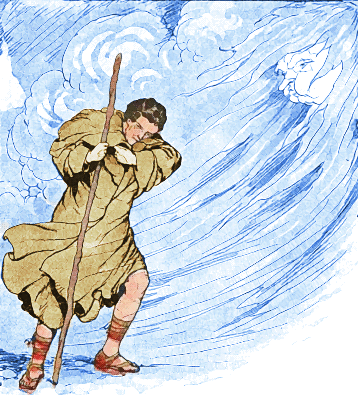
I was born in the month of March, and have always had a certain affinity with the strange weather that can happen in the midwestern US at this time of year.  The wind is said to roar like a lion, and temperatures can fluctuate wildly: from beautiful balmy days to heavy dumps of snow.  Hreda comes to me in the weather of my own country, different as it may be from Britain's; I see Her primarily as the late winter/early spring wind that can be so powerful here.  She too roars.  Eventually all that blustering wind blows in warmer weather, just as Hreda ushers in Eostre as the months continue to turn.

There is so little concrete information on this Goddess, I feel there are few wrong ways to honor Her.  However She chooses to manifest in a person's life, I do think it is important to continue to offer to this lesser-known Goddess, who was obviously important enough to the Anglo-Saxons that an entire month was named for Her.  This weekend is the full moon, when I choose to observe the mid-point of the Anglo-Saxon months and also their festivals; so this weekend I will be doing a ritual in honor of Hreda.  I've written a  prayer that incorporates mostly my UPG surrounding Her (how could it not, given the lack of information), feel free to use it or modify it to better reflect your own experience of the Goddess of March.

Hreda, Goddess of March,
roaring lion and swift wind.
Drive out the snow
and bring the shining sun,
the glorious warmth of spring.
That the plants may grow,
that animals may mate,
that life may wake from the land.

Francesco La Barbera
Creative Commons license

Monday, March 10, 2014

TC Blog Project: Calendars

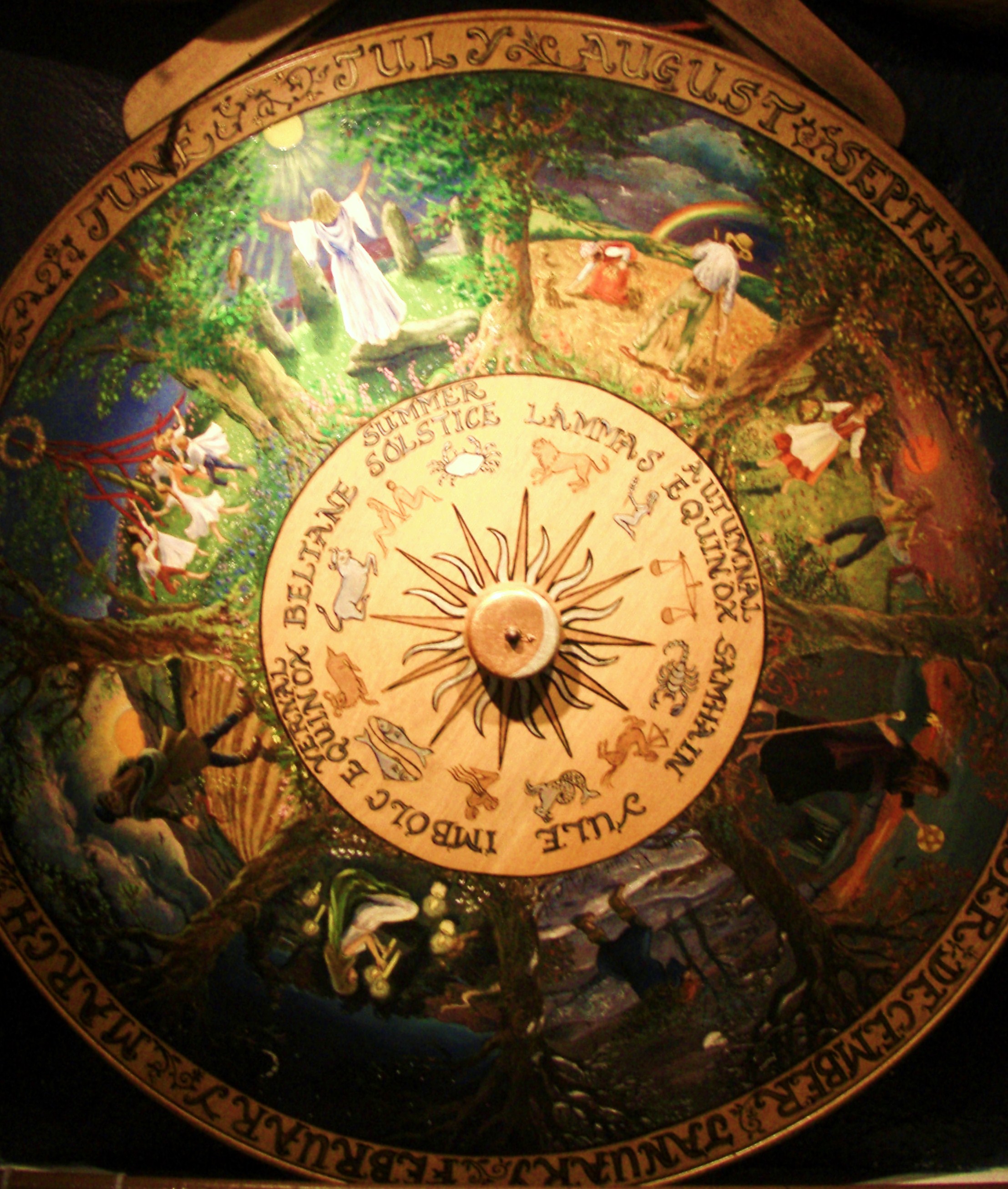
Wheel of the Year from the 
Museum of Witchcraft, Boscastle
Creative Commons license
Calendars - they can be such a touchy subject for Pagans!  For many outside the regular Wiccan paradigm, telling another Pagan that you don't exactly follow the Wheel of the Year (or even close) can lead to confusion and sometimes arguments.  I do follow the regular 8 holidays with my ADF grove and Wiccan coven, and the local Heathen group celebrates the solstices and equinoxes.  But in my family's practice, we have a bit of a different liturgical calendar.  I've posted before about my Anglo-Saxon holidays; this calendar includes my personal Gaelic holidays, some cultural holidays, and a couple to honor other deities.

Imbolc - February 1 (set out a brat to be blessed by Brighid, bless the house)

Ériu Day - March 17 (honor Irish ancestors, prepare traditional Irish food, honor to Ériu)

Cailleach Day - March 20 (bid goodbye to the Cailleach)

Earth Day - April 22 (ritual and offerings for Earth deities)

Arbor Day - April 25 (a big holiday in Nebraska, we visit Arbor Day Farms and discuss tree lore)

Beltane - May 1 (collect dew for holy water, ritually rekindle the household fire, decorate May tree with bright ribbons)

Midsummer - June 21 (tend a flame through the night, offering rushes to Manannán and milk-soaked bread to Áine)

Star Day - July 27 (a new moon, good day for star viewing, and honoring a star Goddess)

Lughnasadh - August 1 (honor Lugh, harvest the first fruits of the garden, make a large feast to share with the Gods, athletic fun and games)

Samhain - October 31 (honoring the Ancestors)

Totensonntag - November 23 (honoring recent Ancestors - this is a 19th century German holiday, and many of my near Ancestors came from Germany after that time)

Friday, March 7, 2014

E is for Eostre, the Holiday


This is not a post about the NeoPagan holiday of Ostara, but rather about the word from which early Wiccans borrowed the name of their holiday.  Ostara is a reconstructed Old High German word, reconstructed based on the Anglo-Saxon word Eostre.  The origin of Eostre itself is somewhat questionable.   The venerable Bede, writing De temporum ratione in the 700s, gives Ēosturmōnaþ as a name for a month in the Anglo-Saxon calendar that corresponds roughly with April (for more about the Anglo-Saxon calendar, Wednesbury Shire's website has some fantastic info).  He also notes that the month is named after the Goddess Eostre, whom the Pagans would honor with feasts during this month.  She is not attested in any other works, but her name can be linguistically linked with several other Indo-European dawn goddesses.

As an Anglo-Saxon Heathen, I think that celebrating the month of Ēosturmōnaþ is vitally important to my religion - in his writing, Bede references very few beings worshiped by his ancestors, which leads me to believe that the customs he does mention were very important that that time.  I choose to celebrate this holiday as a one or two-day affair rather than the entire month, though I do give honor to Eostre through all of the spring (which is considerably longer than a month here in the midwest).  Given that the Anglo-Saxons had a lunar-based calendar, I have chosen to celebrate Eostre's holiday on the day following the Full Moon - which usually ends up falling quite close to Easter, given that Easter is calculated as the first Sunday after the Full Moon after the spring equinox.  This year I'll be celebrating on April 15th, almost a full week before Easter.

In De temporum ratione, Bede specifically references feasts being given in honor of Eostre.  The feasting at least is very much practiced in our culture today - every Easter, my family and many like mine get together and enjoy a ham or turkey.  In our culture, which is becoming more secular, good times and good food with family are the markers of many holidays (which works out great for a Heathen!).  According to the Wednesbury Shire, many of the English-speaking world's Easter customs, such as egg decorating and the celebration of hares, go back almost to Anglo-Saxon times.  Alaric Albertsson in his book Travels through Middle Earth talks about the effects of light on the egg production of hens: by Eostremonath, the hen's eggs would have been an abundant food source, making them both an important symbol of the season and an object worthy of reverence.

So much like my Christian childhood, my children and I will be decorating eggs, cutting out bunnies from paper, and cooking up a delicious feast this mid-April - only instead of hauling them off to church that Tuesday morning, I'll be taking my children outside to explore all the changes happening around us: what flowers are sprouting, which trees have nests in them, what birds have brought their song back to our prairie now that the winter is over.  We'll rise with the dawn to give honor and thanks to Eostre for the return of the light and the warmth.  And that night, we'll all sit down and enjoy a feast together, leaving Eostre Her due on the altar.  For us, this is how Eostre's holy day is celebrated.