Showing posts with label Vanir. Show all posts

Friday, February 27, 2015

The Earth Lies Fallow, and So Do I

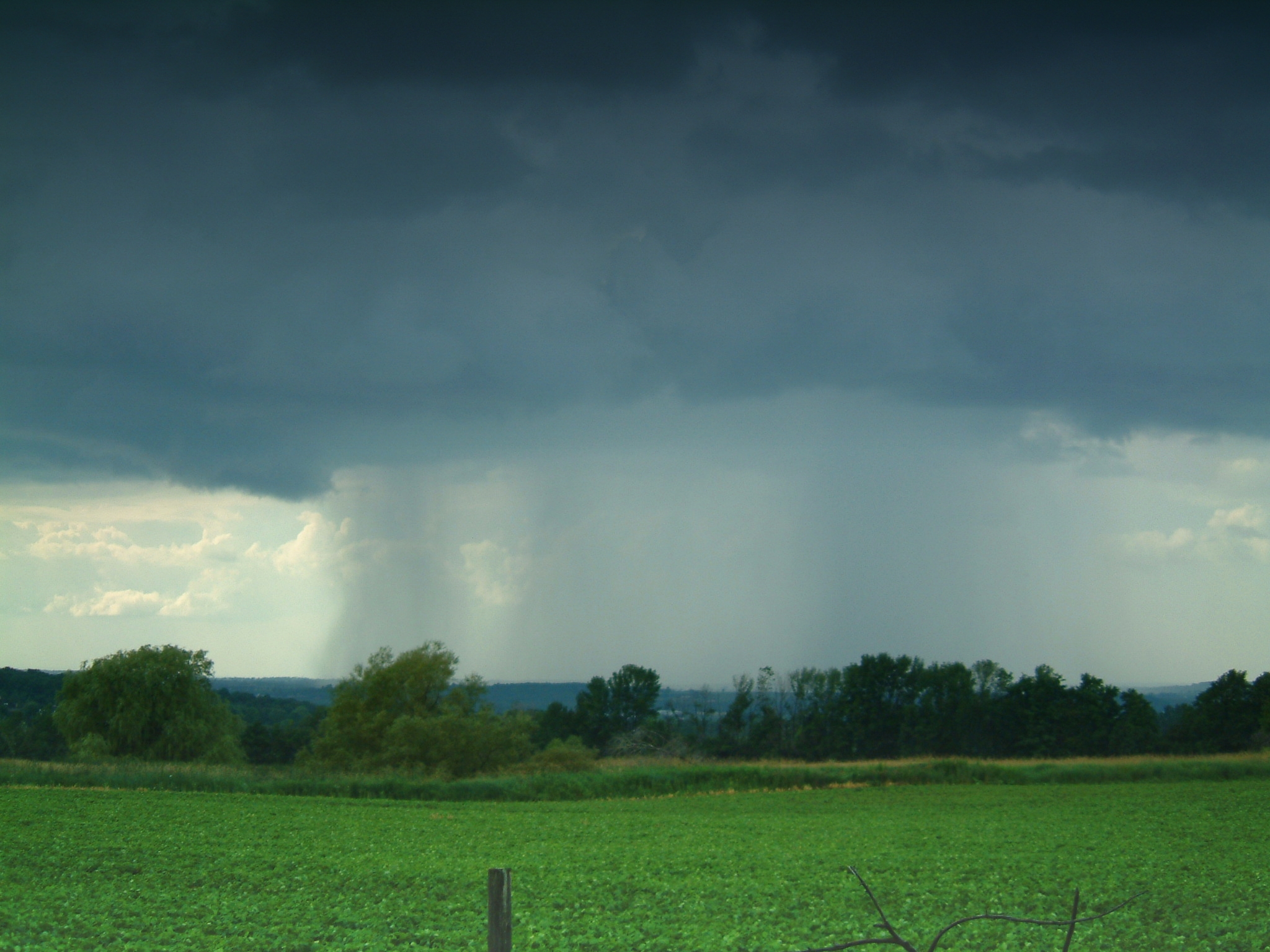
Philip Halling, via Creative Commons
I am at a point in my life where a lot of things are poised on the brink - waiting, wanting to change, but just not quite there yet.  It can be a very frustrating time.  I want so much to just get on with it, to blaze ahead, to make those changes and live inside them and grow used to them.  But it's not time yet.

I am an impatient person.  I really, really suck at waiting - even bad things, I just want to get them over with as soon as possible.  The anticipation is almost always worse than the pain itself.  But that's not how life works.  Even simple things like the cycle of the seasons; everything turns slowly, and comes around in its proper time.

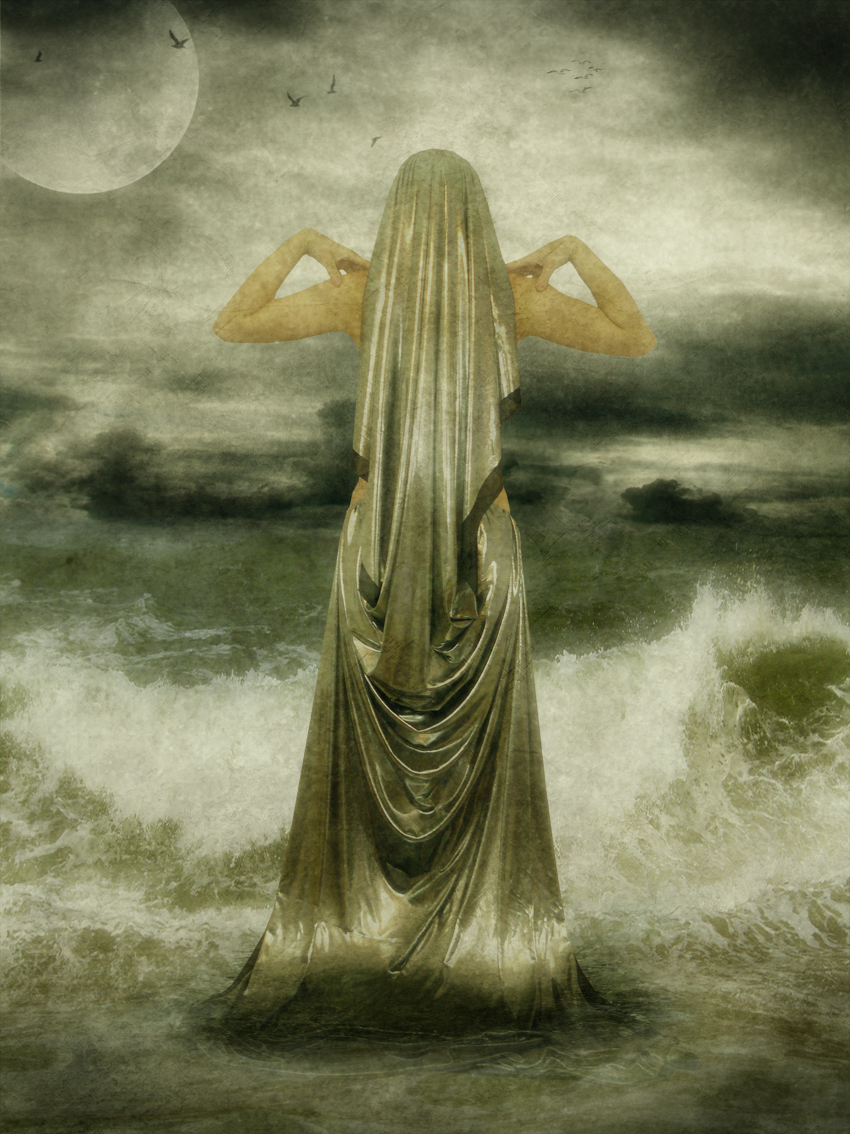
Nerthus is teaching me this right now.  I have other Gods, other spirits, knocking down my door to tell me about this change, to prepare me for what's ahead, to bid me goodbye as I move on to the next stage of my life.  But Nerthus - it's a human thing, a human concern, and She honestly couldn't care less.  A song keeps running through my head: "we'll sleep out in the garden, and when it rains, we'll just sink into the mud," it says.  She is calling me.  To forget my human concerns, this silly impatience, all the surrounding pain; instead, I must sink into the mud.  A time of pause.  This time, before the first green shoots poke their way out of the soil, is for resting.  I must lay in the lake, let the dark water wash over my head, breathe that darkness into me while I wait.

On the other side of this coin is new growth, blooming flowers, a warm and inviting spring - I know that it's waiting to come forth.  In the gnostic gospel of Thomas, Jesus says "If they ask 'what is the sign of the Father in you?', tell them: 'movement and repose'."  That cycle is inherent in my life, and from what I can see, in all of nature.  The sacred is working within me - there is movement, there is rest.  This time of waiting will turn, and new and exciting things will happen; but now is not that time.  And so I lay down in the soil and wait.


Wednesday, February 25, 2015

Konudagur - a Celebration of Spring

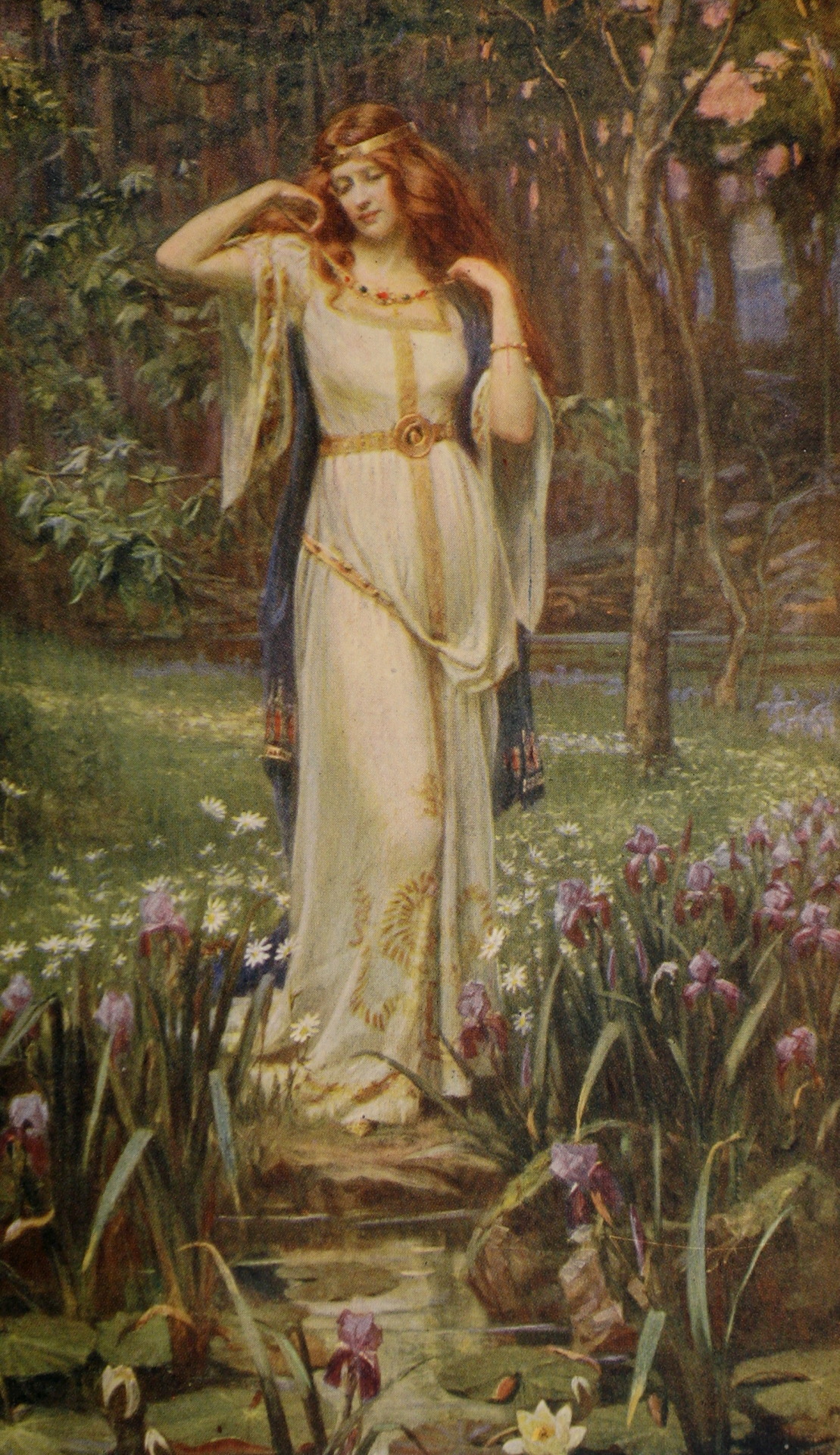
Spring Maiden
by Frank Dicksee
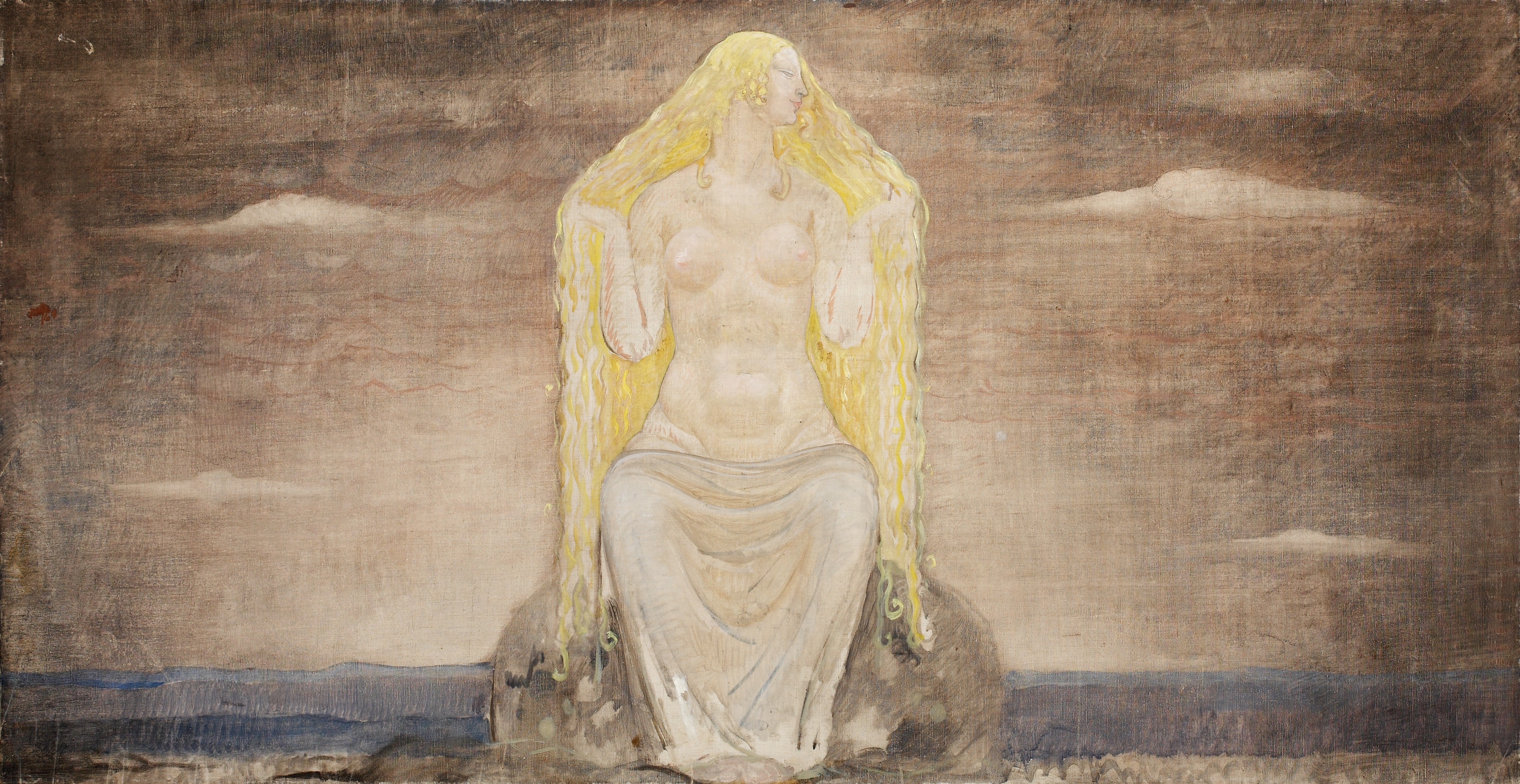
As explained by tumblr user Thorraborinn here, the first day of the Icelandic month of Góa is a day celebrating women and wives.  Góa is alternately either the daughter or the wife of the frost-king Thorri, who disappears at midwinter, and a blót is given to bring her back.  I have written a small ritual to honor this tradition of welcoming back the spring.

Bring a small meal and drink to the threshold of your home.  Call out and address Góa, saying:

Hail the daughter of the Frost King,
who hides in the winter
and returns in the spring-long day.
Your eyes are thawing pools,
your hair like shining sun,
your limbs long and empty branches
soon to sprout new leaves.
I come bearing gifts for the lady of spring,
food to nourish new growth,
to bring forth green sprouts,
to warm the thawing earth.

Open the door, go outside, and pour out the drink on the earth, saying:

Be welcome, dear Góa,
and go into the house;
don’t be outside in the wind
in the spring-long day.
(translation by Thorraborinn)

Come back inside, bringing the plate of food to the table, and set it out as you would for any other guest.  Dine with Her and leave the offerings outside afterwards, if possible.

Sunday, February 8, 2015

Week 6: The Earth is Full of Life


Ah, the earth.  Is there anything more ubiquitous in modern Paganism?  Many, if not most, Pagans will use terms like 'earth-centered' or 'nature honoring' to describe their religion or practice; and those who do not usually make a point of letting people know since it's such a common assumption.  I also identify as having an earth-centered spiritual path; but this means something a bit different to me than many Pagans.

Rather than a pantheistic view of the earth as mother-of-all, all-encompassing Goddess, my idea of honoring the earth is a recognition of the incredibly varied tapestry of spirits that dwell on and within it.  The Goddess I am dedicated to, Nerthus, is typically described as an earth mother; but this is not the best descriptor for Her.  She is not found in all places with dirt, or indoors, without being called or welcomed there.  I also honor other deities with ties to the earth or planting and cultivation: Freyr, Gerda, Gefjon, and others.

In addition to the deities, there is a whole world of spirits to welcome and build relationships with.  The altar I've built in my garden specifically honors a tree Goddess, while also acting as a shrine for many of the land wights - earthworms, squirrels, tree spirits, the local river Goddess, etc.  These relationships make up a huge part of my personal spiritual practice, forming the backbone of how I relate to the world around me.  Learning to identify each individual voice in the chorus of wights that make up the land around me was a huge challenge as I moved from a pantheistic worldview to a more animistic one, but it was a challenge that broadened my spiritual horizons hugely.

As I prepare to plant my garden this spring, I also continue to build relationship with the many wights that dwell in and pass through this land.  It's a blend of the concept of getting out and experiencing the land and spiritual appreciation of the many beings that share this home with me.  The earth is alive with many spirits, many stories, many personalities that are all worthy of attention.

Wednesday, January 21, 2015

The Pagan Experience Week 3: Deity and the Divine

Nerthus by paintedflowers on deviantart
creative commons license
 I have really enjoyed the Pagan Blog Project the past few years, and was very sad to hear that it wouldn't be continuing for 2015.  Robin over at The Pagan Experience has taken over the idea, and will be posting prompts and collating links of Pagan blogs throughout this year.  I'm listed in the blog list as Heathen in the Grove - a little more descriptive of a title for those first visiting the site!  I'll be tagging these posts to make them easier to find, and also listing them under the Pagan Blog Project tag to make all my community posts accessible.

This week's topic is Deity and the Divine.  I feel I must start with Nerthus - my patron deity who has been with me since the beginning of my spiritual journey.  From the J.B. Rives translation of Tacitus's Germania:

"There is nothing noteworthy about these peoples individually, but they are distinguished by a common worship of Nerthus, or Mother Earth. They believe that she interests herself in human affairs and rides among their peoples. In an island of the Ocean stands a sacred grove, and in the grove a consecrated cart, draped with cloth, which none but the priest may touch. The priest perceives the presence of the goddess in this holy of holies and attends her, in deepest reverence, as her cart is drawn by heifers. Then follow days of rejoicing and merry-making in every place that she designs to visit and be entertained. No one goes to war, no one takes up arms; every object of iron is locked away; then, and only then, are peace and quiet known and loved, until the priest again restores the goddess to her temple, when she has had her fill of human company. After that the cart, the cloth and, if you care to believe it, the goddess herself are washed in clean in a secluded lake. This service is performed by slaves who are immediately afterwards drowned in the lake. Thus mystery begets terror and pious reluctance to ask what the sight can be that only those doomed to die may see."

This is all we know of Her, a brief note in a book written by a Roman around 100 CE.  Linguists link Her name with Njordh, noting they have a similar masculine/feminine naming dynamic as Frey and Freya.  This has led many in the Heathen community to the conclusion that Nerthus is Njordh's unnamed Vanir wife, the mother of Frey and Freya.

I believe that the true nature of the Gods is fairly unknowable for us - perhaps incomprehensible is a better word.  But I can tell you who She is to me; how She has shown Herself and what She asks.  I have always felt called by the most wild of places: the deeps of the forest, the midst of the river, where one can wander without seeing any signs of civilization.  I didn't feel safe or comfortable in these places.  They gave me a sense of deep excitement; like stumbling onto an alien land where I am not particularly welcome (though I'm not immediately ejected either - it's more of a low-grade, cautious hostility).  I didn't have many friends growing up, and I spent most of my free time in these places - being in a very small town granted me a lot of 'wandering in wilderness' opportunities.  It was in these places that I met Her.  Just like the land, She at first seemed hostile; but also thrilling.  She was the strongest presence I'd ever felt, a spirit far more concerned with the protection and well-being of the land than with yet another human.

As I grew, I became closer and closer to Her, this presence in the trees and streams.  I didn't have any idea that Paganism was a thing, that there were those who would call Her a Goddess.  When I discovered Wicca, I thought for sure She must be the Earth Mother others talked about; though I soon discovered that my Goddess was very different from the loving, all-embracing Gaia that so many described.  Nerthus is deep, She is ancient - She is angry, at times, a righteous rage at those who would defile the land.  She is sacred, She is hidden, She is veiled - too holy to be looked upon by those who do not understand.

And yet!  In Tacitus's description, we hear that when She visits, it is a time of great feasting and merry-making.  She harbors and loves all the land; even the tame agricultural fields, to which She brings bounty and prosperity.  It is my UPG that She is not commonly found in these places so worked over by human hands, but She will come if invited - and when She does, that is a good day.  Each spring, right around this time, my children and I perform a ritual to invite Her into the garden and bless our land and crops, and despite our presence in the suburban Midwest, we feel Her presence.

Wednesday, October 1, 2014

A Charm to Halt the Rain

From Wikicommons
In my little corner of the midwest, any group that does magick or prays to natural gods has probably done a spell or ritual to bring the rain.  It gets dry and hot here, and our economy depends a lot on agriculture; so any prolonged drought has a ripple effect, first on the farmers, then on local businesses, and then on the employees of those businesses, and on and on.  Everyone is impacted.

So it's not very often that you'll find someone from my region talking about prayers to stop the rain.  But it does occasionally happen that we get just too much in too short a time, and it all runs off and creates dangerous conditions, carrying valuable topsoil with it.  This isn't exactly ideal either.

The past month, we've had far greater than our average amount of rain, which for a time was great, because we were rather behind.  It's getting to be too much, though.  We've already had more than two inches today as I write this, and it's supposed to be raining until early this morning.  So what can we do to gently ask the deities to halt the rain for a bit?  Why, write a charm, of course!

Hail Thunor the Thunderer!
You whose mighty storms cover the sky!
The rains have grown great,
laying our lands with water,
flooding our fields.
You who rule the wind and weather,
dry the rain, scatter the clouds,
return only when you are needed.

Hail Ingvi Frey, God of the World!
You who rule the rain and the shining of the sun!
The water is rising,
choking the green things,
stealing the soil.
You who bless the fields with growth,
dry the rain, scatter the clouds,
bring forth the shining sun!

Saturday, September 27, 2014

Winterfinding Ritual


As the daylight begins to wane, cooler nights settle over the land and cause all sorts of changes in the world around us. Many ancient Germanic peoples held sacrifices or festivals to honor this time of the year and to give thanks for a good harvest - and when building a relationship with the land, it is always good to say thanks.

Swain Wodening’s reconstruction of the Anglo-Saxon calendar, unfortunately no longer available online, sets today as the start of the month Winterfylleð. According to the Venerable Bede this translates to ‘winter full moon’. Called Haustblót in Icelandic (autumn sacrifice) or Álfablót (elves’ sacrifice) in Scandinavian sources, the end of autumn was a good time to offer to the land and the spirits. Whether you’d like to try it today, on the full moon, or at a seasonally appropriate time for your locale, this is a simple but powerful ritual to acknowledge the gifts of the harvest and the coming of winter.

Things to gather: representation of Frey, locally harvested produce that can be made into a meal or left fresh, mead or other celebratory drink


Carry the representation of Frey around the space set out for the ritual, whether that be your home, yard, or other area, saying “Frey, who blessed the fields and gives bounty to humankind, we thank you and offer you gifts now in return for your kindness.”

Set the image of Frey before you, and walk the edge of the space again, noticing the changes that are coming over the land. Use your own words that resonate with your local land, or say “Trees that have begun blazing with color, squirrels that are hastily gathering nuts, cold earth ready and waiting to rest: you herald the coming of winter. Landvaettir, wights, alfar that surround this place, I thank you for your bounty, and offer you gifts now to see you through the coming cold.”

Come back to the center or your altar, and lift the cup of drink in a toast. After each hail, pour out some drink, drink some yourself, and offer a portion of the produce.
“Hail my ancestors who prepared well for the dark of winter! Watch over me in these days of coming cold. Feast and drink with me, in thanks for your protection!”
“Hail the alfar and wights of the land, fertile soil and growing food! Feast and drink with me, in thanks for your harvest!”
“Hail Frey, Lord of Alfheim, who blessed the fields to grow! Feast and drink with me, in thanks for your bounty!”


If you have some things in particular to be thankful for this season, you should also toast the gods or wights responsible and share with them as well. When you are finished, pour out the rest of the drink and leave the produce to be composted or where it will be found by wild things.

Monday, September 15, 2014

My Oath Rite

Nerthus by ErebusOdora
It's getting to be that time.  I've been working on my Dedicant Path documentation for ADF on and off for more than two years, and I'm finally nearing the finish line (still have to do a write-up on my meditation practice, but that's going to take some compressing).  I've spoken with Amber, the Grove Organizer for Prairie Shadow Protogrove, and we've scheduled my Oath Rite to take place during our Samhain ritual.  So here I am, desperately trying to write an oath that is simple, addresses all the points I feel are necessary, has the right gravitas, and yet doesn't drag our ritual out to twice its usual running length!  After more than a few drafts, I feel ready to present it for critique - please let me know your thoughts!


I stand here tonight that I may make an oath before the Kindred, my friends, and my Goddess. This oath is the result of more than two years of study and dedicated practice in the tradition of Ár nDraíocht Féin, and the culmination of more than ten years following a Goddess of the dark, still earth.

Today I Oath to my Ancestors, to my lineage that stretches back to the once dark and wild forests, my Disir who guide me wisely, to my great-grandparents and my Grandpa Lee.  Ancestors, accept this offering, and hear my oath.
Today I Oath to the Landvaettir, to the house spirit who dwells in my home, the tree spirits around us, the spirit of the wide prairie and the brown river Goddess that spreads across it.  Landvaettir, accept this offering, and hear my oath.
Today I Oath to my Gods, to Nerthus my patron, the dark Goddess of the fertile earth and the wild places, to Her children Freya and Frey the divine twins, to Thor who brings the rain.  Gods, accept this offering, and hear my oath.

I swear to seek the knowledge of the past, and bring what I find of value in my Ancestor's practice into this time.
I swear to cherish the Earth and the spirits of the earth, and do what I can to reduce and heal the damage caused by my people.
I swear to honor the Gods and Goddesses, to maintain the relationship of hospitality between us, and to continue in my commitment to the service of Nerthus.


These things I swear before the burning Fire that sends up sparks to the sky, the dark Well that flows in the deeps, the sacred Tree that bridges the worlds. These things I swear before my Ancestors, the landvaettir and wights, and my Deities. These things I swear before all those gathered here, on these beads that have long taken my prayers for the Kindred. As I swear, so be it!

Wednesday, September 3, 2014

Thoughts and a Morning Devotional

Wind Turbines at Sunrise, Emilian Robert Vicol, Public Domain Photos, CC by SA, 2.0
Over the past few months, I've been drawn deeper and deeper into my work with what I'm calling Earth-centered Heathenry.  Nerthus, my patron deity, led me to this place - but it's gone beyond just the Vanir (which may be a term and classification invented much later than anyone thought; see Rudolph Simek's The Vanir: An Obituary).  To me, Earth-centered means to be focused primarily on the natural world, which includes not only the Earth itself, but also the sky, the seas, all of nature that surrounds us.  Yesterday, I felt strongly led to alter my morning devotional, currently a very ADF standard acknowledging of Gods, Ancestors, and Nature Spirits.  

The morning star has always been special to me, and Eostre and Sunne since I began honoring Anglo-Saxon deities; but suddenly I felt strongly led to acknowledge these deities of the morning.  Taking inspiration from Cynewulf's 9th century poem Crist II, which contains beautiful verses about the morning star, I wrote a new morning prayer.

Hail Earendel, brightest of stars,
Herald of the coming dawn,
bright above the morning, every season
a perfect illuminated jewel.

Hail Eostre, the shining dawn,
brilliant beginning of the day,
rays of light crowning the East,
a bright and glorious birth.

Hail Sunne, bright bride of the heavens,
All-shining bringer of life,
flaming chariot riding through the sky,
the fire that feeds the world.

I kindle the sacred Fire
with the joy of dawning day;
may it bring light and life and warmth
to me and mine.

Monday, March 17, 2014

Sorting through Spirituality: Vanatrú in Heathenry

Freja by John Bauer
Public Domain
I have been a devotee of Nerthus for many years, before I knew Her name.  I often hear other Heathens talk about how Heathenry isn't nature-centered - and I know it's not necessarily earth-centered - but my Heathenry is, and always has been.  There's a lot of talk about Óðinn and Thor in the Heathen community, great warrior deities who fight the good fight, delaying Ragnarök.  Frey has His devotees, and Freyja is often talked about as a love deity.  But when people separate Heathenry from generic Paganism by saying that it's not earth-centered, full stop, I think this erases a very important part of the religion of my ancestors.

The Vanir are represented by Snorri as a separate tribe of Gods from the Æsir, and this has prompted the creation of the term Vanatrú (loyal to the Vanir) as opposed to Ásatrú.  Some contend the true separateness of the two tribes, especially in the Anglo-Saxon culture I work in; but there's no question that the deities traditionally identified as Vanir have different attitudes, rites, and expectations than the Æsir.  Frey's priests are described by Saxo Grammaticus as wearing women's clothing and dancing effeminately, and according to the Heimskringla, Njörðr married His sister (suspected to be Nerthus) and had children with Her - an action forbidden among the Æsir.

Though I have honored Nerthus for many years, it's only relatively recently that I began to explore a relationship with Frey and Freya.  Looking for more information on Them, I came across more and more references to the term Vanatrú.  I'd heard it before, mentioned in passing on forums or on some sites talking about Nerthus, but I'd never been very interested in exploring it further.  This time around, I decided to take a look.  Reading websites like Cena Bussey's Wane Wyrds and Gefion Vanirdottir's Adventurs in Vanaheim, and Svartesól's book Visions of Vanaheim, I felt the idea take hold somewhere inside me.  I'm not declaring myself Vanatrú - for one, separating myself from the general Heathen community is not something I'm interested in; and two, I tend to be more lore-based in my Heathenry than many Vanatrú practitioners - but the idea of a truly nature-centered way to practice Heathenry feels like home.

Civilization, culture, and society have their place in many religions; and I think a very important place in Heathenry.  I continue to honor Thunor, Frige, and Woden, because they are the Gods of my ancestors, and because I am a mother, a homemaker, and a scholar.  I can't always wear the hat of eco-activist, and I can't go out and live under the trees and stars, because I have a responsibility to my family and my community.  I can't sacrifice my life to Nerthus like Her slaves of old - but I worship Her.  I continue to honor and offer to the land wights around me.  And now I honor Her children as well; and in doing so I move closer to the cycles of the land, the circles of the Earth.. birth and life, death and decay.  Nerthus is leading me to Her people.  In one of his famous poems, Rumi wrote: "The breeze at dawn has secrets to tell you.  Don't go back to sleep."  In beginning to honor Ing Fréa and Fréo, I can just barely hear mumbled whispers coming from the dark earth.

Friday, March 14, 2014

F is for Fréo

Freya and the Necklace
James Doyle Penrose (Public Domain)
Fréo of the cat-drawn chariot,
Fréo of the falcon cloak,
Fréo of the passions of all men:
with your vitality, with your passion, with your magic,
come and bless me and mine.
Fréo of the amber and gold,
Fréo of the soveriegn land,
Fréo of the boundless seidh:
with your vitality, with your passion, with your magic,
come and bless me and mine.
Fréo, strength of women,
Fréo, golden beauty,
Fréo, fierce in battle:
with your vitality, with your passion, with your magic,
come and bless me and mine.
- prayer to Fréo

Fréo is an Anglo-Saxon Goddess, experienced by many Anglo-Saxon Pagans, though not obviously attested - though one reason for this may be the similarity between Her name and Frige's, making it difficult to discern who place-names are referencing.  I experience the AS deities as separate, though similar to Their Germanic counterparts; Fréo is linguistically related to the Goddess Freya, of whom we have many reports.

She is a member of the tribe of the Vanir (the Wanes in Anglo-Saxon), a tribe of deities closely associated with nature and the earth.  Talking for a moment about Freya, there are many stories describing Her skill at magic (particularly seiðr), Her multiple sexual partners, Her warrior associations, and Her sovereignty.  Many see Her as originally being a sovereignty Goddess, granting Odin His power over the land through sexual relations - this is corroborated by the Sörla þáttr, in which not only is Freya described as a 'concubine' of Odin, but He becomes extremely jealous when He discovers She has given Her sexual favors to others.  Whatever Her function originally, it is clear in the many other stories of Her that She has become much more.  In Gylfaginning, it is said that "whenever She rides into battle She takes half of the slain," clearly marking Her as also a warrior Goddess.  She is also said to have taught seiðr magic to Odin - whether seiðr is Her own power or knowledge common among the Vanir, we do not know.  She is also portrayed as sorrowful; Her husband Óðr is frequently gone, and She is described as weeping tears of red gold for Him.  Her associations with fertility and the Earth are obvious.  It is speculated that many plants now named after Saint Mary in Northern Europe were originally named after Freya.

It is my impression that Fréo is a Goddess of the land, but not as much so as Her mother or Her brother, Ing Fréa.  She is associated with those parts of our lives that are still very much tied to our animal instincts: sexuality, hunger, etc.  And yet She also calls us to the mystery that lies behind these seemingly simple pleasures, the mystical experience of otherworldly trance and magic that stems from that which is green and growing.

Saturday, March 1, 2014

Fréo and Ing Fréa - More Fun with Salt Dough

For the past month or so, I've felt a pull towards the Wanic deities.  Well, that's not exactly right - I've been honoring Nerthus since before I knew Her name.  But recently, I feel as if I'm being asked to explore Her children as well.  Nerthus was the earth-mother Goddess of the Saxons before their migration to England, and it is assumed She was still very important to them, especially considering the Æcerbot's reference to the earth as a mother deity all the way in the 11th century.  Ing Fréa, whose name can be linguistically traced to Freyr and is thought to have many of the same qualities, was one of the three most important Gods in Anglo-Saxon times (the other two being Woden and Thunor).  Fréo, however, seems to have managed a complete vanishing act - though according to Alaric Albertsson in Travels Through Middle Earth, it's very possible that Her place-names are now impossible to distinguish from Frige's.

My interest catalyzed this past weekend when the local Heathen group offered a class exclusively focused on Freyja.  It was so interesting to discuss Her roles and stories.  As a hard polytheist, I do consider Her and Her Anglo-Saxon counterpart Fréo to be different deities; but in my opinion they are like close cousins.  Learning about Freyja has increased my desire to try to connect with both Fréo and Her brother, Ing.


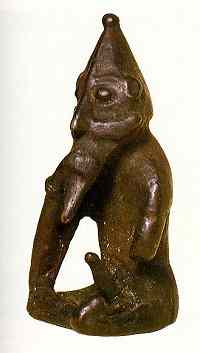
After a few offerings, I've decided to make representations of Them to sit on my nature altar next to Nerthus.   I made them out of salt-dough, which is almost like playdough to work with, and super cheap to make.  I shaped them based off of an image of Freyr from an archaeological dig in Sweden (though no visible penis - this is being displayed in my kitchen, after all!).  After drying them out in the oven, I painted them with greens and golds to imitate vegetation and wheat.  I painted Fréo an amber necklace, though I don't believe She was connected with an Anglo-Saxon version of Brísingamen - however, since we know so little of Her, there's no way to say Fréo didn't have an amber necklace of her own either.

I've been offering Ing and Fréo birdseed, which is what I keep to offer to Nerthus, but I may begin experimenting with other offerings related to the earth or plants.  I've been saving some rose petal powder to burn as incense that I'd like to see if Fréo enjoys.  If my readers have any offerings suggestions, please let me know in the comments!

Monday, February 17, 2014

Charming of the Plow

This past Saturday, my children and I gathered in the garden to perform an old Anglo-Saxon ritual - the Æcerbot, first recorded in the 11th century.  As recorded, it is rather Pagan with a thin Christian veneer; but it has become a seasonal celebration for us because of a passing mention by the Venerable Bede in De Temporum Ratione in 725.  In the passage, he describes the month Solmōnaþ, roughly equivalent with our February and beginning and ending on the new moon.  He translates the name as "cake-month", because he says that the English would offer them to their Gods in that month.  Fast-forward to the Æcerbot a few centuries later, and we see that the ritual calls for digging a furrow in the garden to be planted, and offering cakes to Mother Earth.  And so, we celebrate this holiday - called the Charming of the Plow because it is a common Heathen name for holidays at this time of year, and because the original Æcerbot ritual does just that.  I like to position the holiday and corresponding ritual near the full moon of February; it seems like the best way to condense what may have been a month-long practice into one holiday.  Here is my re-Paganised (and slightly simplified for modern life) version of the ritual:


After sunset on the night of the full moon, go out and dig four small holes in the four corners of the garden, saving the soil.  Mix together oil, honey, and yeast.  If you have any perennial herbs or plants, use twigs from those to drip the mixture onto the soul three times; otherwise, use twigs gathered from nearby trees, saying this each of the three times:

"Grow mightily and fill this earth with fruits; Nerthus bless this soil with your great power."

After that, leave the soil out in a sacred place overnight - perhaps at the foot of a mighty tree or a nearby creek.

The next day, write or inscribe the rune Berkana onto each of the four twigs reserved for this purpose.  Place one into the bottom of each hole, putting the soil back into place, and saying "Grow" nine times over each hole.

In the center of the garden, stretch your arms to the sky and turn clockwise three times, keeping your face lifted to the sky.  Say:

"This soil is filled with plenty.  May its fruitfulness nourish the bodies of me and mine, and may my efforts give honor to the spirits of this place, the land wights, and the Earth, mother of all."

Take some seeds that you are planning to use in that land, and place them in a bowl on the soil before you.  Then say (feel free to substitute some of your own plants for those listed):


"Erce, Erce, Erce, earth's mother,
May Nerthus grant you
fields growing and flourishing,
propagating and strengthening,
tall shafts, bright crops,
and red tomato crops,
and soft sage crops,
and all earth's crops.
May Nerthus grant you
that your produce be guarded against any enemies,
and that it be kept safe from harm,
from poisons sown around the land.
Now I bid the Mother, who shaped this world,
that none shall overturn the words thus spoken."

Dig up a small portion of the land - or more, if you are planning to plant that day - and say:

"Whole may you be Earth, mother of men!
May you be ever-growing and ever-fruitful,
with food filled for the needs of me and mine."
Placing the cake in the soil, just as you would normally plant seeds, say:
"Field full of food for me and mine,
bright-blooming, you are blessed
in the holy name of the one who gives all fruitfulness,
the Earth on which we live;
Nerthus, the one who made the ground,
grant us the gift of growing,
that for us each fruit and leaf might come to use.

Then say three times: "Grow, in the name of Nerthus, be blessed."


Supplies:

Spade or shovel
bucket or container for soil
oil
honey
yeast
twigs from perennial herbs or trees on property
four twigs or small branches to use as rune staves
a few early seeds or bulbs for planting, or seeds for later planting if seasonally appropriate
cakes - these can be either like pancakes or cookies, but flavored with honey rather than sugar

Here's a possible recipe for the cakes, based on a recipe from New Varangian Guard, a re-enactment society in Australia:

Honey Shortbread
1 cup flour
1/4 cup corn starch
3/4 cup butter, softened
1/2 cup honey
Mix the ingredients and form a dough, spoon into a well-greased pan.
Bake at 325 for 30 minutes, let cool and cut into pieces.